Anyone who has stepped off a long-haul flight knows the feeling, the dull headache, the gritty eyes, the sense of having aged a decade somewhere over the Bay of Bengal. For most of the jet age, that arrival fatigue was simply the price of getting somewhere fast. Then Boeing rolled out the 787 Dreamliner, and frequent flyers began noticing something different. They were stepping off twelve-hour sectors feeling, if not exactly fresh, then noticeably less wrecked.
The reason sits hidden in the fuselage, and it comes down to a number most passengers never think about: cabin altitude.
The 8,000-foot compromise
A jet cruising at 38,000 feet is flying through air far too thin to breathe. Outside the cabin, pressure is barely a fifth of what your body expects at sea level. To keep passengers alive and comfortable, the aircraft is sealed and pumped up, pressurised to mimic conditions at a far lower altitude.
But there’s a catch, and it’s structural. Every pound of pressure difference between the cabin and the outside air tries to burst the fuselage like a balloon. The greater that differential, the harder the airframe has to work, and the faster it fatigues over tens of thousands of pressurisation cycles. For decades the industry struck a bargain: pressurise the cabin to the equivalent of roughly 8,000 feet, higher than the floor of many ski resorts, and high enough that the air is measurably thinner than at sea level. That figure kept structural stress within sensible limits for an aluminium airframe, while keeping passengers safe enough.
“Safe enough,” though, is not the same as comfortable. At 8,000 feet, the air holds noticeably less oxygen than at sea level, and over the course of a long flight that thinner air takes a toll.
The evidence Boeing went looking for
This wasn’t guesswork. Before committing to the Dreamliner’s cabin, Boeing partnered with researchers to run one of the more rigorous studies of its kind, later published in the New England Journal of Medicine. More than 500 volunteers spent twenty hours each inside a hypobaric chamber, “flying” at simulated altitudes of 650, 4,000, 6,000, 7,000 and 8,000 feet while their blood-oxygen levels and symptoms were tracked.
The findings were clear. Oxygen saturation fell steadily as simulated altitude climbed, dropping by around four percentage points at 8,000 feet. More tellingly, reported discomfort, headaches, fatigue, general malaise, rose sharply once altitude reached the 7,000-to-8,000-foot band, and crucially, it tended to set in after three to nine hours aloft. In other words, exactly the duration of a long-haul flight. Below that band, passengers simply felt better.
That gave Boeing its target. Drop the cabin altitude, and you keep more oxygen in the bloodstream precisely over the window where passengers start to suffer.
How carbon fibre changed the equation
The obstacle had always been the airframe. You cannot simply pump an aluminium fuselage to a lower cabin altitude without raising the pressure differential, and with it the structural fatigue that shortens an aircraft’s life.
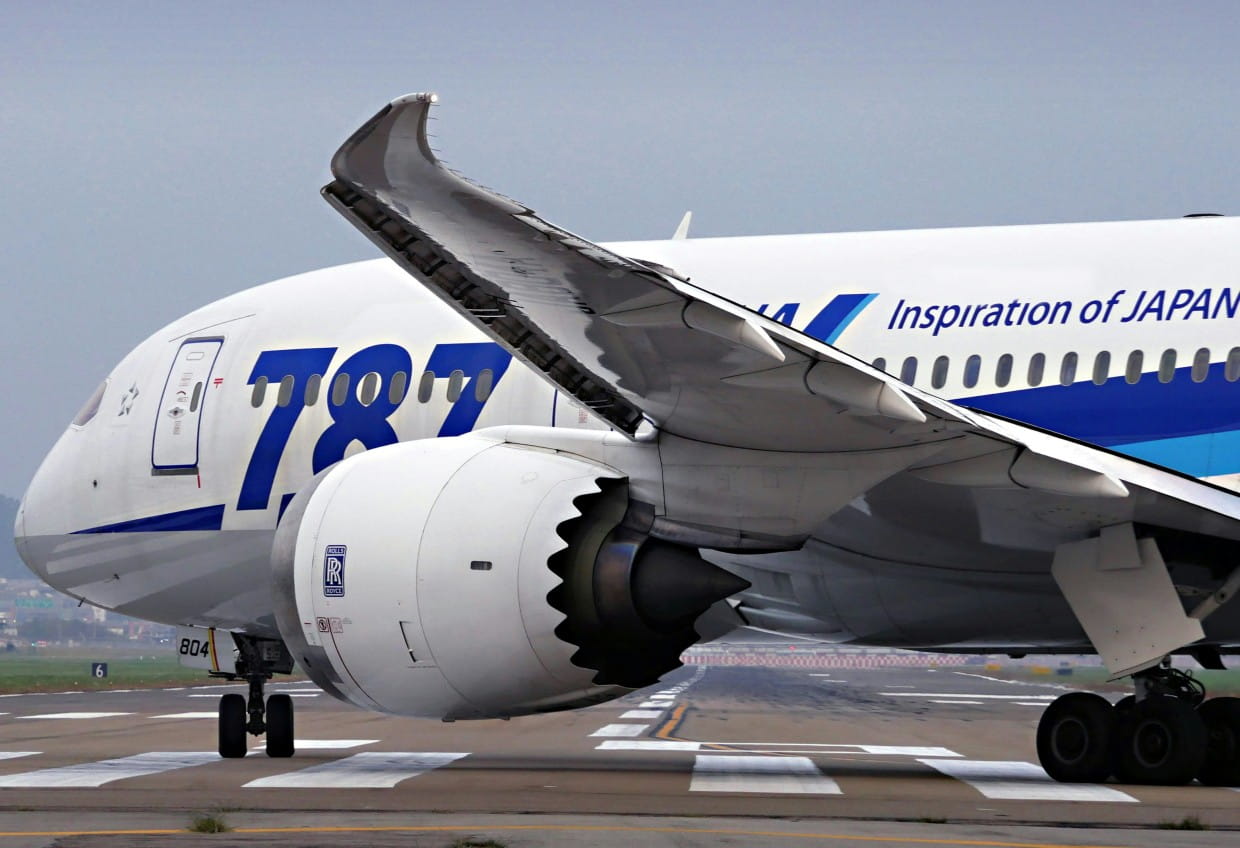
The 787’s answer was its fuselage material. Rather than riveted aluminium, the Dreamliner is built largely from carbon-fibre-reinforced polymer. Composite is stronger in tension, far more resistant to fatigue, and, importantly, it does not corrode. That combination let Boeing safely run a higher pressure differential, and the company spent the dividend on passenger comfort: a maximum cabin altitude of 6,000 feet rather than 8,000.
Two thousand feet may not sound like much, but it lands the cabin squarely below the discomfort threshold the research had identified. Your blood carries more oxygen for the whole flight, and the cumulative fatigue that builds over a long sector is meaningfully reduced.
The humidity dividend – and a dose of honesty
Composite construction delivered a second benefit. Conventional aluminium airframes are kept bone-dry on purpose, because moisture trapped behind the cabin lining corrodes metal over time. The result is cabin humidity of perhaps four or five percent, drier than most of the world’s deserts, which is why your throat and sinuses feel like sandpaper by hour eight.
Because carbon fibre doesn’t corrode, the Dreamliner can safely run higher humidity, generally cited somewhere between 15 and 25 percent depending on conditions and configuration. The 787 also abandons the traditional “bleed air” system, which siphons hot, dry, high-pressure air from the engine compressors, in favour of dedicated electric compressors drawing fresh air directly from outside. That cleaner architecture makes humidification easier and improves air quality alongside it.
Here a note of candour is worth sounding, because the comfort story is sometimes oversold. Some cabin-environment specialists point out that the humidity gain from the lower altitude alone is marginal, a percentage point or two, and that the genuinely transformative humidity figures depend on active humidification systems, which are far more common in flight decks and crew rest areas than in the main cabin. The honest conclusion is that the Dreamliner’s reputation rests not on any single trick but on a bundle of improvements working together: lower cabin altitude, higher humidity, better filtration, a quieter and smoother ride from the composite structure and gust-suppression systems, larger electrochromic windows, and LED mood lighting tuned to ease the body across time zones. No one of these is a silver bullet. Stacked together, they add up to that “I arrived less destroyed” feeling.
Does the A350 share the benefit?
It does, and for the same underlying reason. Airbus took the composite route too, building the A350 XWB with a carbon-fibre fuselage and wing. That gave Toulouse the same structural licence Boeing enjoyed, and the A350 is likewise pressurised to a low cabin altitude. Most sources place it around 6,000 feet, with some citing a touch lower, near 5,500 feet. Like the Dreamliner, it runs elevated cabin humidity and benefits from advanced air management, multi-zone temperature control and draught-free ventilation.
There is one notable engineering difference. Where the 787 broke with tradition and went to a fully electric, no-bleed air architecture, the A350 retains a conventional bleed-air system drawn from its engines. Both aircraft deliver a markedly better cabin environment than the aluminium generation they replaced, the A330, 767 and 777, but they arrive there by slightly different routes. For the passenger in seat 47K, the practical experience is much the same: more oxygen, more moisture, less noise, and a gentler arrival.
The bottom line
The next time you disembark from a Dreamliner or an A350 feeling unexpectedly human, you can thank a quiet revolution in materials science. By trading riveted aluminium for baked carbon fibre, both manufacturers escaped the old structural compromise that had pinned cabins at 8,000 feet for half a century. The result is the most tangible improvement in long-haul passenger comfort in a generation, proof that sometimes the most important innovations are the ones you can’t see, only feel, somewhere over the ocean at two in the morning.