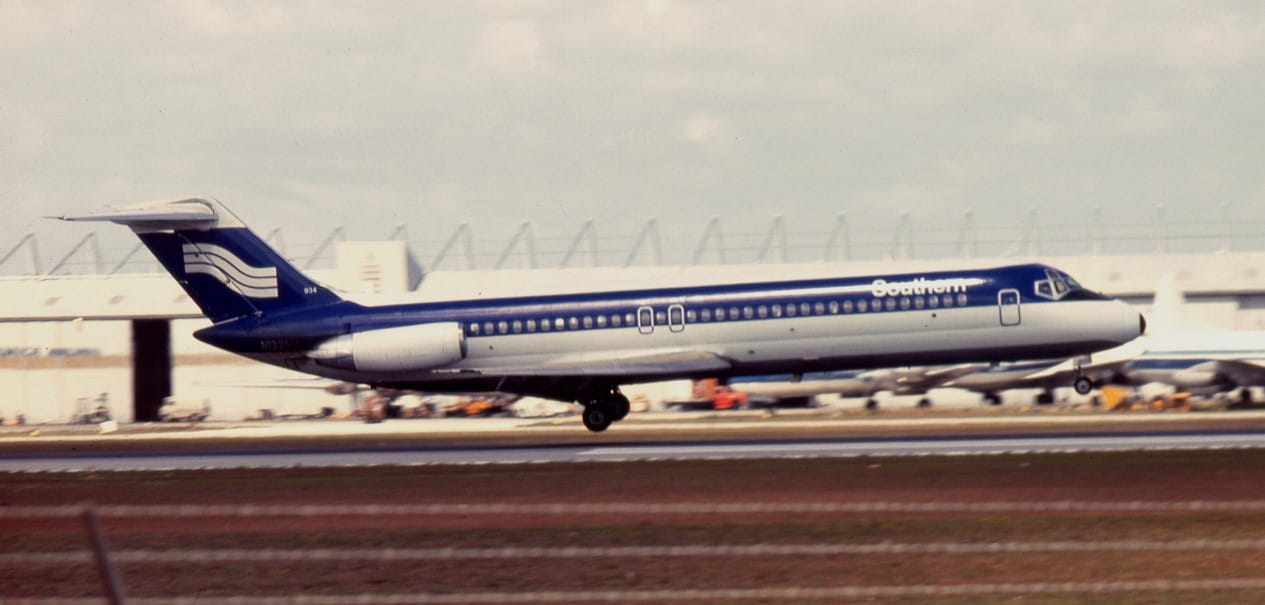
On April 4, 1977, a routine domestic flight turned into one of the most unusual accidents in aviation history. Southern Airways Flight 242, a DC-9 en route from Huntsville to Atlanta, flew straight into a severe thunderstorm over Georgia.
What the crew didn’t fully realise was that this wasn’t just heavy rain, it was a violent system producing hail, extreme precipitation, and even tornadoes. Inside the storm, the aircraft was bombarded by intense rain and hail. Within minutes, both engines began to fail.
Then the unthinkable happened: both engines flamed out, permanently.
What went wrong?
The engines didn’t fail from a mechanical defect. Instead, they were overwhelmed:
- Massive amounts of water and hail were ingested
- This caused compressor stalls and internal damage
- The engines were destroyed from the inside
- Restart attempts failed there was no thrust left at all
This is one of the rare cases where a jet lost both engines due to weather alone.
A deadly chain of decisions
The crew had limited real-time weather information. Critical factors included:
- Dispatch failed to provide updated severe weather data
- The crew relied heavily on onboard weather radar
- Air traffic control systems at the time couldn’t effectively relay real-time storm intensity
- But there’s a deeper issue here that still matters today
The Radar illusion
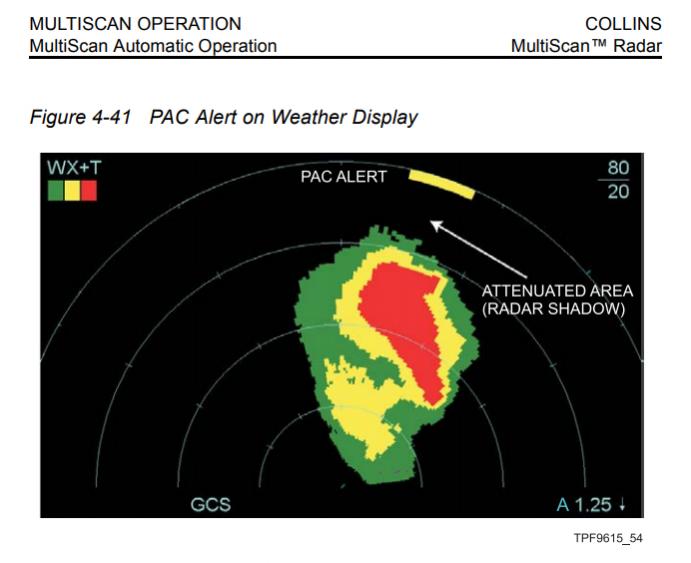
Even modern weather radar has a critical limitation, Attenuation also known as a Radar Shadow. In heavy rain or hail, the radar beam gets absorbed and weakened before it can see beyond the first storm cell.
That means:
- Strong cells can hide even stronger cells behind them
- Dangerous areas may appear as false “gaps” or weaker returns
- What looks like a safe path can actually be the worst part of the storm
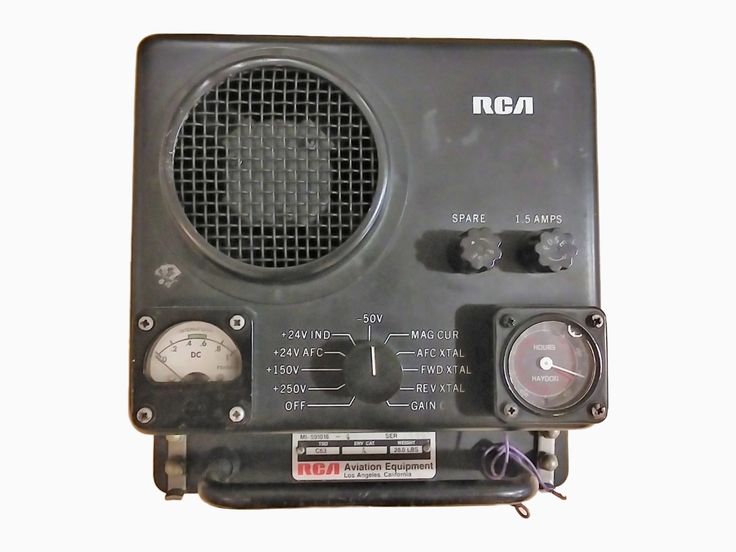
This exact limitation was identified in the Flight 242 investigation heavy precipitation can reduce radar performance and obscure hazards. Below: The DC-9 would have had an RCA AVQ-20 magnetron based Weather Radar.
Flight 242 Partial Transcript
3.58.26: MEMPH: Memphis Centre attention all aircraft: SIGMET – hazardous weather – vicinity Tennessee, southeastern Louisiana, Mississippi, northern and western Alabama and adjacent coastal waters monitor VOR broadcast within a 150-mile radius of the SIGMET area.
3.58.27: CAPT: Oh ###! [expletive]. 3.58.45: MEMPH: Southern 242, contact Atlanta Centre on 134.05.
3.58.50: CAPT: 134.05 Southern 242, good day.
3.59.00: CAPT [evidently as aircraft runs into heavy turbulence]: Here we go – hold ’em cowboy!
4.00.21: F/O: I can handle this all the way over …
4.02.57: CAPT: I think we’d better slow it up right here in this stuff. 4.03.14: (Sound of light rain)
4.03.20: CAPT: Atlanta, Southern 242 – with you – level 17.
4.03.24: ATLAN: Southern 242, Atlanta, roger – altimeter 29.56.
4.03.48: CAPT: Looks heavy – nothing’s going through that! (WXR display)
4.03.54: CAPT: See that?
4.03.56: F/O: That’s a hole, isn’t it?
4.03.57: CAPT: It’s not showing a hole, see it?
4.04.05: (Sound of rain)
4.04.06: F/O: ###! [Expletive evidently as aircraft is severely jolted]
4.04.08: F/O: Do you want to go around that right now?
4.04.19: CAPT: Hand fly at about 285 knots.
4.04.30: (Sound of hail and rain)
4.05.53: F/O: Which way do we go across here? I don’t know how we get through there, Bill.
4.05.59: CAPT: I know you’re just going to have to go out!
4.06.00: F/O: Yeah – right across that band
4.06.01: CAPT: All clear left approximately right now – I think we can cut across there now.
4.06.12: F/O: All right – here we go.
4.06.25: F/O: We’re picking up some ice, Bill.
4.06.29: CAPT: We’re above 10 degrees.
4.06.30: F/O: Right on 10!
4.08.34: ATLAN: Southern 242, do you read Atlanta?
4.08.46: CAPT: Atlanta, Southern 242, standby…
4.08.49: ATLAN: Roger, maintain 15,000 if you understand me – maintain 15,000, Southern 242.
4.08.55: CAPT: We’re trying to get it up there!
4.08.57: ATLAN: Roger.
4.09.15: CAPT: OK – Southern 242 – we just got our windshield busted and we’ll try to get it back up to 15,000, we’re at 14,000.
4.09.25: ATLAN: Southern 242 – you say you’re at 14,000 now?
4.09.27: CAPT: Yeah – couldn’t help it.
4.09.30: ATLAN: That’s OK – are you squawking 5623?
4.09.36: F/O [evidently trying to increase power]: Left engine won’t spool!
4.09.37: CAPT: Atlanta – our left engine just cut out!
4.09.42: ATLAN: Southern 242, roger and lost your transponder squawk 5623.
4.09.43: F/O: I am squawking 5623 – tell him I’m level at 14,000.
4.09.49: CAPT: Atlanta, 5623 – we’re squawking!
4.09.53: ATLAN: You’ve lost an engine and busted a windshield?
4.09.56: CAPT: Yes sir, Atlanta!
4.10.00: ATLAN: Southern 242 you can descend and maintain 13,000 that’ll get you down a little lower.
4.10.02: CAPT: Autopilot’s off. 4.10.03: F/O: I’ve got it – I’ll hand fly it.
4.10.04: F/O: My God! That other engine’s going too!
4.10.05: CAPT: Got the other engine going out too!
4.10.08: ATLAN: Southern 242 – say again?
4.10.10: CAPT: Standby – we’ve lost both engines!
4.10.14: F/O: All right, Bill – get us a vector to a clear area.
4.10.16: CAPT: [urgently]: Get us a vector to a clear area, Atlanta!
Radar isn’t perfect (even today)
Airborne weather radar then and now has a critical limitation: attenuation
In very heavy rain or hail, the modern low-power radar beam gets weakened or blocked.
That means:
- Intense cells can hide what’s behind them
- Dangerous areas may appear as “black holes” or gaps
- Pilots can be tricked into flying toward the worst part of the storm
This exact effect was noted in the Flight 242 report heavy precipitation can reduce radar performance and obscure targets
So what looked like a safe path… wasn’t.
Modern solution: PAC (Path Attenuation Correction)
Modern systems like the Collins WXR-700X introduced:
Path Attenuation Correction (PAC)
What it does:
- Compensates for signal loss caused by intervening precipitation
- Helps ensure the correct intensity (color) is displayed, even through rain (up to ~80 NM)
The implementation of PAC Alert is a huge safety improvement, but it’s not perfect
The PAC alert bar your warning sign
If attenuation becomes too severe, the WXR can’t receive a return signal as the transmission pulse is absorbed by the cloud.
That’s when you’ll see:
A yellow arc (PAC alert bar) at the edge of the display
This means:
- There is severe precipitation between you and the return
- Targets beyond that area may not be accurate or visible at all
In simple terms: “There’s something nasty ahead… and you can’t see through it.”
Important limitations (even today)
Critically: Radar should NEVER be used to penetrate thunderstorms
PAC Alert is activated whenever the radar is operated in CAL gain, and the aircraft is within 80 nautical miles of a thunderstorm.
Another indications that a Radar return is being attenuated:
- When the display shows Green and Yellow on the front side of a thunderstorm. However, the backside shows Red and little or no yellow and green.
- By manually lowering the tilt angle until a significant ground clutter appears on the display. If there is clutter to the right and left of the storm cell, however, the area behind the cloud remains black, then radar shadowing exists.
Beyond that, attenuation can still hide storms with no warning, also Ground returns can confuse the system and create false weather echoes
Flight 242 the final moments
With no engines, the pilots attempted to glide to safety.
They were vectored toward Dobbins Air Force Base but they didn’t have enough altitude.
Instead, they made a desperate decision: land on a highway
The aircraft struck trees, vehicles, and buildings before breaking apart in the town of New Hope, Georgia.
The toll
- 62 people onboard were killed
- 22 were seriously injured
- 8 people on the ground also died
The bigger lesson
Flight 242 reshaped how aviation treats storms:
- Thunderstorms must be avoided, not penetrated
- Radar must be interpreted, not trusted blindly
- Modern systems now highlight attenuation risk
Final takeaway
Flight 242 wasn’t just about bad weather. It was about invisible weather.
And even today, with modern radar and PAC: If you see a gap in a storm…make sure it’s real.

Photo By clipperarctic – Southern DC-9,