The System That Defined Corporate Aviation in the 1990s
During the 1990s, the business aviation industry underwent a major technological transition. Traditional electromechanical flight instruments once the backbone of cockpit design were rapidly being replaced by integrated digital avionics systems. At the center of this transformation was the Collins Pro Line avionics family, developed by the avionics division of Rockwell Collins.
By the end of the decade, Pro Line systems had become the dominant flight deck architecture in business aviation, appearing in aircraft from manufacturers such as Dassault, Gulfstream, Bombardier, Raytheon, and Cessna.
The system helped standardize cockpit layouts, improve situational awareness for pilots, and significantly reduce pilot workload.
The Evolution of the Pro Line System
The Collins Pro Line family evolved through several generations during the late 20th century.
Pro Line I (1970s)
The earliest systems focused on integrating traditional avionics functions such as:
- navigation radios
- communication systems
- weather radar
- autopilot systems
These systems were still largely analog but introduced greater integration than earlier avionics packages.
Pro Line II (1980s)
The Pro Line II system marked a significant step forward with the introduction of CRT-based Electronic Flight Instrument Systems (EFIS).
Aircraft such as the Saab 340 and early Dash 8 turboprops adopted these displays, replacing mechanical attitude indicators and horizontal situation indicators with electronic screens.
This technology brought airline-style cockpit displays to regional aircraft and business aviation.
The Arrival of Pro Line 4
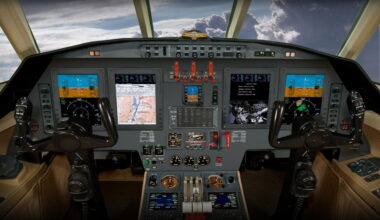
The most influential generation of the system during the 1990s was Collins Pro Line 4.
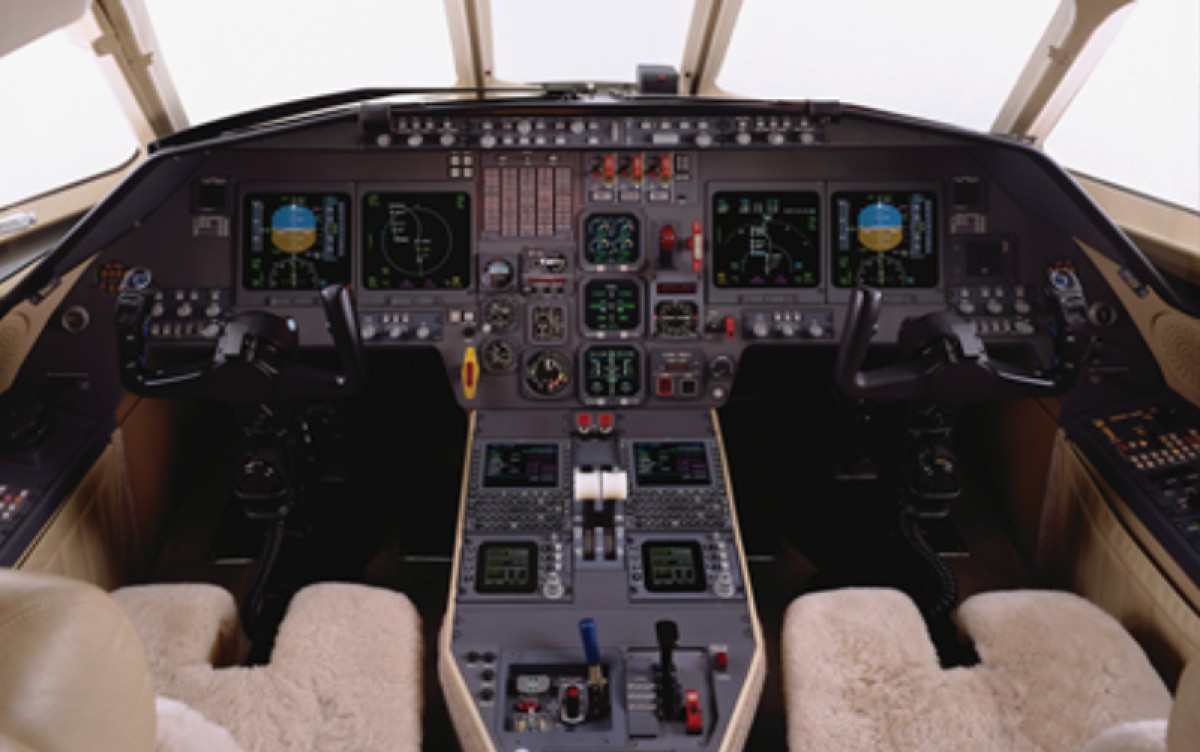
Pro Line 4 was built around large-format CRT displays and advanced digital processing systems.
Typical Pro Line 4 flight decks included:
- Electronic Attitude Director Indicator (EADI)
- Electronic Horizontal Situation Indicator (EHSI)
- integrated Flight Management System (FMS)
- digital autopilot
- weather radar display
- engine indication systems
This architecture gave pilots a comprehensive view of flight data and navigation information, all integrated into a small number of displays.
Aircraft That Adopted Pro Line 4
Pro Line 4 quickly became the preferred avionics suite for many business aircraft introduced in the 1990s.
Notable aircraft equipped with the system included:
Dassault Falcon 2000
The Falcon 2000 featured a Pro Line 4 cockpit that combined:
- advanced navigation capability
- digital engine monitoring
- integrated flight management
Gulfstream G200
The Gulfstream G200 also adopted Pro Line 4 avionics, providing a highly capable cockpit environment for long-range corporate travel.
Bombardier Challenger Series
Several Bombardier business jets also incorporated Collins avionics, reinforcing the system’s growing influence across the industry.
Why Airlines and Operators Preferred Pro Line
The success of Collins Pro Line avionics came from several key advantages.
Standardization
Pilots transitioning between aircraft equipped with Pro Line avionics encountered familiar display formats and operating logic.
This significantly reduced training requirements.
Improved Situational Awareness
Integrated navigation and weather information allowed pilots to see:
- aircraft position
- weather radar
- terrain
- navigation routes
all on a single display.
Reduced Pilot Workload
Automation of navigation calculations, flight planning, and engine monitoring allowed pilots to focus more on flight management and decision-making.
Reliability
Digital avionics systems contained fewer moving parts than traditional electromechanical instruments, improving reliability and reducing maintenance costs.
The Influence of Airline Technology
Much of the technology behind Pro Line avionics had been influenced by developments in commercial aviation.
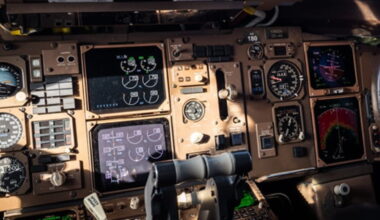
During the late 1970s and early 1980s, aircraft such as the Boeing 757 and Boeing 767 introduced fully digital flight decks with electronic displays and integrated flight management systems.
Collins avionics engineers adapted many of these concepts to the business aviation market, creating a system that delivered airline-level capability in smaller aircraft.
The Transition to LCD Displays
By the early 2000s, newer avionics systems began replacing CRT displays with liquid crystal displays (LCDs).
This led to the introduction of systems such as:
- Collins Pro Line 21
- Collins Pro Line Fusion
These newer systems offer:
- larger displays
- enhanced graphical interfaces
- improved integration with satellite navigation systems
However, the design philosophy of these modern systems still traces its roots back to the earlier Pro Line architecture.
A Lasting Legacy in Business Aviation
The Collins Pro Line family of avionics systems played a critical role in shaping the modern business aircraft cockpit.
By combining digital navigation systems, electronic flight displays, and integrated automation, the system allowed business jets to achieve levels of capability previously found only in large commercial airliners.
Aircraft such as the Falcon 2000 and Gulfstream G200 helped cement Pro Line’s reputation as the standard cockpit architecture of corporate aviation during the 1990s.
Even today, many of these aircraft remain in service, and their Pro Line avionics systems continue to operate reliably decades after their introduction.