The Regional Airliner That Redefined Passenger Comfort
While Bombardier’s CRJ family pioneered the regional jet concept during the 1990s, Brazilian manufacturer Embraer took the idea further by designing a new generation of regional aircraft from the ground up. The result was the Embraer E-Jet family, a series of aircraft that combined regional airline economics with the passenger comfort and technology normally associated with larger narrow-body airliners.
Since entering service in the early 2000s, the E-Jet family has become one of the most successful regional aircraft programs ever built, with more than 1,700 aircraft delivered worldwide. Today these aircraft operate for airlines across every continent, forming a critical link between regional airports and global airline hubs.
The E-Jet program did not merely compete with existing regional jets. It fundamentally redefined what a regional airliner could be.
Embraer’s Rise in Commercial Aviation
Embraer was founded in 1969 as a Brazilian state-owned aerospace manufacturer. Early aircraft included military trainers and small commuter aircraft, most notably the EMB-110 Bandeirante, which became widely used for regional airline operations.
During the 1990s, Embraer gained international recognition with the ERJ 135, ERJ 140, and ERJ 145 regional jets. These aircraft competed directly with Bombardier’s CRJ100 and CRJ200 in the 50-seat market.
However, by the late 1990s airlines were beginning to demand larger aircraft capable of carrying 70 to 100 passengers.
Rather than stretching the ERJ145 design, Embraer chose a different strategy: it would develop an entirely new aircraft family.
The Birth of the E-Jet Program
The Embraer E-Jet program was launched in 1999.
The goal was to create a family of aircraft that could bridge the gap between traditional regional jets and larger narrow-body airliners such as the Boeing 737 and Airbus A320.
The new aircraft would feature:
- a wider fuselage
- improved passenger comfort
- modern avionics
- greater operational flexibility
This approach produced four aircraft variants:
| Aircraft | Typical Capacity |
|---|---|
| E170 | 70–78 passengers |
| E175 | 76–88 passengers |
| E190 | 96–114 passengers |
| E195 | 100–132 passengers |
Together these aircraft formed a flexible family capable of serving a wide range of airline route structures.
The First Flight of the E170
The first aircraft in the family, the Embraer E170, made its maiden flight in February 2002.
The aircraft entered airline service in 2004 with LOT Polish Airlines.
Unlike earlier regional jets, the E170 was designed with a wider fuselage and spacious cabin, providing passengers with a level of comfort more typical of larger airliners.
One of its most distinctive features was the 2-2 seating configuration, which eliminated the middle seat entirely.
Passengers quickly noticed the difference.
The E175: The Most Successful Variant
The Embraer E175 soon became the most popular member of the family.
With seating for around 76 to 88 passengers, the aircraft was ideally suited to the U.S. regional airline market, particularly because it fit within pilot union scope clause restrictions.
Scope clauses limit the size and weight of aircraft that regional airlines can operate on behalf of major carriers.
These restrictions typically allow aircraft with:
- 76 seats
- maximum takeoff weight of approximately 86,000 pounds
The E175 was optimised for exactly this segment, helping it become one of the most widely used regional jets in North America.
Major operators include:
- SkyWest Airlines
- Republic Airways
- Envoy Air
- Air Canada Express
The Larger E190 and E195
While the E170 and E175 targeted the traditional regional market, Embraer expanded the family with the E190 and E195.
These aircraft offered significantly greater capacity, approaching that of smaller narrow-body aircraft.
Typical seating included:
- E190: 96–114 passengers
- E195: up to 132 passengers
Because of their size and range, these aircraft were often operated directly by major airlines rather than regional partners.
Operators included:
- JetBlue
- KLM Cityhopper
- Lufthansa CityLine
- Azul Brazilian Airlines
The E190 in particular became a favourite for airlines seeking a smaller alternative to the Boeing 737 or Airbus A320.
Advanced Avionics and Fly-By-Wire
One of the defining technological features of the E-Jet family was its advanced avionics and flight control systems.
The aircraft introduced digital fly-by-wire flight controls, an unusual feature for aircraft of this size at the time.
Benefits included:
- reduced pilot workload
- improved flight envelope protection
- smoother aircraft handling
- increased safety margins
The cockpit incorporated large electronic flight displays, integrated flight management systems, and modern navigation technology.
These features brought airline-level cockpit technology into the regional aviation sector.
Passenger Comfort: A Key Advantage
Passenger experience became one of the defining advantages of the E-Jet design.
Compared with earlier regional jets such as the CRJ series, the E-Jets offered:
- wider cabins
- larger windows
- larger overhead bins
- more spacious seating
The aircraft’s cabin cross-section allowed a 2-2 seat layout with no middle seat, making it particularly popular with passengers.
For airlines operating longer regional routes, this improved comfort became a significant competitive advantage.
Global Expansion
Following its introduction, the E-Jet family quickly gained worldwide popularity.
The aircraft proved versatile enough to operate in a wide variety of markets, including:
- regional airline networks
- point-to-point routes between smaller cities
- short-haul mainline operations
Airlines across Europe, North America, Asia, and Latin America adopted the aircraft.
By the 2010s the E-Jet had become one of the most widely used regional airliners in the world.
The Next Generation: E-Jet E2
Building on the success of the original aircraft, Embraer introduced a new generation known as the E-Jet E2 family.
This updated series includes:
- E175-E2
- E190-E2
- E195-E2
The new aircraft feature:
- redesigned wings
- new Pratt & Whitney geared turbofan engines
- improved fuel efficiency
- updated avionics systems
The E2 program significantly reduces fuel consumption and operating costs, allowing the aircraft to remain competitive in the evolving regional airline market.
The Legacy of the E-Jet
The Embraer E-Jet family represents one of the most successful regional aircraft programs ever developed.
Its combination of modern technology, passenger comfort, and operational flexibility allowed airlines to expand their networks while maintaining efficient operations.
Together with Bombardier’s CRJ series, the E-Jets helped establish the modern regional airline system that connects thousands of smaller cities to global aviation hubs.
Today these aircraft continue to play a vital role in airline networks worldwide.
Conclusion
The Embraer E-Jet family did more than compete with existing regional jets — it redefined the category.
By combining the economics of regional aircraft with the comfort and technology of larger airliners, Embraer created a new generation of regional jets that appealed to both airlines and passengers.
More than two decades after its first flight, the E-Jet remains one of the most influential aircraft families in modern aviation.
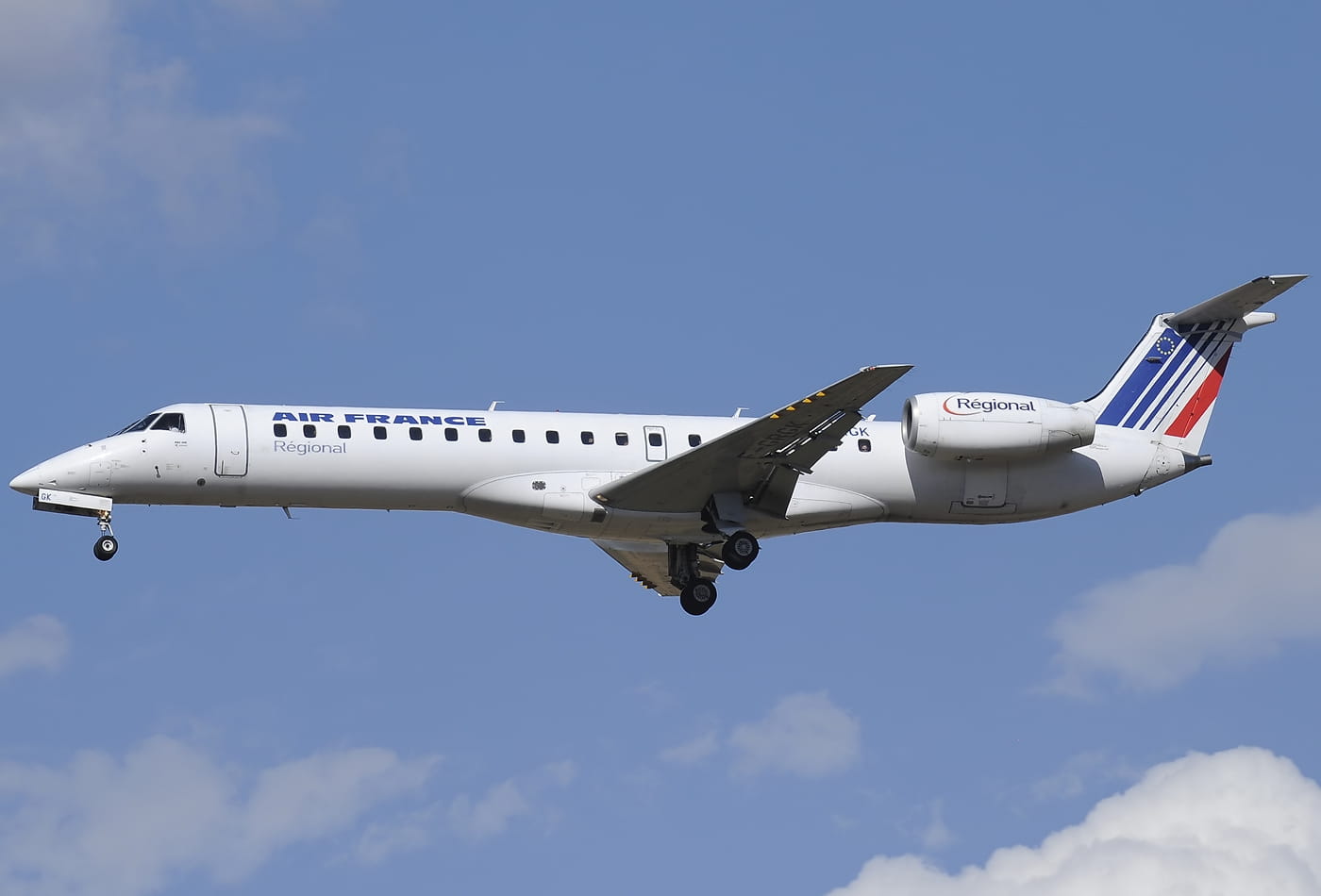
By Aldo Bidini – Gallery page https://www.jetphotos.com/photo/6914566Photo https://cdn.jetphotos.com/full/1/87190_1281622614.jpg,