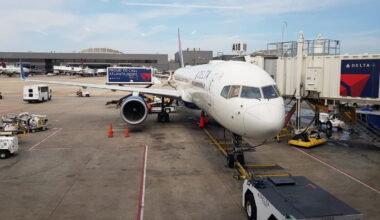
While many airlines have rushed to retire older aircraft in favour of new-generation jets, Delta Air Lines has taken a very different approach. Instead of rapidly replacing its Boeing 757 and 767 fleets, Delta has invested millions of dollars upgrading and modernising these aircraft to keep them flying for decades longer than most industry analysts expected.
This strategy has surprised many aviation observers. But for Delta, the decision is based on a clear combination of economics, operational flexibility, and the unique capabilities of these aircraft capabilities that even modern replacements still struggle to fully replicate.
The Boeing 757: An Aircraft That Still Has No True Replacement
The Boeing 757 remains one of the most versatile airliners ever built.
Introduced in the early 1980s, the aircraft combined the economics of a narrow-body jet with performance normally associated with much larger aircraft.
Key advantages include:
- Exceptional takeoff performance
- Long range for a narrow-body aircraft
- High passenger capacity
- Ability to operate from shorter runways
This combination allows Delta to use the 757 on routes that fall into a unique “middle ground” where other aircraft types struggle.
These include:
- transcontinental U.S. routes
- long domestic sectors
- high-demand narrow-body routes
- “thin” transatlantic routes between secondary cities
Even modern aircraft such as the Airbus A321neo come close but still cannot fully match the 757’s unique performance envelope.
For this reason, the 757 continues to play a key role in Delta’s network.
The Boeing 767: The Perfect Mid-Size Widebody
Delta also operates one of the largest fleets of Boeing 767 aircraft in the world.
While newer widebody aircraft such as the Airbus A350 dominate long-haul routes, the 767 fills an important niche between narrow-body aircraft and larger widebodies.
The aircraft offers:
- wide-body passenger comfort
- strong long-range capability
- lower operating cost than larger aircraft
- significant cargo capacity
For Delta, this makes the 767 ideal for routes such as:
- medium-demand transatlantic services
- flights to South America
- premium domestic routes
Rather than retiring these aircraft prematurely, Delta upgraded them with new cabins and modern systems to extend their useful life.
The Economics: Paid-Off Aircraft Are Powerful Assets
A key reason Delta continues operating these aircraft is simple financial logic.
Most of the airline’s 757 and 767 fleets are already fully owned and depreciated. This dramatically lowers their operating costs compared to newly purchased aircraft.
While modern jets may offer better fuel efficiency, they also come with extremely high purchase prices.
When the full economics are considered including financing and depreciation older aircraft can still be extremely competitive.
For Delta, upgrading existing aircraft often makes more financial sense than buying replacements.
Delta TechOps: The Secret Behind the Strategy
One of Delta’s biggest advantages is its massive in-house maintenance organisation, Delta TechOps.
Delta TechOps performs:
- heavy aircraft maintenance
- engine overhaul
- structural repairs
- avionics upgrades
- fleet modifications
Because the airline controls its own maintenance infrastructure, it can maintain and upgrade older aircraft more efficiently than airlines that rely on outsourced maintenance providers.
This capability allows Delta to extend aircraft lifespans far beyond the industry average.
Major Cabin Modernization Programs
Delta has not simply kept these aircraft flying unchanged.
Instead, the airline has invested heavily in modernizing them.
Recent upgrades include:
New premium cabins
Many aircraft now feature Delta One lie-flat business class seats, making them competitive with modern widebody aircraft.
Updated passenger experience
Upgrades include:
- seatback entertainment systems
- onboard Wi-Fi
- modern lighting and cabin interiors
Flight deck improvements
Avionics updates allow these aircraft to meet modern navigation and air traffic management requirements.
These upgrades ensure that passengers often experience little difference between older aircraft and newer jets.
Why Other Airlines Retired These Aircraft Earlier
Many airlines retired their 757 and 767 fleets much earlier than Delta.
This was often due to:
- high lease costs
- expensive outsourced maintenance
- fleet simplification strategies
Delta’s unique business model allows it to take a different approach.
By owning its aircraft and controlling maintenance, the airline can operate them economically for far longer.
Gradual Replacement Instead of Sudden Retirement
Delta does plan to replace these aircraft eventually but slowly and strategically.
New aircraft entering the fleet include:
- Airbus A220
- Airbus A321neo
- Airbus A330-900neo
- Airbus A350
Rather than replacing hundreds of aircraft at once, Delta introduces new aircraft gradually while keeping upgraded older aircraft flying.
This spreads capital costs across many years and reduces financial risk.
A Different Philosophy of Fleet Management
Delta’s approach reflects a broader philosophy:
maximize the value of existing assets before replacing them.
Instead of focusing solely on the newest aircraft technology, the airline considers:
- total lifetime cost
- operational flexibility
- route suitability
- maintenance capability
In many cases, upgraded aircraft still perform extremely well on these metrics.
The Legacy of Two Legendary Aircraft
The Boeing 757 and Boeing 767 are among the most successful aircraft ever built.
For Delta Air Lines, they remain essential parts of the fleet decades after their introduction.
Thanks to careful maintenance, smart upgrades, and a long-term fleet strategy, Delta has shown that older aircraft can still play a critical role in modern airline operations.
And until a true replacement emerges especially for the unique capabilities of the Boeing 757 these aircraft are likely to remain part of Delta’s fleet for years to come.