How Collins Created the Glass Cockpit That Changed Airline Aviation
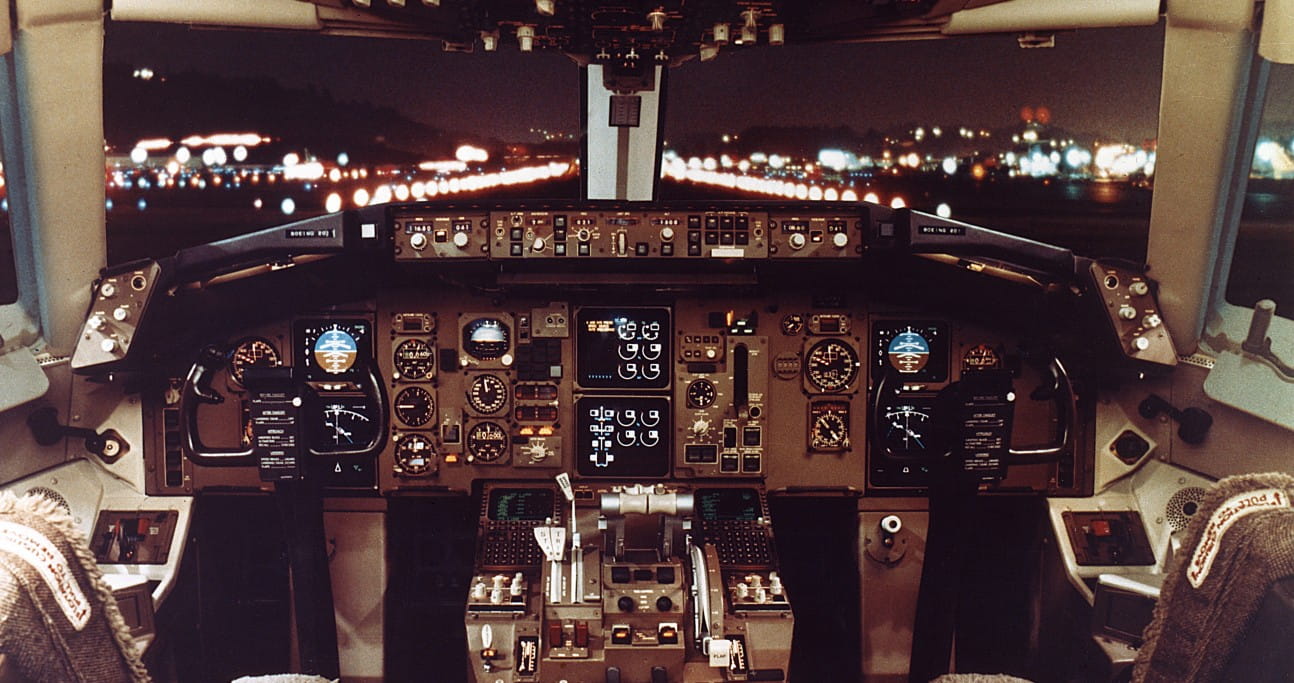
When the Boeing 767 entered service in 1982, it introduced one of the most important cockpit revolutions in airline history: the Electronic Flight Instrument System (EFIS) and the Engine Indicating and Crew Alerting System (EICAS).
These systems did far more than replace a few old gauges. They marked the beginning of the modern glass cockpit, where primary flight information, navigation data, engine parameters, warnings, and system status could be presented on electronic displays rather than on a crowded panel of electromechanical instruments.
At the center of that revolution was Collins Air Transport Division, whose display technology, digital avionics integration, and ruggedized color CRT development helped make the 767 the first FAA-certified airliner to use CRTs as primary flight instruments. The FAA certification of the Collins EFIS for the Boeing 767 came in July 1982.
The result was a cockpit architecture that would define the future of commercial aviation.
Before the 767: The Age of Steam Gauges
Before the early 1980s, most airline flight decks were dominated by what pilots now call steam gauges individual electromechanical instruments spread across the panel.
A typical widebody cockpit contained separate displays for:
- attitude
- airspeed
- altitude
- heading
- vertical speed
- engine parameters
- fuel flow
- hydraulic status
- warning lights
- navigation sources
These cockpits worked, but they required constant instrument scanning and imposed a heavy workload on the crew.
By the 1970s, advances in solid-state digital electronics, microprocessors, integrated circuits, and CRT technology created a new opportunity: instead of dozens of separate instruments, cockpit data could be integrated and shown on a smaller number of electronic displays. A Department of Transport Australia training document from the period noted that the new systems offered better integration, better presentation to flight and maintenance crews, improved MTBF, and lower purchase and overhaul costs.
That change would arrive on the Boeing 757 and 767.
Collins and the Breakthrough in CRT Flight Displays
The roots of the 767’s glass cockpit go back well before the aircraft itself.
In the 1950s, brighter cathode ray tubes began appearing in airborne weather radar. Through the 1960s, better tube design and integrated circuitry made CRTs more practical for broader use in aviation. By the early 1970s, Collins engineers were experimenting with CRTs as primary flight instruments, aiming to replace traditional electromechanical indicators and their many moving parts.
For these new instruments, Collins chose a particularly ambitious display technology: the shadow mask color tube.
This was a bold decision. Shadow mask tubes had already been used in consumer color television, but no avionics manufacturer had yet succeeded in making them rugged enough to survive the vibration, shock, and environmental stress of airline service. Collins Air Transport Division, working with its tube supplier, solved that problem.
The choice mattered because a shadow mask CRT allowed:
- full-color presentation
- a bright, crisp picture
- high readability
- a display capable of showing far more information than an analog instrument
That gamble paid off when Boeing selected Collins systems for its new-generation airliners, the 757 and 767, in 1978.
The First Truly Modern Airline Cockpit
The Boeing 767 became a bridge between the analog world and the digital one.
Not only did it introduce CRT-based primary flight displays, it was also regarded as the first completely digital airliner in avionics terms. The transition from analog to digital systems was as important as the move from gauges to screens.
In practical terms, the 767 used digital electronics and microprocessor-based systems to manage, route, and display a vast amount of information. The Australian training material described how CRTs combined with microprocessors gave much greater flexibility in presenting:
- flight path control
- navigation data
- caution and warning data
- system information
- checklists and drills
- stored malfunction information CRT Study
That was a massive shift in philosophy. The challenge for Collins engineers was not just to display more information, but to display it without overwhelming the crew.
They solved that by presenting critical data in formats pilots already understood.
EFIS: Replacing the Core Flight Instruments
The Boeing 767’s Electronic Flight Instrument System replaced the traditional attitude indicator and horizontal situation indicator with electronic displays.
On the 757/767, the system used three different CRT sizes for the major displays, with dedicated flight displays for the pilot and co-pilot, plus two EICAS screens.
Primary Flight Display
The PFD brought together the core data pilots needed to fly the aircraft:
- attitude
- airspeed
- altitude
- vertical speed
- flight director guidance
- radio altitude
- mode annunciations CRT Study
Instead of scanning several instruments, pilots could monitor flight-critical data in one place.
Navigation Display
The Navigation Display was just as revolutionary.
It could show:
- compass rose or modified HSI formats
- VOR and ILS information
- map mode
- plan mode
- weather radar overlay
- selected navigation symbology such as waypoints, navaids, and airports CRT Study
The EFIS control panel allowed pilots to change mode, select data sources, and add or remove layers of information. Weather radar ranges were selectable, and the display logic could be tailored to the phase of flight.
This gave flight crews a level of situational awareness previously unavailable in airline cockpits.
Sunlight-Readable Color in Front of Both Pilots
One of the striking achievements of the Collins system was not simply that it used color CRTs, but that it delivered sunlight-readable full-color displays directly in front of both pilots.
That mattered because these were not decorative screens. They had to be readable in bright cockpit lighting, stable in vibration, and reliable enough to be trusted as primary instruments.
The amount of selectable information available to the flight crew was unprecedented. But Collins deliberately organized the displays so that only the most relevant information appeared automatically, with additional information available at the push of a button.
This was the essence of the new philosophy: show the crew what they need, when they need it, in a familiar format.
EICAS: The Other Half of the Revolution
If EFIS changed how pilots flew the aircraft, EICAS changed how they monitored and managed it.
The Engine Indicating and Crew Alerting System replaced a large collection of electromechanical engine and systems instruments. According to the Australian training material, the Collins EICAS replaced indicators traditionally used for:
- engine data
- hydraulic quantity
- fuel flow
- control surface positions
- brake temperatures
- power systems
- warning displays CRT Study
It also displayed:
- system status
- maintenance messages
- checklists CRT Study
That was a huge leap beyond conventional engine gauges.
Upper and Lower EICAS Displays
On the 757/767, EICAS normally used two displays:
Upper display
The upper display showed primary engine information, while reserving space for caution and warning messages. Warning messages were sequenced, with the most recent shown at the top.
Lower display
The lower display normally showed secondary engine data, such as:
- engine vibration
- oil quantity
- fuel flow CRT Study
It could also display:
- aircraft systems status
- checklist formats
- maintenance information while on the ground CRT Study
The lower screen meant crews no longer had to look up to the overhead panel for routine system monitoring in the same way older crews did.
Why EICAS Was So Important
EICAS did more than centralize information. It fundamentally changed the human-machine interface.
The Australian technical notes pointed out that system displays using color-coded synoptics improved immediate analysis of system configuration in failure cases, reduced the need to refer to the overhead panel, and reduced crew mental workload after failures.
Operational benefits included:
- hot-start monitoring
- engine overboost monitoring
- storage of overboost time CRT Study
In other words, EICAS was not just an electronic mimic of old gauges it was an intelligent management system.
The Digital Airliner and the ARINC Era
The 767’s cockpit revolution also depended on digital architecture behind the scenes.
Industry standards such as the ARINC 700 series redefined characteristics for these systems, while ARINC 600 standardized electronic racking, form factors, and cooling. The Australian training material notes that common databuses designed to meet ARINC 429 helped save around 30% of wiring.
This was an enormous engineering benefit.
Reduced wiring meant:
- lower weight
- improved reliability
- easier maintenance
- greater flexibility for future modifications
The 767 therefore did not just look more modern than earlier airliners it was architecturally more advanced.
A Two-Crew Widebody
One of the most important consequences of EFIS and EICAS was that the 767 could be operated by two pilots instead of three.
Earlier widebody aircraft such as the:
- Boeing 747
- DC-10
- Lockheed L-1011
still relied on a flight engineer to monitor systems and manage the engineer’s panel.
By combining electronic displays, system logic, digital computers, and automated crew alerting, the 767 removed the need for that third crewmember.
This was not just a labor-saving measure. It reflected a deep confidence in the new display and alerting architecture.
That basic two-crew philosophy became standard for future airliners.
The 757 and 767 as the Turning Point
The 757 and 767 did not merely introduce new avionics. They marked a turning point in cockpit design philosophy.
Instead of:
- many separate instruments
- dispersed warning lights
- isolated system panels
the crew now had:
- integrated electronic flight displays
- centralized engine and systems monitoring
- selectable navigation and weather information
- digital data handling
- meaningful alert prioritization
The cockpit became less about scanning hardware and more about managing information.
Why Pilots Accepted It
One reason the Collins system succeeded is that its designers did not force pilots to abandon everything they knew.
The displays presented information in forms pilots were already accustomed to attitude, speed, altitude, and course were still recognizable. The transition was evolutionary in presentation, even if revolutionary in technology.
That mattered enormously for airline adoption and training.
Rather than intimidating pilots with raw digital complexity, the system reduced workload and improved comprehension.
The Legacy of the 767 Glass Cockpit
The influence of the 767 EFIS and EICAS architecture can be seen in nearly every modern airliner.
Its legacy extends directly into later Boeing aircraft, including the:
- 757
- 777
- 787
and across the industry into Airbus flight decks as well.
Today, modern LCD displays, integrated avionics suites, and advanced synoptics may look more refined than the original CRT systems, but the underlying philosophy is still the same:
- centralize information
- prioritize alerts
- reduce workload
- improve situational awareness
- present data in a meaningful format
That philosophy was proven in airline service on the Boeing 767.
B767, B757 & B737 LCD Plug in Play Upgrade
In 2019 Thomas Global certified TFD-7000 series LCDs these were designed as plug-and-play replacements for the Collins EDU-776 and EDU-766 CRT displays used with the EFIS-700 / EICAS systems in 757 and 767 flight decks. Extending support for this federated cockpit until end of life for these platforms.
Conclusion
The Boeing 767’s EFIS and EICAS systems were not just another avionics upgrade. They represented a historic shift in the way airline cockpits were designed and operated.
By combining:
- Collins-developed ruggedized color CRT technology
- digital avionics architecture
- integrated primary flight displays
- centralized engine and crew alerting systems
the 767 became the aircraft that brought the glass cockpit into mainstream airline service.
It was the first FAA-certified use of CRTs as primary flight instruments, one of the first fully digital airliners, and the platform that proved electronic displays could improve both safety and efficiency in everyday airline operations.
In that sense, the Boeing 767 did not simply modernize the flight deck.
It redefined it.