On 28 November 1979, Air New Zealand Flight TE901, a McDonnell Douglas DC-10-30, departed Auckland on a sightseeing flight to Antarctica. The flight carried 237 passengers and 20 crew and was scheduled to return to Christchurch after flying over the Ross Sea and McMurdo Sound. Tragically, the aircraft crashed into the slopes of Mount Erebus, killing all 257 people on board, making it one of the deadliest aviation disasters in the Southern Hemisphere.
The subsequent Royal Commission of Inquiry, led by Justice Peter Mahon, examined the causes of the crash and the circumstances surrounding the flight. The findings reshaped understanding of the disaster and became one of the most controversial aviation investigations in history.
A Scenic Flight to Antarctica
The Antarctic sightseeing flights operated by Air New Zealand in the late 1970s were designed to give passengers a dramatic aerial view of the Antarctic continent. The DC-10 would fly from New Zealand south across the Ross Sea, descend to low altitude over McMurdo Sound, and circle the area near McMurdo Station and Scott Base before returning north.
Under normal conditions, aircraft approaching McMurdo would descend under radar guidance and then fly visually along the Sound at altitudes between 1,500 and 3,000 feet, providing passengers with a clear view of the Antarctic landscape.
The Final Approach
On the day of the accident, McMurdo air traffic controllers expected the DC-10 to follow the standard route down McMurdo Sound, descending through cloud and emerging below the overcast layer where visibility was reportedly excellent.
At 12:45 pm, the aircraft reported it was descending through 6,000 feet toward 2,000 feet while operating in visual meteorological conditions (VMC). This was the final radio transmission received by McMurdo control.
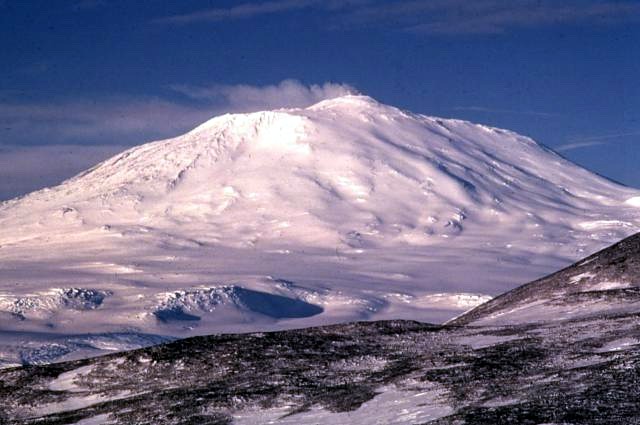
Within minutes the aircraft failed to appear over the Sound. Attempts to contact the crew were unsuccessful. After several hours of uncertainty, search aircraft discovered the wreckage of the DC-10 on the northern slopes of Mount Erebus at approximately 1,500 feet above sea level.
The impact occurred at approximately 12:50 pm, only five minutes after the last radio call.
The Mystery: Why Did the Aircraft Hit the Mountain?
Initial assumptions suggested the aircraft had flown into cloud. However, evidence recovered from the wreckage quickly raised serious questions.
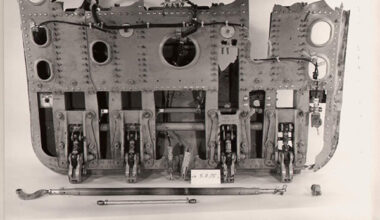
Investigators recovered both the cockpit voice recorder (CVR) and digital flight data recorder (DFDR), which documented the aircraft’s speed, altitude, and flight path. Hundreds of passenger cameras were also recovered from the wreckage, many still containing exposed film.
Photographs taken by passengers seconds before impact revealed a critical fact: the aircraft had been flying in clear air, not cloud. Visibility extended for many miles across the Ross Sea and surrounding mountains.
Data from the flight recorders showed the aircraft had been flying straight and level at approximately 260 knots when it struck the mountain. The cockpit voice recorder confirmed that none of the five people on the flight deck saw Mount Erebus before impact.
The Navigation Error
Flight recorder data revealed another critical discovery: the aircraft was not flying down McMurdo Sound as the crew believed. Instead, it was on a course approximately 27 miles east of the intended route, placing it directly on a collision path with Mount Erebus.
The DC-10’s navigation system relied on the Inertial Navigation System (INS), which guided the aircraft along pre-programmed coordinates. The Mahon investigation determined that the flight’s coordinates had been changed shortly before departure without the knowledge of the flight crew, shifting the route toward Mount Erebus rather than through the center of McMurdo Sound.
Believing they were flying safely down the flat expanse of the Sound, the pilots continued descending toward what appeared to be open terrain.
The Antarctic “Whiteout” Illusion
Another factor identified in the report was a visual phenomenon known as sector whiteout. Under certain Antarctic conditions, snow-covered terrain and overcast skies merge visually, making mountains nearly indistinguishable from the surrounding landscape.
In such conditions, even in otherwise clear air, a mountain can appear as a continuation of the distant horizon. The Mahon Report concluded that this optical illusion likely prevented the crew from recognising the rising terrain ahead.
Controversy and the Mahon Findings
The Royal Commission ultimately concluded that the accident resulted from a combination of navigation errors, operational failures, and inadequate briefing procedures.
Justice Mahon also criticized Air New Zealand’s handling of the investigation, famously accusing the airline of presenting a “concerted litany of lies” to conceal the route change that had occurred prior to the flight.
The report sparked intense debate within aviation circles and the New Zealand government. Although later legal challenges modified some of Mahon’s findings, the report fundamentally changed the narrative of the disaster.
Legacy of the Erebus Disaster
The Mount Erebus crash remains one of aviation’s most studied accidents. It led to improvements in:
- flight planning procedures
- navigation system verification
- crew briefing protocols
- awareness of Antarctic visual illusions
Today, the Erebus disaster stands as a powerful reminder that even modern aircraft equipped with advanced navigation systems can be vulnerable when human factors, environmental conditions, and procedural errors intersect.