The Digital Data Bus That Standardised Modern Avionics
In modern aircraft cockpits, dozens of electronic systems continuously exchange data. Navigation computers communicate with autopilots, air data systems feed flight displays, and flight management systems supply guidance information to the aircraft’s flight controls. Behind this seamless flow of information lies one of the most important yet largely invisible technologies in aviation: the ARINC 429 digital data bus.
Introduced in the late 1970s, ARINC 429 became the standard method for transmitting digital data between avionics systems, shaping cockpit design for more than four decades. Even today, despite newer networking technologies, ARINC 429 remains one of the most widely used avionics data buses in the world.
The Problem: Early Avionics Integration
Before the 1970s, aircraft avionics systems were largely independent units.
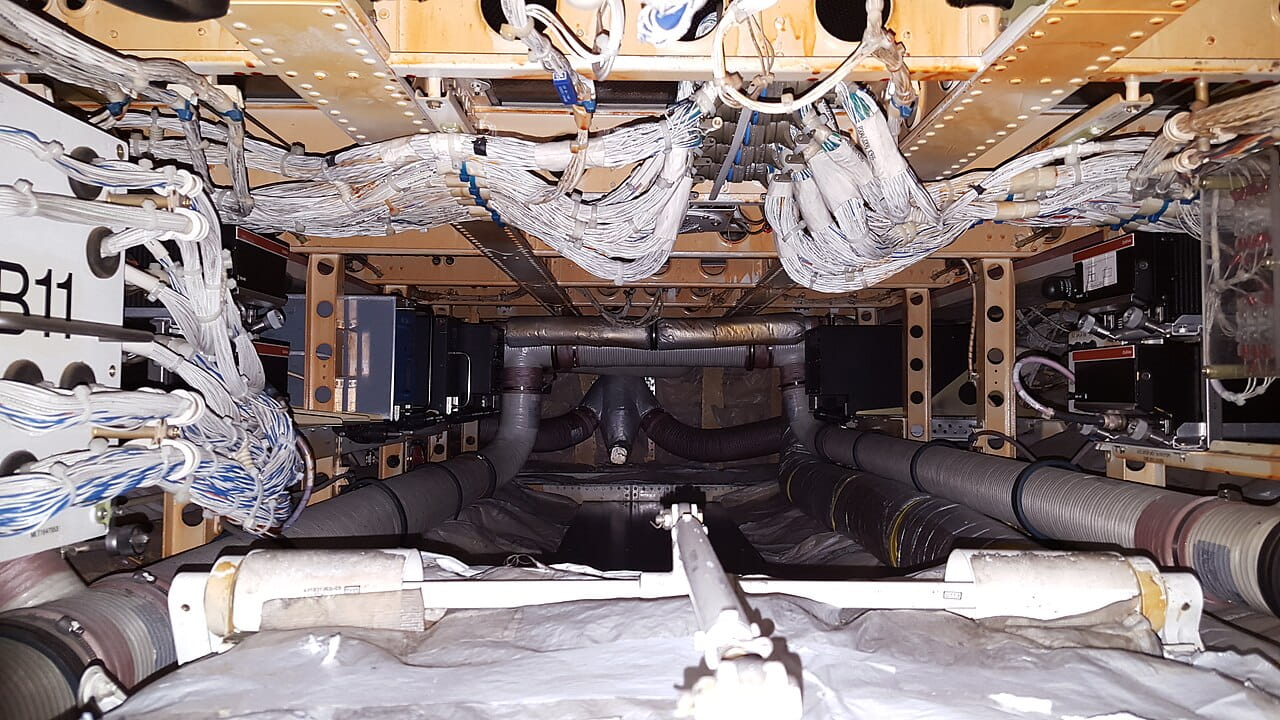
Each system navigation radios, autopilots, flight instruments, weather radar, and engine instruments operated as a stand-alone component. Communication between systems relied primarily on analogue electrical signals, resolver outputs, or discrete wiring connections.
This architecture created several problems:
- extremely complex wiring harnesses
- incompatibility between different avionics manufacturers
- limited ability for systems to share data
- difficulty integrating new digital equipment
As aircraft avionics grew more sophisticated, manufacturers needed a standard digital communication system capable of linking multiple electronic systems together.
The Role of ARINC
The solution came from ARINC (Aeronautical Radio Incorporated).
ARINC was originally formed in 1929 by major U.S. airlines to manage radio communications and develop technical standards for the aviation industry.
Over time ARINC became responsible for publishing the technical specifications that allowed avionics equipment from different manufacturers to interoperate reliably.
These standards became known as ARINC Specifications, covering everything from avionics rack sizes to digital communication protocols.
By the 1970s, ARINC engineers began developing a standard digital data bus for avionics systems, which would become ARINC 429.
Early Digital Data Coding and the “2-Out-of-5” Influence
Before modern digital data buses existed, engineers had already experimented with various error-resistant coding methods used in early computing and industrial control systems.
One of these was the “2-out-of-5 code”, a binary-coded decimal system in which exactly two bits out of every five are set to ‘1’. This system was used in 500 Series Avionics and is common on aircraft such as DC-9 and Boeing 747-Classic and 727.
This coding method had an important advantage: it allowed simple error detection because any invalid combination that did not contain exactly two active bits could immediately be recognised as corrupted data.
Systems based on 2-out-of-5 logic were widely used in early digital equipment, including punch-card systems and industrial communication networks during the 1950s and 1960s.
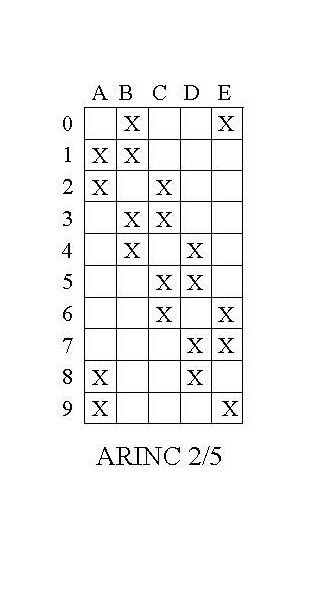
Although ARINC 429 ultimately adopted a different digital word structure, the underlying design philosophy remained the same:
simple coding, strong error detection, and highly reliable data transmission.
These principles were critical in aviation, where data integrity and reliability are essential for safe flight operations.
The Introduction of ARINC 429
ARINC formally introduced ARINC Specification 429 in 1977.
The new system defined a two-wire digital communication bus specifically designed for aircraft avionics.
The design priorities were:
- reliability
- simplicity
- compatibility across manufacturers
- minimal wiring complexity
ARINC 429 quickly became the dominant avionics data standard used in commercial aircraft.
How ARINC 429 Works
ARINC 429 is a simple point-to-point digital communication system.
Each transmitter sends data across a twisted pair of wires to multiple receiving systems.
Key characteristics include:
- Unidirectional communication
- One transmitter per bus
- Up to 20 receivers
- 32-bit data words
Because communication is one-way, devices that both send and receive information must use two ARINC channels.
This architecture simplifies system design and increases reliability.
The ARINC 429 Data Word
All information transmitted on the bus is sent as 32-bit digital words.
Each word contains several sections:
| Field | Function |
|---|---|
| Label | Identifies the type of data |
| Source/Destination Identifier | Identifies system origin |
| Data | The numerical value being transmitted |
| Sign/Status Matrix | Indicates validity and status |
| Parity | Error detection |
The label field tells receiving systems what type of data is being transmitted.
Examples include:
- airspeed
- altitude
- heading
- navigation data
- engine parameters
This system allows many avionics systems to share the same communication standard.
Data Transmission Speed
ARINC 429 operates at two data rates:
- Low speed: 12.5 kbps
- High speed: 100 kbps
Although slow compared with modern computer networks, these speeds are ideal for the relatively small amounts of data transmitted between avionics systems.
The lower speeds also help reduce electromagnetic interference, an important consideration in aircraft electrical systems.
Aircraft That Introduced ARINC 429
The introduction of ARINC 429 coincided with the emergence of digital avionics and glass cockpits.
Aircraft that incorporated early ARINC-based avionics architectures included:
- Boeing 757
- Boeing 767
- Airbus A310
- Airbus A320
These aircraft required reliable communication between systems such as:
- flight management computers
- autopilot systems
- navigation radios
- electronic flight displays
ARINC 429 provided the common digital language needed to connect these systems.
Limitations of ARINC 429
Despite its success, ARINC 429 has some limitations.
Because the system uses unidirectional communication, complex avionics systems require many separate data buses.
The relatively low data rate also limits the volume of data that can be transmitted.
As avionics technology evolved, newer communication systems were developed to address these limitations.
The Evolution of Avionics Data Networks
Several newer avionics data systems have since emerged:
ARINC 629 – used on the Boeing 777
AFDX (ARINC 664) – used on the Airbus A380 and A350
These systems support higher data rates and more complex network architectures.
However, ARINC 429 remains widely used because of its simplicity, reliability, and proven performance.
ARINC 429 Today
More than four decades after its introduction, ARINC 429 continues to operate in thousands of aircraft worldwide.
It remains the standard interface for transmitting information such as:
- air data parameters
- navigation information
- engine monitoring data
- flight guidance commands
Because of its reliability, avionics manufacturers continue to support ARINC 429 in both new and legacy systems.
The Legacy of ARINC 429
ARINC 429 played a critical role in the transition from analogue cockpits to the fully digital flight decks found in modern aircraft.
By providing a reliable and standardised communication system, it allowed complex avionics systems from different manufacturers to work together seamlessly.
Even as newer network technologies emerge, ARINC 429 remains one of the most enduring and influential technologies in aviation electronics.
Graphic By Sk3lm – Own work, CC BY-SA 4.0,