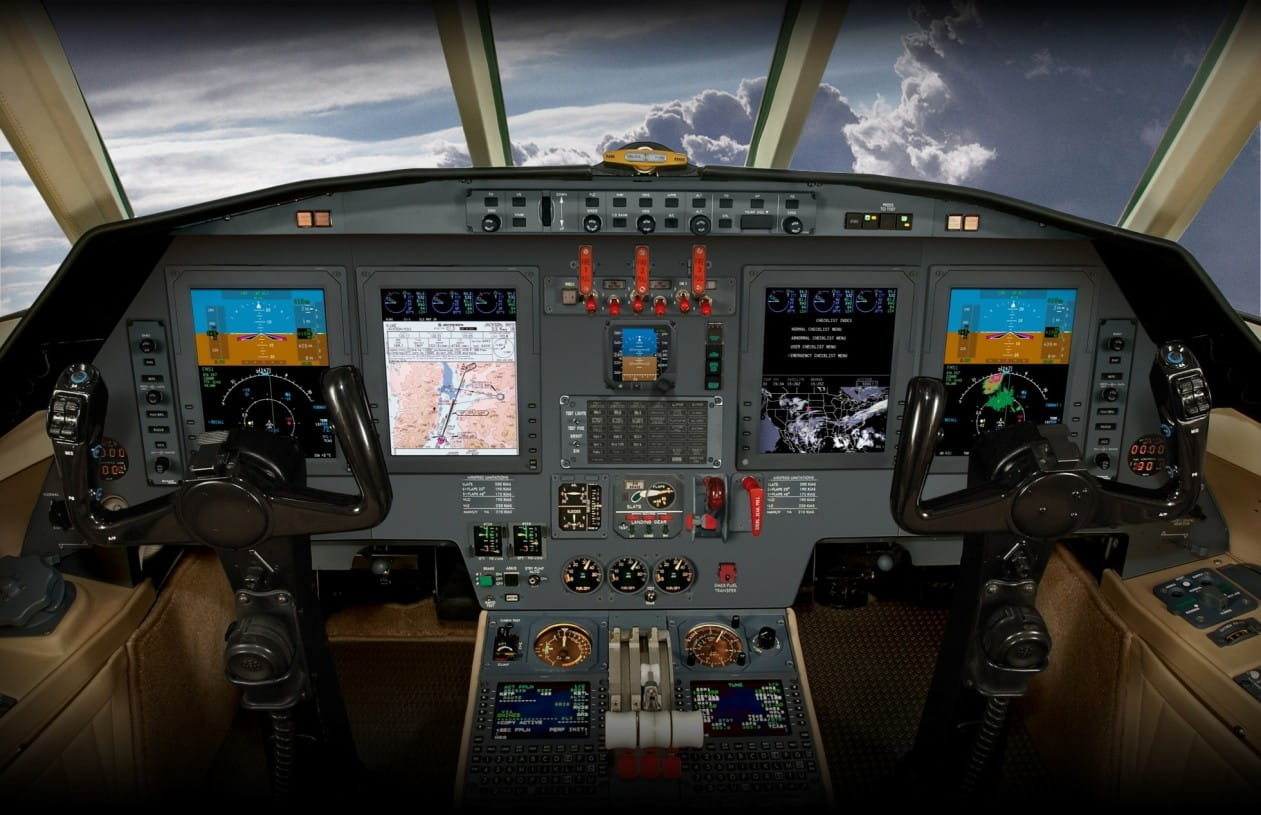
How Flight Deck Displays Evolved from Cathode Tubes to Modern Glass Cockpits
For much of the late twentieth century, the glowing green and amber screens of CRT displays defined the look of the modern aircraft cockpit. Introduced during the late 1970s and early 1980s, Cathode Ray Tube (CRT) displays replaced traditional mechanical instruments and marked the beginning of the digital glass cockpit era.
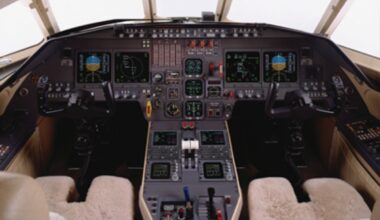
Aircraft such as the Boeing 747-400, Boeing 757, Boeing 767, early Airbus A320, Airbus A330, Saab 340, Dash 8, and many business jets adopted CRT-based Electronic Flight Instrument Systems (EFIS). These displays revolutionized flight deck design by consolidating critical flight data onto electronic screens.
However, by the early 2000s, a new technology began to replace CRTs across the aviation industry: Liquid Crystal Displays (LCDs). The transition fundamentally changed cockpit architecture once again, improving reliability, reducing weight, and enhancing display capability.
The Birth of the Electronic Flight Display
Before digital displays appeared, aircraft cockpits were filled with dozens of electromechanical instruments.
Typical flight decks contained individual gauges for:
- airspeed
- altitude
- attitude
- heading
- vertical speed
- navigation information
Each instrument required mechanical components and complex wiring, increasing maintenance requirements and limiting the amount of information pilots could see at once.
The solution emerged through the Electronic Flight Instrument System (EFIS).
Instead of individual gauges, flight information could be displayed on electronic screens that combined multiple instruments into a single display.
Why CRT Displays Were Initially Ideal
When digital cockpits first appeared, Cathode Ray Tube technology was the most mature display technology available.
CRTs had several advantages that made them well suited to early avionics systems.
High brightness
CRTs produced extremely bright images that remained visible in direct sunlight an essential requirement for cockpit displays.
Smooth graphics
The technology allowed flight instruments to be displayed with smooth, continuous movement, closely mimicking the behavior of traditional mechanical gauges.
Mature electronics
By the 1970s, CRT technology had already been widely used in radar systems, television sets, and early computer displays, making it relatively reliable and well understood.
The First Generation of CRT Glass Cockpits
One of the most important milestones in cockpit display technology came with the introduction of the Boeing 757 and Boeing 767 in the early 1980s.
These aircraft used full EFIS flight displays and digital engine monitoring systems, allowing them to be flown by two pilots instead of three.
Other aircraft quickly followed.
Examples of CRT-based cockpits included:
- Boeing 757 and 767
- Airbus A310 and A320
- Saab 340
- Dash 8 turboprops
- numerous business jets using Collins Pro Line 2 & 4 avionics
These displays typically used shadow-mask CRT tubes, similar to those used in color television, but strengthened to withstand aircraft vibration and temperature variations.
The Limitations of CRT Displays
Despite their advantages, CRT displays had several significant drawbacks.
Size and weight
CRT units were bulky and heavy, requiring deep instrument panels to accommodate the display tubes.
Power consumption
CRTs required relatively high electrical power to operate, increasing aircraft electrical loads.
Heat generation
The displays produced significant heat, requiring cooling systems to prevent overheating.
Reliability issues
Over time, CRT displays could suffer from:
- brightness degradation
- color distortion
- Imprinting
- High Volt Power Supply Failure
These limitations became more significant as aircraft systems became increasingly digital.
The Arrival of LCD Technology
By the late 1990s, Liquid Crystal Display (LCD) technology had matured enough to be used in aviation applications.
LCD displays offered several important advantages over CRT technology.
Reduced weight
LCD panels were dramatically lighter than CRT displays, helping reduce aircraft weight and fuel consumption.
Lower power requirements
LCD displays consumed far less electrical power, improving overall system efficiency.
Improved reliability
With fewer internal components and no electron gun, LCD displays proved more durable and required less maintenance.
Thinner display panels
The shallow depth of LCD displays allowed cockpit panels to be redesigned with greater flexibility.
The First LCD Glass Cockpits
As LCD technology improved, aircraft manufacturers began transitioning away from CRT displays.
Early aircraft to adopt LCD flight decks included:
- Boeing 777
- Airbus A340-500/600
- later versions of the Airbus A320 family
These aircraft demonstrated that LCD displays could meet the demanding brightness and reliability requirements of commercial aviation.
Enhanced Display Capability
LCD technology also enabled significant improvements in display functionality.
Modern LCD cockpit displays can present:
- high-resolution navigation maps
- weather radar overlays
- terrain awareness data
- traffic information
- flight management data
These features provide pilots with far greater situational awareness than earlier CRT-based systems.
The Modern “Large Format Display”
Today’s aircraft use large-format LCD screens that combine multiple functions into a single display unit.
Examples include:
- Boeing 787 flight deck displays
- Airbus A350 cockpit displays
- Collins Pro Line Fusion systems used in business jets
These displays often incorporate touchscreen interfaces and advanced graphics processing, allowing pilots to interact with aircraft systems in ways that were impossible in earlier cockpits.
The End of the CRT Cockpit
By the early 2000s, CRT displays had largely disappeared from new aircraft production.
Many older aircraft still operate with CRT displays today, but most have undergone cockpit modernization programs that replace the original CRT units with LCD displays.
These upgrades improve:
- reliability
- maintenance costs
- pilot interface design
The Legacy of CRT Displays
Although largely replaced, CRT technology played a crucial role in aviation history.
It enabled the transition from mechanical cockpits to digital flight decks, paving the way for the advanced avionics systems used today.
Aircraft such as the Boeing 757 and 767 demonstrated how electronic displays could dramatically improve cockpit efficiency and situational awareness.
Without the CRT era, the fully digital cockpits of modern aircraft would not exist.
From Analog Gauges to Digital Flight Decks
The evolution of cockpit displays reflects the broader technological development of aviation.
The progression has moved through three major stages:
- Mechanical instruments (pre-1970s)
- CRT electronic displays (1980s–1990s)
- LCD glass cockpits (2000s–present)
Each step brought significant improvements in safety, efficiency, and pilot workload.
Today’s modern airliners rely on sophisticated digital displays that integrate navigation, weather, aircraft systems, and flight management into a seamless cockpit environment.
But the origins of that system trace directly back to the glowing CRT displays that first introduced pilots to the world of the glass cockpit.