Keeping the First Glass Cockpits Alive
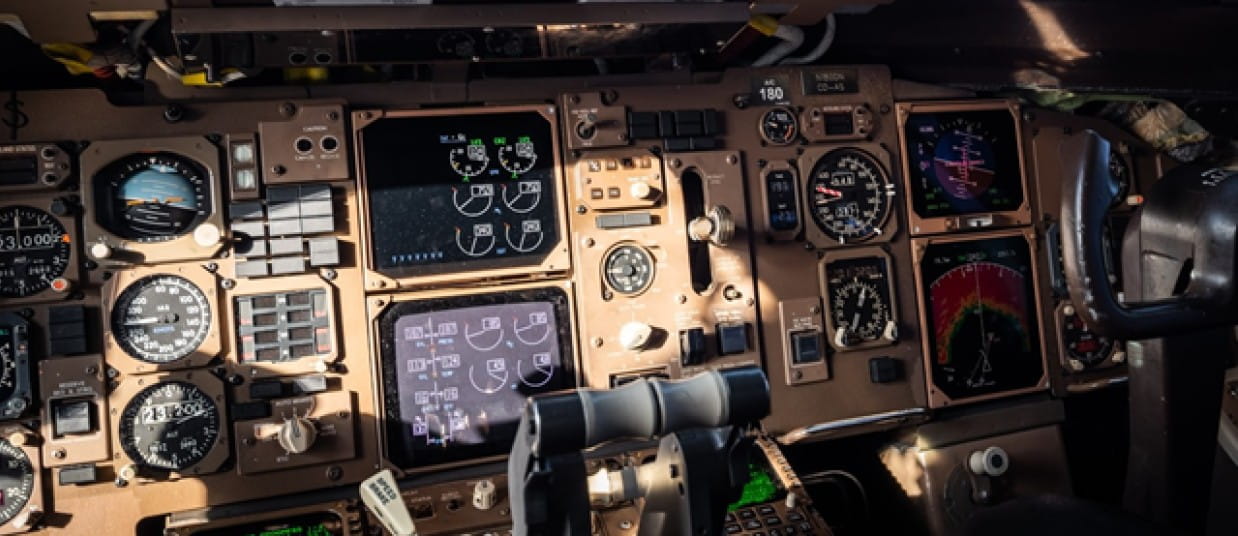
When the Boeing 757 & 767 entered airline service in the early 1980s, they introduced one of the most revolutionary flight deck technologies in aviation history: the glass cockpit.
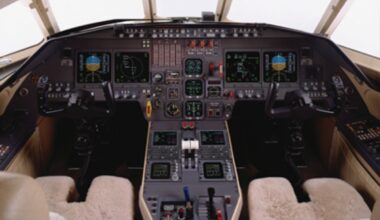
Developed with the Collins Electronic Flight Instrument System (EFIS) and Engine Indication and Crew Alerting System (EICAS), these aircraft replaced dozens of traditional gauges with full-color CRT (Cathode Ray Tube) displays.
The system dramatically improved situational awareness and allowed the aircraft to be operated by two pilots instead of three, eliminating the flight engineer position.
But the technology came with an unexpected operational problem: CRT burn-in.
The Problem with CRT Displays
CRT displays operate by firing an electron beam at a phosphor-coated screen, creating light where the beam strikes.
Over time, if the same image remains on the screen for long periods, the phosphor can degrade unevenly. This leads to:
- burn-in
- image imprinting
- brightness loss
In aviation cockpits, this was particularly problematic because certain symbology remained static for long periods.
Examples included:
- the attitude indicator horizon line
- airspeed and altitude tapes
- navigation display compass roses
- engine parameter scales
After several years of service, these images could become permanently etched into the display surface, even when the screen changed modes.
Early Airline Experience
During the 1980s many airlines discovered that CRT displays in early glass cockpits required frequent replacement.
Some early CRT displays lasted only three to five years before burn-in became noticeable.
For airlines operating large fleets of aircraft such as:
- Delta Air Lines
- United Airlines
- American Airlines
- FedEx
- UPS
this created significant maintenance costs.
CRT units were expensive and removing them required avionics technicians and aircraft downtime.
Software Solutions
One of the first ways engineers addressed the burn-in issue was through software modifications.
Avionics manufacturers introduced subtle changes that prevented symbology from remaining perfectly static.
These techniques included:
Pixel shifting
Display symbols were moved slightly by a few pixels over time, so small that pilots could not detect the movement. This technique was known as dithering.
This prevented any single point on the phosphor screen from receiving continuous exposure.
Alternating display elements
Certain graphics were redrawn slightly differently between screen refresh cycles.
This distributed the electron beam across a wider area of the screen.
Brightness Management
Another solution involved automatic brightness control.
High brightness levels accelerate phosphor wear.
To reduce this effect, avionics systems began incorporating:
- automatic dimming at night
- ambient light sensors
- brightness limiting during low-light conditions
This extended the life of CRT displays significantly.
Scheduled Display Rotation
Airlines also introduced maintenance procedures to manage display wear.
In many fleets, cockpit displays were periodically rotated between positions.
For example:
- captain side display
- first officer side display
- center display units
Because different screens displayed slightly different symbology, rotating them helped distribute wear more evenly.
Improved CRT Technology
Later versions of CRT displays also improved the technology itself.
Manufacturers introduced:
- longer-life phosphor coatings
- better electron beam control
- improved cooling systems
These upgrades increased the lifespan of many CRT displays to eight years or more in some aircraft.
The Transition to LCD Displays
Despite these improvements, CRT displays still had inherent limitations.
They were:
- heavy
- power-hungry
- sensitive to burn-in
- expensive to maintain
By the late 1990s and early 2000s, aircraft manufacturers began transitioning to LCD flight displays, which solved many of these issues.
LCD displays offered:
- lower power consumption
- lighter weight
- improved reliability
- no phosphor burn-in
Many airlines eventually replaced CRT displays in older aircraft with LCD retrofit upgrades.
Why the 757 and 767 Still Fly Today
Despite their early display challenges, the Boeing 757 and 767 proved remarkably durable aircraft.
Their glass cockpits once considered revolutionary became the blueprint for modern flight decks.
Many aircraft still flying today have undergone cockpit modernization programs, replacing the original CRT units with modern LCD displays.
This allows these aircraft to continue operating efficiently well into the twenty-first century.
A Transitional Technology
CRT flight displays represent an important chapter in aviation history.
They were the technology that allowed aviation to move from:
analog cockpits → digital flight decks
While eventually replaced by LCD technology, CRT displays proved that fully electronic instrument panels were viable and in doing so, helped launch the modern era of aviation avionics.