Summary
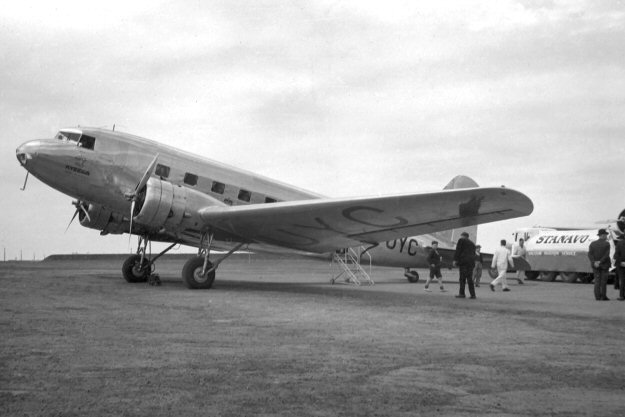
The crash of the DC 2 Kyeema VH-UYC in the Dandenong Ranges on 25 October 1938 marked a significant moment in Australian aviation history. Although not the nation’s first fatal accident, it was the first involving an aircraft that remained in radio communication up to the moment of impact. A public inquiry examined whether delays in commissioning the 33 MHz radio range, or deficiencies in ground-air communication, contributed to the tragedy.
The Kyeema Crash: A Tragic First in Radio Communication
The loss of Kyeema in the Dandenong Ranges, while not the first fatal accident in Australian aviation history, was unique in that it was the first aircraft in radio communication up to the time of the disaster. Previous aircraft that had come to grief either did not carry a radio, or if they did, such as the Holyman DH86 in Bass Strait and the DH86 crash at Longreach on its delivery flight to Qantas, whatever caused the crash happened so suddenly that no message was transmitted before impact.
The Public Inquiry and the 33 MHz Radio Range
The public enquiry set up to investigate the Kyeema disaster was given wide powers to determine whether the Government had been in any way responsible for the delay in commissioning the 33 MHz radio range, and whether changes could be introduced to improve the ground-air-ground communication system.
The Cross-Examination of Bill Cridge
Bill Cridge, the AWA operator on duty at VML on the day of the crash, spent a considerable time being cross-examined. It was inferred by Counsel assisting the Chairman that, had Bill given Mick a bearing when he requested the weather report, the crash may have been averted.
Bill maintained that Mick had only said he may require a bearing, and this was confirmed by the radio logs from Launceston and Albury. He stated that had Mick requested a bearing he would have taken one and alerted Kyeema to the fact that she was east of the airport and not 30 miles west as the pilot believed.
When asked whether such a bearing would have been accurate, Bill replied, “Yes, within one or two degrees.” Asked further if such a bearing could be 180 degrees in error, he said this was impossible.
He was then questioned about a recent incident involving Captain John Chapman (later Assistant General Manager of TAA), who had been given a bearing placing his position south of Essendon when in fact he was north and dangerously close to Mount Macedon. A crestfallen Bill admitted recalling the incident and conceded that, on that occasion, he had failed to switch the “sense” control, assuming Chapman was on his normal track from Launceston.
Criticism of the Civil Aviation Board
Another witness critical of the Civil Aviation Board was Harry Purvis, one of A.N.A.’s senior pilots, later retired and flying charter tours from Alice Springs. Purvis blamed the Board for dismantling the low-frequency radio range that AWA had installed at Brighton.
He cited a flight to Sydney in low overcast conditions, with a reported ceiling at Mascot of 400 feet, and argued that locating Mascot would have been far easier had the Brighton range still been operating. Counsel assisting the Panel pointed out that ANA regulations prohibited an instrument approach when the ceiling was below 500 feet and asked why he had not turned back at Albury when advised of the 400-foot ceiling.
Purvis admitted he had believed Sydney’s minimum was 400 feet and conceded that he had made an error.
A Shift Away from the Central Question
As proceedings continued, the cross-examinations developed into something of a contest, with both sides engaging in a game of cat and mouse. Attention increasingly shifted toward delays in commissioning the 33 MHz range, alleged deficiencies in meteorological reporting, inadequate route maps, and the burden of cockpit workload.
In the process, the central issue the fundamental cause of the Kyeema disaster risked being overshadowed.
Squadron Leader “Stiffy” Wiggins Takes the Stand at the Kyeema Inquiry
However when “Stiffy” Wiggings took the witness box stand, it became evident that proving the accuracy of the system was the prime reason for the apparent delay in commissioning any leg of the 33 MHz radio range system, which had been operating at Essendon since November 1936. He tore to shreds, the criticism levelled at the Board for its refusal to allow pilots to navigate using the range, even though only two or three aircraft had the range receivers installed.
The evidence of Squadron Leader (“Stiffy”) Wiggins in the witness box at the public enquiry into the Kyeema disaster effectively buried the hopes of those who believed cross-examination would reveal inexcusable procrastination on the part of the Government and the Civil Aviation Board, Department of Defence, in testing and commissioning the 33 MHz two-course visual aural radio range system. This system was destined to become Australia’s primary short-range aeronautical navigation aid for many years.
Delays in Commissioning the 33 MHz Radio Range
While there was little doubt that Cabinet’s decision to approve the purchase of only a modern high-speed British-designed aircraft to flight test the beacons delayed the evaluation of the AWA prototype receivers, the simple reality was that no suitable British aircraft existed for the task in 1937.
“Stiffy” remained firm in his position that thorough and complete testing of both ground systems and airborne equipment was essential before the Board would allow pilots to fly “blind” with passengers aboard.
Lessons from America: The Dangers of Flying the Beam
Wiggins cited cases in the United States involving the four-course medium-frequency aural radio range. In those instances, incomplete testing and propagation anomalies had led to course bending and beam splitting. Pilots, confident they were accurately “flying the beam,” had inadvertently flown into mountainous terrain, unaware that signal distortion was leading them toward disaster.
The implication was clear: premature reliance on unproven systems could prove fatal.
Prototype Receivers and Technical Challenges
At the time of the Kyeema crash, AWA had installed only two prototype receivers in aircraft. Furthermore, engineers had not yet perfected a satisfactory audio automatic volume control (AVC) circuit a critical component. Without it, pilots would either be forced to constantly adjust the volume control or risk dangerously loud audio signals when approaching a beacon.
The system, while promising, was still under development.
Engineering from Scratch: AWA’s Position
In response to questioning from Counsel, Wiggins denied that AWA was failing in its efforts to overcome the technical challenges inherent in designing a complex receiver from scratch. He argued that until prototype receivers were fully flight-tested and formally approved by the Board, there was little justification for commencing full-scale production.
Certification and reliability, he insisted, had to precede manufacture.
Statements That Echo Through Aviation History
During cross-examination, Wiggins made two remarks that remain striking decades later.
When asked whether the 33 MHz radio beam would significantly enhance aviation safety, he replied simply:
“Science cannot do enough for aviation.”
When further questioned whether an aircraft fitted with a range receiver and the new left-right indicator radio compass would represent the most advanced equipment modern radio science could provide, he responded:
“I know of nothing which could possibly be added.”
The Board of Enquiry’s Findings on the Kyeema Disaster
The finding of the Board of Enquiry was to the effect that had the Kyeema been fitted with a range receiver, the disaster would not have occurred, but that no blame could be attached to the Civil Aviation Board for the delay in commissioning the beacons. The Board further recommended having the ground radio operator in the same building as the Control and Meteorological staff, and urged the Civil Aviation Board to bring the 33 MHz radio range system into service with the least possible delay.
Immediate Action: Accelerating the 33 MHz Radio Range Testing
On the very day of the crash, an officer of the Treasury Department signed a contract with Guinea Airways for the hire (he may even have travelled to Adelaide on Kyeema that morning) of a Lockheed 10. The aircraft was flown to Essendon the following day, and the propellers had hardly stopped turning when the AWA engineers were installing one of the prototype range receivers, enabling the Civil Aviation Board to accelerate testing of both the airborne receiver and the ground beacons.
The Lasting Legacy of the Kyeema Tragedy
The tragedy of the Kyeema finally impressed upon the aviation industry the reality that, as man is not infallible, science must design systems that, as far as possible, ensure accurate navigation from point A to point B. AWA was destined to play a leading role in the development and manufacture of these navigation systems, shaping the future of Australian aviation safety.
This material is published here for the first time and remains the intellectual property of FlyingTin.com In presenting this account, we honour and respectfully remember those who lost their lives in the tragedy.
There were 18 people on board the DC-2: 14 passengers, the captain, the first officer, an air hostess, and a cadet pilot from ANA’s aeronautics school who operated the radio during the flight.
Crew
- A. C. D. Webb, Captain, aged 32.
- Alan J. Steen, Junior Captain, aged 25.
- Elva Jones, air hostess, aged 27.
- Philip D. Pring, cadet pilot
Passengers
- Charles Hawker MHR, aged 44.
- Leonard Sydney Abrahams, aged 51.
- Sidney Hill Smith, aged 41.
- Alfred Cecil Gain, aged 42.
- Gordon H. Goddard, aged 30.
- Lancelot (Lance) William Shirley, aged 27.
- James Ian Massie, aged 25.
- Vaughan Pate, aged 42.
- Thomas M. Hardy, aged 48.
- George William Ling, aged 72.
- Louis Hugo Gramp, aged 43.
- Elizabeth Mary Schrader, aged 69.
- Mr. and Mrs. Hands L. Gloe.[3]