Why Private Jet Demand Surged as Airlines Collapsed
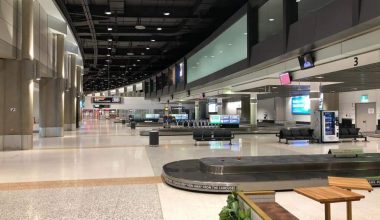
When COVID-19 triggered the largest contraction in commercial aviation history, scheduled airlines reduced capacity by up to 90% in some markets. International networks fragmented, hub operations stalled, and frequency became unpredictable.
Yet while commercial aviation contracted, business aviation expanded.
The surge in private jet demand during the pandemic was not driven solely by luxury. It was driven by control control over exposure, scheduling, routing, and operational continuity.
Impact of COVID-19 on Business Jets: A Counter-Cyclical Response
The impact of COVID-19 on business jets contrasted sharply with its effect on airlines. While global passenger traffic declined by more than 60% in 2020, private aviation operators reported significant increases in charter enquiries.
Several operators reported triple-digit percentage growth in booking requests compared with early-pandemic lows. A notable proportion of these enquiries came from first-time private flyers individuals who had previously relied exclusively on commercial airlines.
The shift was structural rather than cosmetic. Corporate travel departments, high-net-worth individuals, and government agencies sought mobility without exposure to crowded terminals and unknown passenger cohorts.
Why Private Jet Demand Increased During the Pandemic
Several factors explain the increase in private jet demand during COVID-19:
1. Reduced Exposure Risk
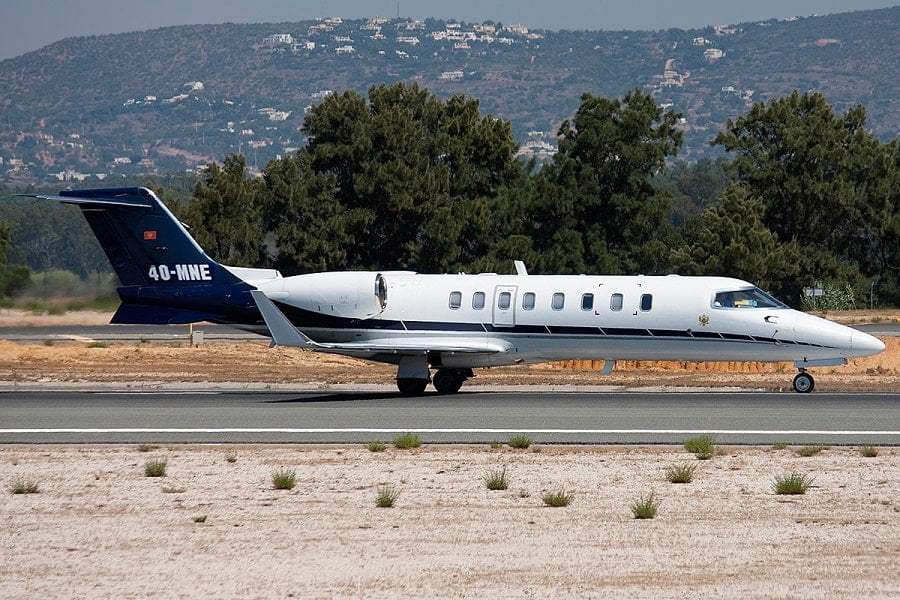
Business jets operate through Fixed Base Operators (FBOs), separate from main passenger terminals. Passenger lists are controlled, contact points are limited, and cabin density is lower.
2. Network Flexibility
Unlike commercial airlines, private jets are not tied to hub-and-spoke networks. Operators can fly direct, point-to-point routes, bypassing congested hubs.
3. Schedule Control
With airline frequencies unpredictable, charter operators could depart according to client timelines rather than fixed timetables.
4. Access to Secondary Airports
Business jets can operate from smaller airports closer to final destinations, reducing ground travel and terminal exposure.
In a period defined by uncertainty, autonomy became a premium commodity.
Commercial Airlines vs Private Aviation During COVID-19
Commercial airlines depend on high passenger load factors and coordinated global networks to achieve profitability. When borders closed and demand collapsed, these economics broke down.
Business aviation operates under a different model:
- Revenue is generated per aircraft movement, not per seat
- Smaller aircraft reduce break-even thresholds
- Clients value speed and flexibility over ticket price
This structural distinction explains why business aviation demonstrated relative resilience while scheduled airlines struggled.
Business Jet Charter Growth 2020 and New Client Acquisition
One of the most significant outcomes of the pandemic was the influx of new users into private aviation.
Operators reported that many 2020 clients had never previously chartered a private jet. For some, this represented a temporary solution to network collapse. For others, it introduced a new travel model.
Charter growth supported ancillary sectors including:
- Aircraft brokerage
- Fractional ownership programmes
- Jet card membership schemes
- Flight crew employment
The long-term retention of these first-time clients will determine whether the surge represents cyclical demand or structural expansion.
Business Jet MRO Market Growth and Operational Spillover
Increased utilisation rates have implications beyond charter revenue. Higher flight hours drive growth in the business jet Maintenance, Repair and Overhaul (MRO) sector.
Pre-pandemic forecasts projected global business aviation MRO revenues approaching US$4–5 billion within the mid-2020s. Sustained utilisation growth may accelerate that trajectory.
The resilience of the business jet MRO market during COVID-19 highlights how decentralised aviation segments can stabilise broader industry downturns.
V-Shaped Recovery for Business Aviation?
Many analysts predicted a V-shaped recovery for business aviation a faster rebound compared with commercial airlines’ prolonged recovery cycle.
However, long-term sustainability depends on several variables:
- Corporate travel policy evolution
- Global economic recovery
- Public health confidence
- Capital market conditions
If corporate travel budgets remain constrained, some pandemic-era private flying may recede. Conversely, if flexibility and risk control remain priorities, demand may stabilise at a higher baseline.
Structural Advantages of Business Aviation in Crisis
The pandemic highlighted inherent structural strengths in the business aviation model:
- Decentralised routing
- Lower passenger density
- Reduced reliance on major hubs
- Faster operational adaptation
Unlike airlines, which must coordinate global schedules and alliance networks, business jet operators can adjust quickly to demand shifts.
In systemic disruption, flexibility is resilience.
The Future of Business Aviation After COVID-19
As commercial aviation rebuilds, business jets continue serving high-value, time-sensitive segments. For corporations and government agencies, the ability to guarantee schedule integrity and minimise exposure remains attractive.
The key question is whether pandemic-era private jet growth represents:
- A temporary substitution effect
- Or a lasting rebalancing of premium travel demand
History suggests that once travellers experience operational control and flexibility, behavioural patterns can shift permanently.
Conclusion: Private Aviation as a Structural Outlier in the Pandemic
Business aviation during COVID-19 did not merely survive it operated counter-cyclically to the airline sector.
The surge in private jet demand during the pandemic was grounded in structural characteristics:
- Operational autonomy
- Network independence
- Controlled passenger environment
- Access flexibility
In a crisis that paralysed commercial aviation, business jets offered continuity.
Whether that continuity evolves into structural growth will shape the premium segment of global aviation for years to come.