Accident History of the GAF Nomad
The accident history of the GAF Nomad was shaped by a convergence of operational and statistical factors rather than a single defining flaw. The aircraft was primarily deployed in some of the world’s harshest aviation environments short and rough strips, mountainous terrain, jungle regions, maritime patrol zones, and remote logistics routes where low-level flying, high utilisation rates, and limited support infrastructure naturally increase risk exposure. Accident records show a concentration of engine-related events, alongside pilot error and a smaller number of structural failures. High-profile incidents, including the in-flight tailplane separation of RAAF A18-401, amplified safety concerns and affected public perception.
Operational realities also played a role. The Nomad was frequently used as a high-cycle “workhorse,” combining demanding STOL profiles, frequent take-offs and landings, and, in some cases, pilots with limited time on type. These thin-margin conditions made it more vulnerable to accumulating incidents compared with aircraft operating longer, less demanding sectors. With only around 170 aircraft produced, even a moderate number of fatal accidents translated into a high rate per airframe, magnifying its statistical footprint.
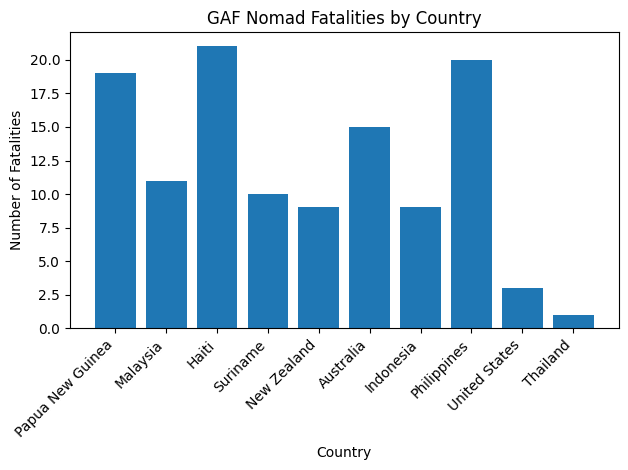
Geographically, fatalities were concentrated in Papua New Guinea, the Philippines, Haiti, Indonesia, and other frontier regions. Across all recorded events, total fatalities exceed 115 worldwide. In sum, the Nomad’s safety record reflects the interaction of mission profile, geography, utilisation intensity, and fleet size factors that together shaped its controversial legacy.
It was flown in the harshest mission set
The Nomad was built for short/rough strips, remote logistics, patrol, medevac, skydiving, and utility work exactly the kind of flying with higher baseline risk: low altitude, high cycles, heat/dust, minimal support, and frequent operations at the edge of performance.
A pattern of engine/propulsion issues in the accident record
A detailed Australian operator history argues the accident stats cluster heavily into engine failures, plus “pilot error” and a smaller number of structural failures (as categories found by the author when surveying incident reports).
Whether or not one agrees with every interpretation in that article, the broader point holds: if an aircraft type is widely used in regions with maintenance constraints and training variability, engine-related events can become disproportionately represented.
Some high-profile accidents involved structural or control issues
For example, ASN’s entry on the RAAF A18-401 accident explicitly notes that the tailplane broke off in flight. Even a small number of structural-loss events can loom large in reputation especially when they involve catastrophic failure modes.
Training/time-on-type and “thin margins” operations
The Nomad was often used as a “workhorse.” When operators combine:
- demanding STOL/low-level profiles,
- frequent takeoffs/landings,
- and pilots with limited time on type (a risk factor highlighted in the operator-history discussion),
…you can see how a type accumulates incidents faster than comparable aircraft mainly flying longer, more benign sectors.
Small fleet, big headline rate
As of May 2007 the Nomad had been involved in dozens of hull-loss accidents with dozens of fatalities. Because total production numbers were not huge, a moderate absolute number of losses can translate into a very high rate per airframe, amplifying its reputation.
Country-by-Country Fatality Breakdown
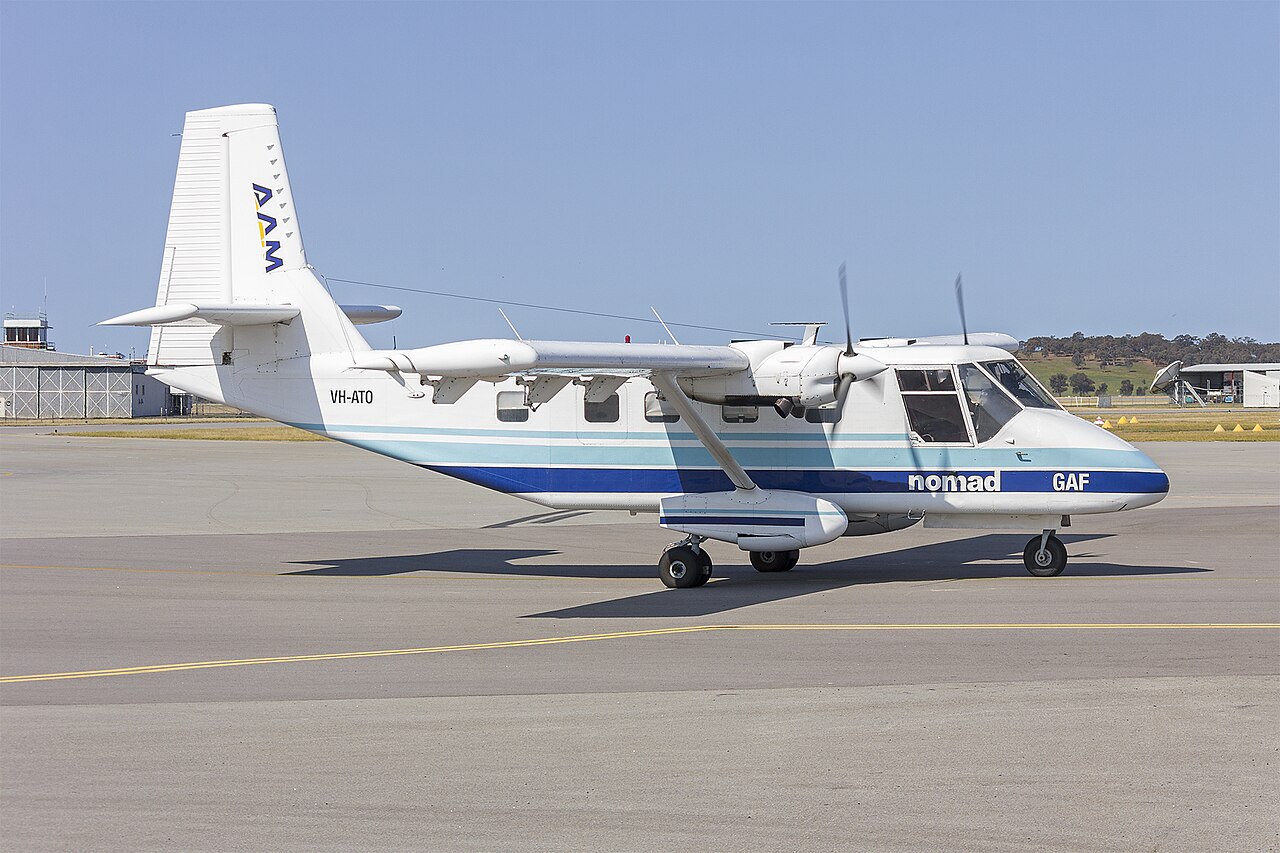
The GAF Nomad (N.22 and N.24 variants) was designed and built in Australia as a rugged STOL (Short Take-Off and Landing) utility aircraft. It operated in some of the world’s most demanding environments Papua New Guinea, Southeast Asia, the Pacific, remote Australia, the Caribbean, and beyond.
Over time, however, the Nomad developed a reputation for having a high accident rate relative to fleet size. Below is a country-by-country fatality summary.
Nomad Aircraft Fatalities by Country
| Country | Total Fatalities | Notable Accidents |
|---|---|---|
| Papua New Guinea | 19+ | 1979 Manari crash (16); 1981 PNGDF crash (2) |
| Malaysia | 11 | 1976 Sabah Air “Double Six” crash |
| Haiti | 21 | 1996 Port-au-Prince crash (10+); additional fatal events |
| Suriname | 10 | 2001 Gum Air crash |
| New Zealand | 9 | 1993 Franz Josef Glacier crash |
| Australia | 15+ | 1990 RAAF Mallala crash; 1991 Army training crash |
| Indonesia | 9+ | Indonesian Navy and patrol aircraft losses |
| Philippines | 20+ | Multiple Philippine Air Force fatal crashes |
| United States | 3 | 1990 Wilmington crash; 1998 Customs accident |
| Thailand | 1 | 2009 Royal Thai Air Force crash |
Estimated Total Fatalities Across All Countries: 115+