Introduction
As Australian aviation expanded beyond its pioneering years, the role of aviation radio evolved from experimental communication into a structured and regulated system essential to flight safety. Increasing air traffic, longer routes, and the growth of commercial aviation demanded reliable radio networks, standardised procedures, and coordinated ground infrastructure.
During this period, aviation radio in Australia moved toward formalisation, with dedicated frequencies, improved equipment, and the emergence of organised air traffic communication services. These developments laid the groundwork for modern air traffic control and transformed radio into a cornerstone of civil aviation operations.
This second part examines how aviation radio networks expanded across Australia, how standardisation improved safety and efficiency, and how radio communication became embedded in everyday flight operations.
Expansion of Aviation Radio Networks Across Australia
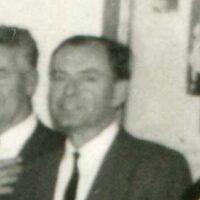
The first significant move towards establishing an aviation section was made with the transfer of Ted Betts from Braybrook to create an aviation radio service Depot at Essendon. This happened early in 1935. At the time, there was but one radio equipped aeroplane, but more were soon to follow.
In June of that year, Doug Wood was transferred from Ballan to open a servicing establishment at Mascot.
In the meantime, AWA had provided a low frequency D. F. station at Essendon and also was experimenting with a 4 course L.F. beacon, soon to be erected at Brighton – a few miles from Mascot Airport. Two radio stations were also in the course of construction. Gus Hart was operator in charge of the Essendon Station whilst Jack Christie operated the installation serving Mascot.
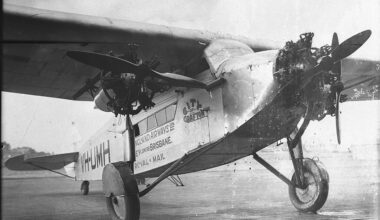
Doug. Wood’s duties consisted of maintaining the communication system installed in the Monospar Aircraft which would roar up and down Sydney’s beaches on Sundays – spotting sharks!
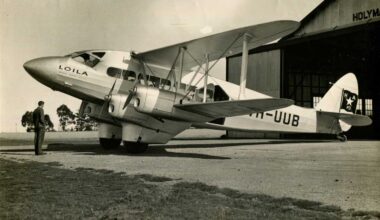
He also maintained the equipment in the Holyman Airways DH-84, flying between Melbourne and Sydney daily. His main duty at the time however, was installing the 4 course beacon at Brighton. He was to be joined in a few months by Bill Gibbings.
By this time the AWA had developed its first fully airborne communications apparatus – the type C155 three valve TRF receiver and the 0.110 transmitter were installed in several aircraft.
The appointment in mid 1936 of Hector Johnston as Superintendent marked the inauguration of the Aviation Department an organisation which despite setbacks and heavy financial losses was to proudly emerge in a foremost position in Australia’s aviation industry.
Foundation of The Aviation Department
Among the many problems to be resolved by the new Department were, the likelihood of increased airline activity, the provision of more aeradio stations and the establishment of additional servicing centres.
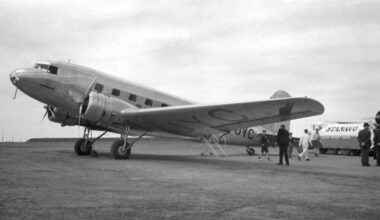
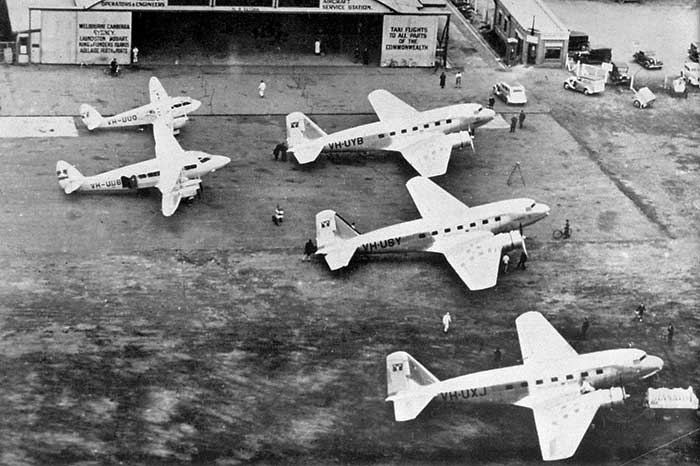
It became evident that when the new DC-2 machines and other modern aircraft were placed in Australian service, a new phase would begin. Airline routes would become longer, demanding more powerful and more sensitive airborne equipment’s, local servicing facilities would be required at many points, with a few route and terminal aeradio stations thrown in.
Technical Improvements in Aircraft Radio Equipment
With typical zeal Hector Johnston tackled the various tasks. Firstly, more staff had to be appointed then specifications were required for new airborne apparatus. Orders had to be raised on R.E.W. for its development and manufacture. As a temporary stop gap, A.W.A. car radio sets, were modified to cover both low frequency and the broadcast bands. This type of receiver replaced the C155 which had proved too insensitive over the longer airline routes.
Aviation Radio and the Development of Air Traffic Control
The immediate provision of more servicing centres plus additional Aeradio stations was a masterpiece of improvisation and ingenuity. Certain of the Company’s Coastal radio stations had been used in the past for communication with radio equipped aeroplanes. This scheme was extended – wherever such aircraft flew in Australia the pilots could exchange signals with Coastal Stations. Even Broadcasting Stations at one or two country centres were regularly impressed into service for ground-air communication. In those days the operators at aeradio and relevant Coastal Stations were also responsible for amassing and disseminating meteorological data.
To temporarily overcome the servicing problem, operators at various coastal stations were trained in aviation equipment maintenance and provided service whenever required. Thus was set the early pattern of the Aviation Department’s activities.
This article is part of the Flying Tin series on Aviation Radio in Australia.
Continue reading:
Aviation Radio History in Australia: The Origins of Aircraft Communication Part 1
Aviation Radio in Australia: Modernisation and VHF Communication Part 3
Aviation Radio in Australia: Regulation and Modern Airspace Communication Part 4
Photo courtesy of Geoff Goodall