Introduction
Aviation radio has played a defining role in the development of safe and reliable flight, particularly in a country as vast and sparsely populated as Australia. Long before satellite navigation and digital data links, early aircraft relied on basic radio communication to maintain contact with ground stations, coordinate air traffic, and navigate immense distances.
In Australia, the evolution of aviation radio was shaped by geography, isolation, and the demands of long-range flight. From early experimental systems to the establishment of civil aviation communication networks, radio became an essential foundation of Australian aviation safety and infrastructure.
This article explores the origins of aviation radio in Australia, examining the technical experiments, operational challenges, and institutional developments that laid the foundation for modern air traffic control. As the first part of a multi-part series, it focuses on the formative years when aviation radio was still an uncertain but transformative technology.
The Beginning
Few people are gifted with foresight! When in 1936 the Management of Amalgamated Wireless Australasia (AWA Ltd), decided to create an Aviation Department, perhaps only the Management and a few advisers could foresee the splendid role that the Company was destined to play in the future of the Aviation industry for the next 60+ years.
The story of aircraft radio in Australia is one of courage, vision, and confidence. It is also one of hard work, technical skill, and unprecedented enthusiasm. It rivals that of the airline industry itself who, but the most courageous businessmen, would have sufficient confidence in the future to pour capital into a struggling young industry during a great depression, knowing that returns could not be expected for many years, if at all?
Who, but the most enthusiastic technicians, would consistently work long hours on exacting work demanding new and hitherto unknown techniques. From such a background has the Aviation Industry developed, and from such a background has the AWA Aviation Department grown.
The history of aviation radio dates back many years before the formation of the Aviation Department – in fact, from the time the first paying passenger was carried in an aeroplane, the AWA was experimenting with apparatus for airborne use.
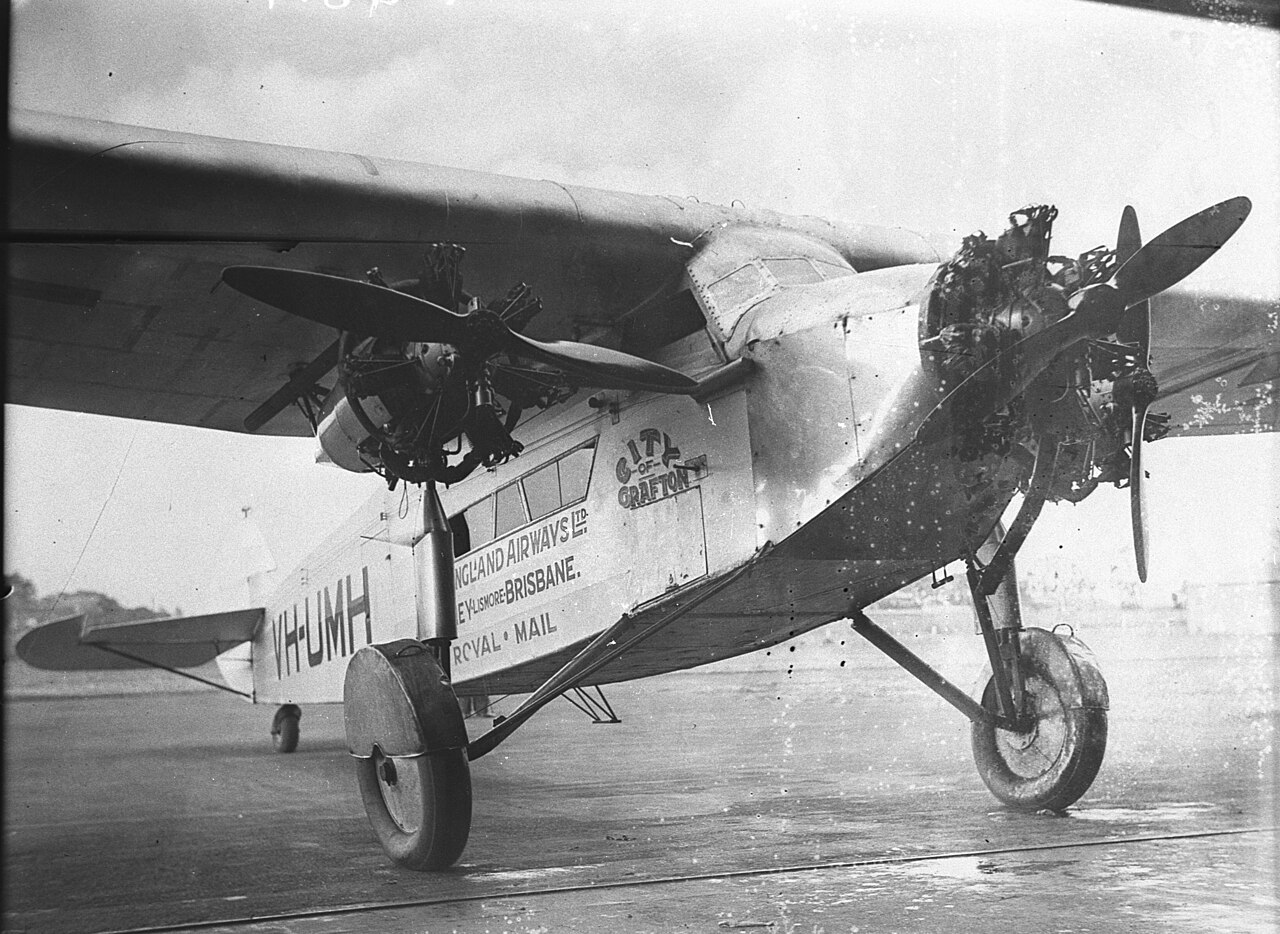
Who can imagine the feelings of Murray Johnson and Gordon Betteridge, when in the early infancy of civil aviation, they equipped with radio, the then Charles Kingsford-Smith’s fleet of AVRO 10’s?
Did they realise that they were striking the first blow in forging an industry within the great airline industry that Kingsford-Smith was founding?
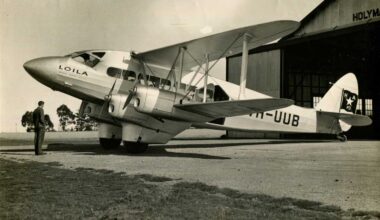
When in early 1935 Harry Lamb fitted equipment to a DH-84, owned by Holyman Airways Pty. Ltd. the second blow was struck.
These men can rightly be regarded as the true pioneers of aircraft radio in Australia.
Technical challenges
Many were the problems of the early aviation technicians. Notwithstanding their past experience in radio, new knowledge had to be acquired. Reliable text books were scarce – the technicians were to learn the hard way.
Interference due to the discharge of static electricity in the then, badly bonded airframe had to be painstakingly traced down and eliminated. The adjustment of comparatively crude communication apparatus to enable it to remain in tune under extremes of atmospheric pressure and temperature, had to be made by trial and error. Hazardous test flights were undertaken to observe and correct malfunctioning of equipment when airborne. Extraordinary precautions were necessary to safeguard the aircraft when lightning struck the trailing aerial. Protective devices were developed to prevent transmitters arcing over at high altitudes.
As receivers became more sensitive and ignition interference increased in intensity, technicians were to learn a lot about aircraft engines before the problem was solved. Knowledge was acquired of aerodynamics, navigation, engines, meteorology and airframes. A great sense of responsibility was developed and new standards were created in skill, and keenness.
Of such attributes were the men engaged in the companies’ early Aviation undertakings.
This article is part of the Flying Tin series on Aviation Radio in Australia.
Continue reading:
Aviation Radio in Australia: Network Expansion and Operational Maturity Part 2
Aviation Radio in Australia: Modernisation and VHF Communication Part 3
Aviation Radio in Australia: Regulation and Modern Airspace Communication Part 4
Photo courtesy of Mitchell Library, State Library of New South Wales