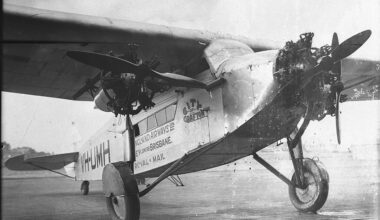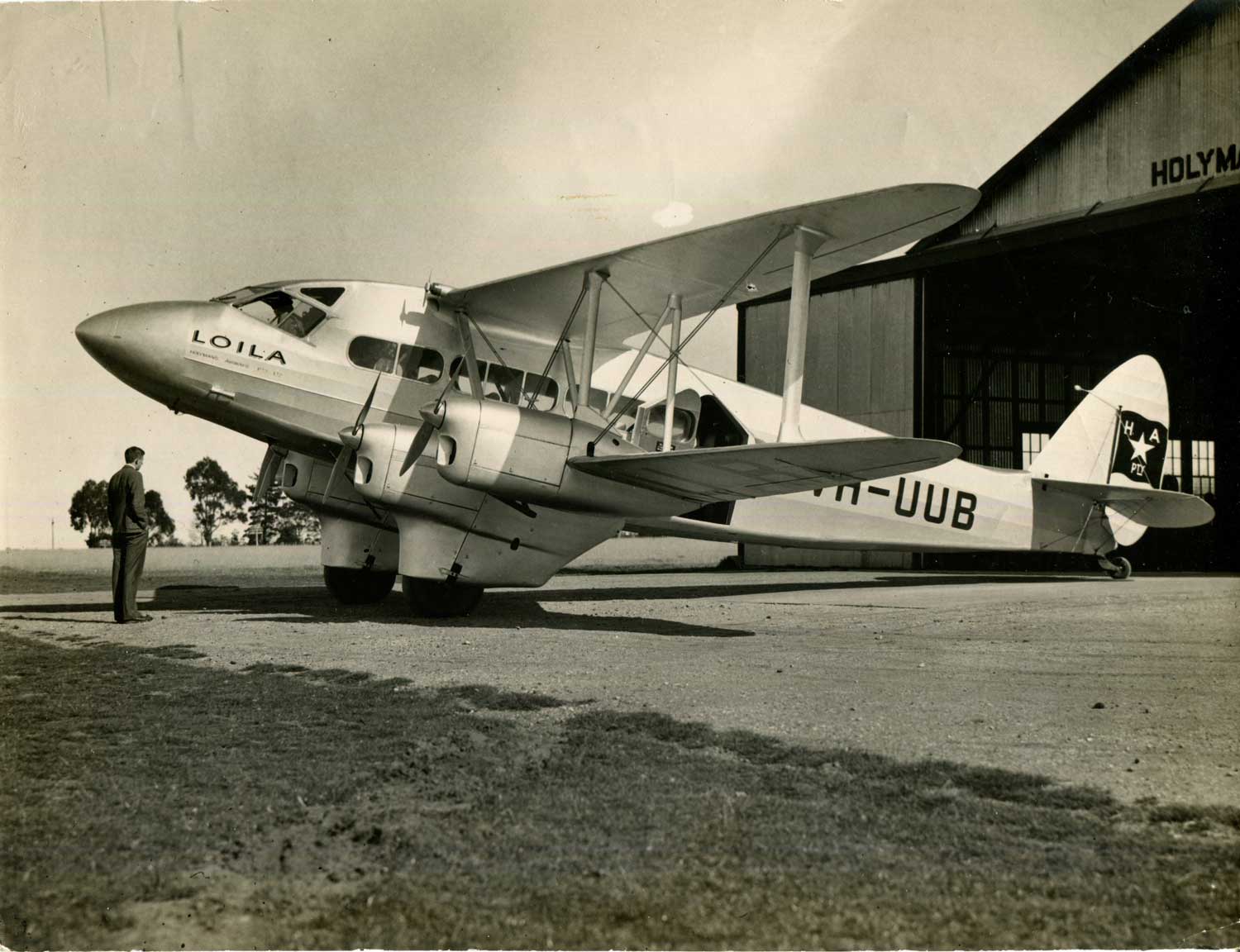
Aviation radio in Australia did not simply improve safety it transformed the nation’s ability to fly vast distances across sparsely populated terrain.
From early low-frequency beacons to VHF communications and integrated air traffic control networks, the evolution of aircraft radio systems reshaped Australian aviation infrastructure, navigation accuracy, and operational reliability.
This is the complete story of how aviation radio developed in Australia and why it mattered.
Why Aviation Radio Was Critical in Australia
Few countries presented the communication challenges that Australia did in the early decades of aviation.
- Long sectors over remote terrain
- Minimal ground infrastructure
- Extreme weather variability
- Sparse population centres
In the 1920s and early 1930s, aircraft navigation relied largely on visual landmarks, dead reckoning, and pilot experience. In a continent where entire routes crossed uninhabited terrain, that model carried obvious limitations.
Radio would become the solution but not immediately.
The Early Years: From Visual Navigation to Wireless Experimentation
In the early 20th century, radio telegraphy was already established in maritime operations. Aviation lagged behind due to weight constraints, power supply limitations, and the absence of ground infrastructure.
Initial experiments focused on Morse-based wireless communication. These early systems were unreliable, heavy, and difficult to operate in flight. Yet they marked the beginning of structured air-ground communication in Australia.
By the 1930s, the development of dedicated aeronautical radio frequencies began shaping a more formalised network.
The 33 MHz Radio Range System and Navigation Accuracy
One of the most significant developments in early Australian aviation radio was the implementation of radio range systems operating in the 33 MHz band.
These ground-based radio beacons provided directional guidance to aircraft equipped with compatible receivers. Pilots could “fly the beam,” aligning with radio signals to maintain track a substantial improvement over visual navigation in poor visibility.
However, early radio range systems were not without technical challenges:
- Propagation variability
- Course bending
- Equipment calibration limitations
- Limited aircraft receiver installation
Testing and certification delays reflected a broader reality: aviation radio science was still evolving.
The commissioning of these systems marked the transition from experimental communication to operational navigation infrastructure.
The Kyeema Disaster and the Importance of Communication Systems
The 1938 crash of the Kyeema in Victoria’s Dandenong Ranges became a pivotal moment in Australian aviation safety history.
While not the first fatal accident, it was among the first involving an aircraft in radio communication prior to impact. The subsequent public inquiry examined not only pilot decision-making but also the adequacy of ground-air communication systems.
The inquiry highlighted systemic issues:
- Coordination between meteorological and radio operators
- Delays in commissioning navigation beacons
- Reliance on pilot position estimation
The tragedy accelerated the adoption and testing of more reliable radio navigation systems.
In aviation history, crises often catalyse technical progress. Aviation radio in Australia was no exception.
Transition to VHF: A Technological Leap Forward
By the mid-20th century, aviation radio shifted toward Very High Frequency (VHF) communications.
VHF offered significant advantages over earlier low-frequency systems:
- Clearer voice transmission
- Reduced atmospheric interference
- Improved reliability
- Standardised international frequencies
The adoption of VHF enabled the development of modern air traffic control (ATC) systems and structured airspace management.
Australia’s geography again shaped implementation. Large distances required careful planning of transmitter placement and signal overlap to ensure continuous coverage across regional sectors.
The Development of Air Traffic Control and Integrated Systems
Radio communication laid the foundation for controlled airspace.
As aircraft performance improved and traffic density increased, procedural separation gave way to radar surveillance and structured ATC services. Radio became the interface between pilots and controllers.
Key milestones included:
- Expansion of en-route communication centres
- Integration of meteorological reporting with radio operations
- Development of controlled terminal airspace
- Standardisation with international ICAO protocols
Radio was no longer supplementary it was central to aviation safety architecture.
Navigation Aids: From Radio Beacons to Modern Systems
Aviation radio in Australia also underpinned the evolution of navigation aids (navaids), including:
- Non-Directional Beacons (NDB)
- VHF Omnidirectional Range (VOR)
- Instrument Landing Systems (ILS)
- Distance Measuring Equipment (DME)
Each development improved precision, reduced pilot workload, and enhanced approach safety.
Modern satellite-based systems (GNSS) have reduced reliance on traditional ground-based beacons, but radio communication remains essential for:
- ATC instructions
- Weather updates
- Traffic advisories
- Emergency procedures
The evolution from Morse-based wireless to digital data link represents a century-long progression — but the underlying principle remains unchanged: reliable communication enables safe flight.
Aviation Radio and the Unique Australian Context
Australia’s aviation radio network was shaped by geography, climate, and infrastructure constraints.
Unlike densely populated regions in Europe or North America, Australian route development required long-distance planning, redundancy, and reliability across remote corridors.
This environment fostered innovation in:
- Long-range radio propagation
- Remote transmitter placement
- Integration of communication and navigation infrastructure
The Australian experience offers a case study in adapting aviation systems to continental-scale operations.
From Ground Stations to Data Link: The Modern Era
Today, aviation radio has expanded beyond analogue voice communication.
Modern systems include:
- Controller–Pilot Data Link Communications (CPDLC)
- Satellite communication (SATCOM)
- Automatic Dependent Surveillance–Broadcast (ADS-B)
- Digital meteorological transmission
Yet even in an era of satellite navigation and automation, VHF voice communication remains the backbone of tactical control.
The principles established in the 1930s standardisation, reliability, redundancy continue to underpin modern systems.
Why the History of Aviation Radio Still Matters
Understanding the history of aviation radio in Australia is not merely academic.
It explains:
- Why infrastructure decisions have long-term consequences
- How regulatory caution influences safety outcomes
- Why technological adoption requires operational validation
- How crises accelerate systemic improvement
Radio transformed Australian aviation from isolated experimental flights into a coordinated national network.
Conclusion: Communication as the Foundation of Safe Flight
Aviation radio in Australia evolved from experimental wireless sets to a sophisticated, integrated communication architecture.
It enabled:
- Safer navigation across remote terrain
- Structured air traffic control
- Reliable weather dissemination
- National connectivity
The story of aviation radio is, ultimately, the story of aviation maturity itself.
As new technologies emerge from satellite surveillance to digital data links the lessons of early radio development remain relevant: infrastructure must be robust, tested, and aligned with operational reality.
In Australia’s vast skies, communication has always been more than convenience. It has been survival.