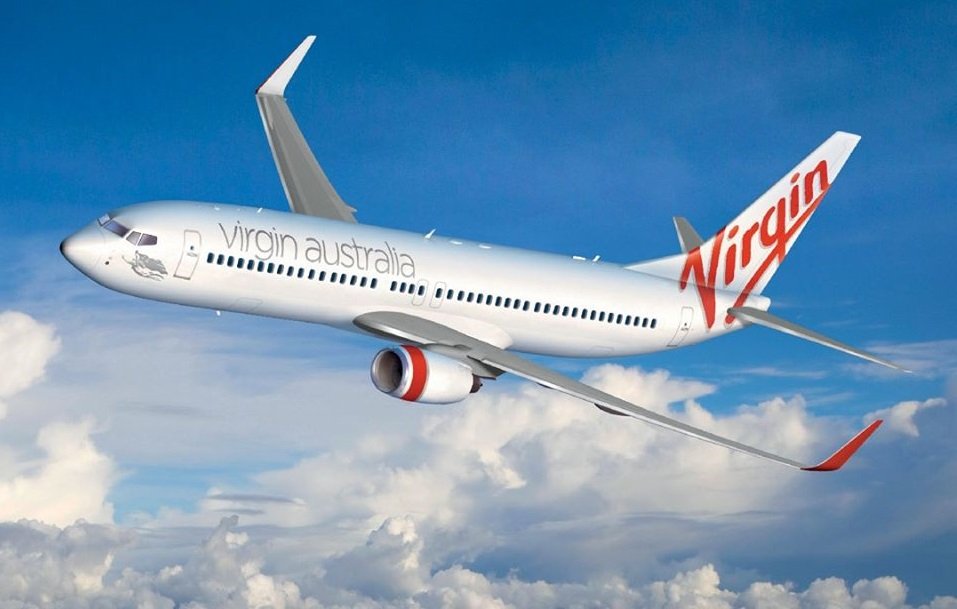
Government Underwrites Domestic Airline Network
In response to the COVID-19 aviation collapse, the Australian Government introduced a AU$165 million aviation support package to sustain a minimum domestic network operated by Qantas Airways and Virgin Australia.
The objective was not to restore profitability, but to preserve national connectivity during an unprecedented demand shock. In a geographically vast nation dependent on air travel for economic and social integration, maintaining core domestic routes was considered essential infrastructure support.
AU$165 Million Airline Support Package: What It Covered
The government underwriting arrangement enabled Qantas and Virgin Australia to operate a reduced “bare-bones” domestic schedule servicing critical metropolitan and regional routes.
This intervention aimed to:
- Maintain essential domestic air links
- Preserve regional and remote connectivity
- Support supply chains and medical transport
- Prevent total collapse of the domestic aviation network
Unlike traditional bailouts, this package underwrote operational costs rather than recapitalising balance sheets.
Virgin Australia Government Support: No Equity Stake
While the AU$165 million package provided short-term operational relief, it did not resolve Virgin Australia’s underlying financial fragility. The airline required substantial recapitalisation.
The Australian Government made clear it would not take an equity stake in Virgin Australia. This decision marked a strategic distinction between supporting connectivity and rescuing corporate ownership structures.
Virgin’s hybrid positioning neither a full low-cost carrier nor a dominant full-service airline left it exposed when passenger demand collapsed.
Qantas and Government Assistance During COVID-19
The support for domestic operations complemented earlier aviation relief measures, including:
- Underwriting international repatriation flights
- The AU$198 million Regional Airlines Network Support (RANS) program
- A broader AU$715 million aviation relief package announced in March 2020
Deputy Prime Minister and Minister for Infrastructure, Transport and Regional Development Michael McCormack emphasised the importance of sustaining domestic aviation:
“We know that a strong domestic aviation network is critical to Australia’s success… maintaining connectivity during this pandemic.”
The emphasis was consistently on connectivity rather than corporate preservation.
Regional Airlines Network Support Program (RANS)
The AU$198 million Regional Airlines Network Support program played a critical role in preserving air services to regional and remote communities.
Australia’s aviation system is uniquely dependent on air transport for:
- Mining and resource regions
- Medical evacuation and healthcare access
- Remote community supply chains
- Inter-state economic integration
The RANS program ensured that regional routes often commercially marginal remained operational during the crisis.
Minimum Domestic Network: Operational and Economic Implications
Operating a skeleton network creates structural challenges:
- Lower passenger load factors increase per-seat costs
- Fixed overheads remain largely unchanged
- Aircraft utilisation declines
- Revenue generation becomes highly constrained
However, maintaining a minimal network preserves:
- Crew currency and licensing
- Airport slot allocations
- Ground handling capability
- National transport continuity
From an aviation systems perspective, preventing complete shutdown avoids long-term recovery costs.
Australian Government Aviation Strategy During COVID-19
Internationally, government responses varied. Some countries took equity stakes in national carriers, while others provided loan guarantees.
Australia’s approach focused on:
- Temporary underwriting
- Market monitoring mechanisms
- Time-limited support (initial eight-week period)
- Avoidance of government ownership exposure
This strategy reflected a philosophy that aviation connectivity constitutes essential infrastructure — but airlines remain commercial enterprises.
Domestic Aviation Recovery After COVID-19
Recovery trends indicate that domestic travel rebounds faster than international routes. As a result, preserving Australia’s domestic trunk routes during the height of the pandemic positioned the market for earlier stabilisation.
The longer-term competitive implications remain significant. Virgin Australia’s restructuring inevitably altered the competitive balance with Qantas and its low-cost subsidiary, Jetstar.
Whether Australia sustains a robust dual-carrier system depends on:
- Recapitalisation outcomes
- Passenger demand recovery
- Cost discipline and fleet strategy
Conclusion: Preserving Australia’s Aviation Infrastructure
The AU$165 million aviation support package was designed to preserve connectivity, not profitability. In a continent-sized nation, domestic air travel functions as economic infrastructure.
By underwriting operations rather than acquiring equity, the Government drew a clear line between safeguarding national mobility and assuming corporate risk.
As with previous aviation crises, the intervention was temporary, targeted, and shaped by geography. The long-term structure of Australian domestic aviation will depend on market recovery, fleet adaptation, and sustained competition.