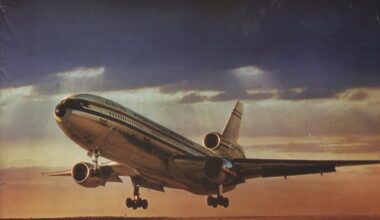
When the Lockheed L-1011 TriStar entered service in the early 1970s, it was widely regarded as one of the most advanced commercial airliners ever built. Yet behind the aircraft’s elegant design and sophisticated automation lay one of the most dramatic engineering and financial crises in aviation history. At the centre of the story was the Rolls-Royce RB211.
A revolutionary turbofan engine whose development nearly bankrupted its manufacturer and threatened to end the TriStar program before it ever entered airline service.
A Revolutionary Engine Concept
In the mid-1960s, Lockheed began designing a new wide-body airliner to compete with the McDonnell Douglas DC-10. The aircraft would require a powerful and efficient turbofan engine capable of delivering high thrust with low noise and improved fuel efficiency.
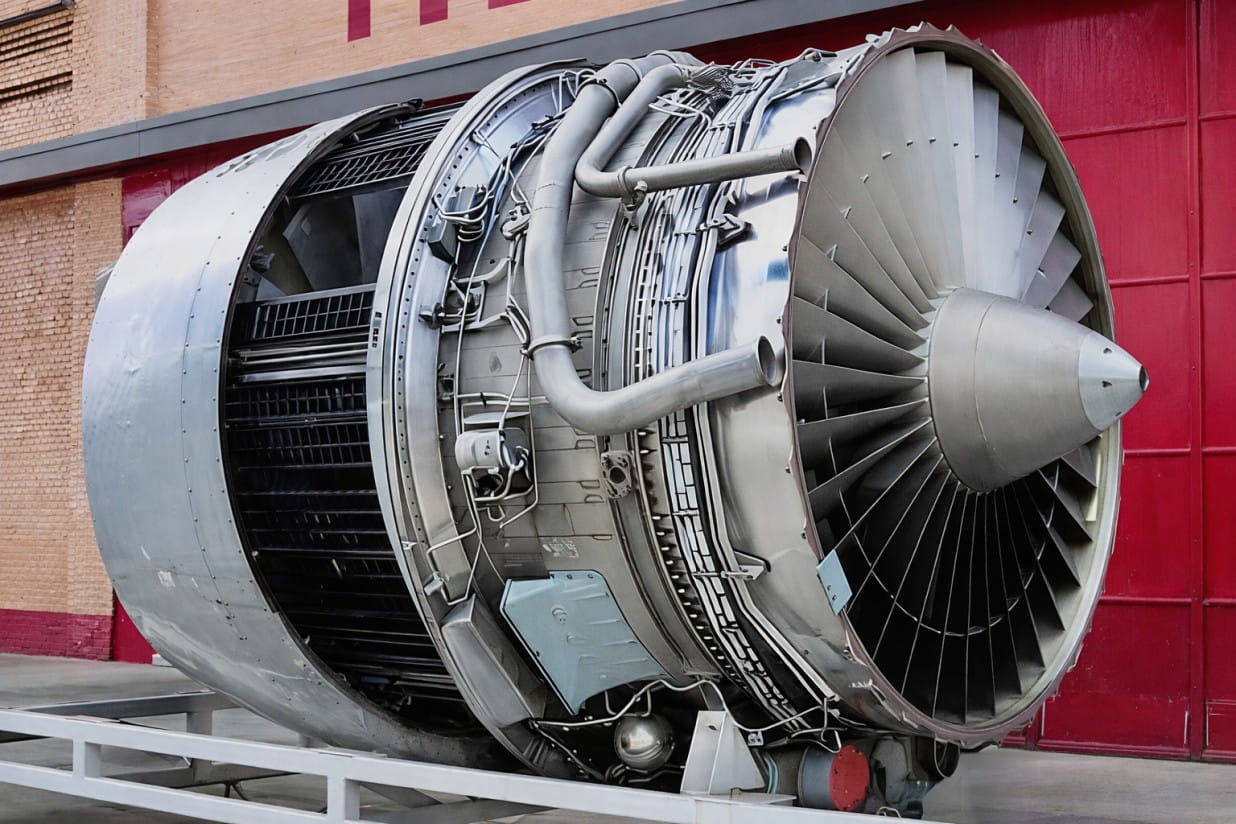
Rolls-Royce proposed an ambitious solution: the RB211, a new generation of high-bypass turbofan engines incorporating several groundbreaking technologies.
The RB211 was designed to feature:
- Advanced three-spool architecture
- High bypass ratio for improved efficiency
- Composite fan blades made from carbon fiber
- Reduced noise levels
- Lower fuel consumption
The engine promised to give the TriStar a significant technological advantage over competing aircraft.
The Three-Spool Breakthrough
One of the most innovative features of the RB211 was its three-spool design.
Traditional jet engines used two rotating assemblies, or spools. Rolls-Royce engineers introduced a third spool, allowing different compressor sections to operate at optimal speeds.
This configuration improved:
- engine efficiency
- fuel economy
- throttle response
- operational stability
Today the three-spool architecture is widely regarded as one of the most elegant designs in jet engine engineering.
But at the time, it was a bold and risky departure from established technology.
The Carbon Fiber Fan Blade Gamble
Perhaps the most controversial aspect of the RB211 design was the use of carbon fiber composite fan blades, known as Hyfil blades.
These blades promised major advantages:
- lighter weight
- improved efficiency
- greater resistance to fatigue
If successful, the technology would have made the RB211 one of the most advanced jet engines in the world.
However, early testing revealed a serious problem.
During bird-strike testing—where engines are tested against simulated bird impacts—the composite fan blades shattered instead of deforming safely.
The design had to be completely reworked.
This unexpected setback triggered massive delays and soaring development costs.
A Financial Disaster for Rolls-Royce
The RB211 development program quickly became one of the most expensive engineering projects Rolls-Royce had ever attempted.
Originally estimated at manageable levels, costs rapidly escalated as engineers struggled to solve the fan blade issue and refine the complex three-spool engine.
By 1971, the financial strain had become unbearable.
Rolls-Royce announced that it could no longer continue development of the RB211 without government support.
Soon afterward, the company entered bankruptcy.
For Lockheed and the TriStar program, the implications were catastrophic.
Without the RB211 engine, the L-1011 could not fly.
The British Government Steps In
The collapse of Rolls-Royce threatened not only the TriStar but also thousands of jobs in the British aerospace industry.
In February 1971, the British government nationalized Rolls-Royce, taking control of the company and continuing development of the RB211.
This dramatic intervention allowed the engine program to survive.
Eventually, engineers redesigned the fan blades using titanium instead of carbon fiber, solving the durability problem.
Although the changes delayed the program significantly, the RB211 finally became a reliable and powerful engine.
The Delay That Cost Lockheed the Market
While Rolls-Royce worked to solve the RB211 problems, the TriStar program suffered severe delays.
Meanwhile, Lockheed’s competitor, McDonnell Douglas, moved ahead with its DC-10, which used engines from multiple manufacturers.
Because the DC-10 entered service earlier, many airlines placed orders for it instead of waiting for the TriStar.
By the time the L-1011 finally entered service in 1972, the market advantage had largely been lost.
Ultimately:
- 250 L-1011 aircraft were built
- 446 DC-10 aircraft were produced
Many aviation historians believe that without the RB211 delays, the TriStar might have dominated the wide-body trijet market.
From Crisis to Engineering Success
Despite the early turmoil, the RB211 eventually proved to be a highly successful engine.
Once the design issues were resolved, the engine delivered on many of its original promises.
The RB211 became known for:
- excellent reliability
- low noise levels
- strong fuel efficiency
- smooth performance
These qualities helped the TriStar earn its nickname as the “Whisperliner.”
Pilots and airlines soon came to appreciate the engine’s performance.
The RB211 Legacy
The RB211’s influence extended far beyond the TriStar.
The technology developed for the engine later formed the basis for Rolls-Royce’s Trent engine family, which powers many modern wide-body aircraft today.
The three-spool architecture pioneered by the RB211 remains a hallmark of Rolls-Royce engines.
What began as a near-fatal engineering gamble ultimately became one of the most important technological breakthroughs in jet engine history.
A Crisis That Shaped Aviation
The story of the RB211 illustrates how close the TriStar came to cancellation.
Without the rescue of Rolls-Royce and the successful completion of the engine, the Lockheed L-1011 might never have entered airline service.
Instead, the RB211 crisis became one of the most dramatic chapters in aviation development.
It nearly destroyed both the engine manufacturer and the aircraft program but in the end, it produced one of the most sophisticated jet engines ever built.
For the TriStar, the RB211 was both its greatest challenge and one of its greatest achievements.