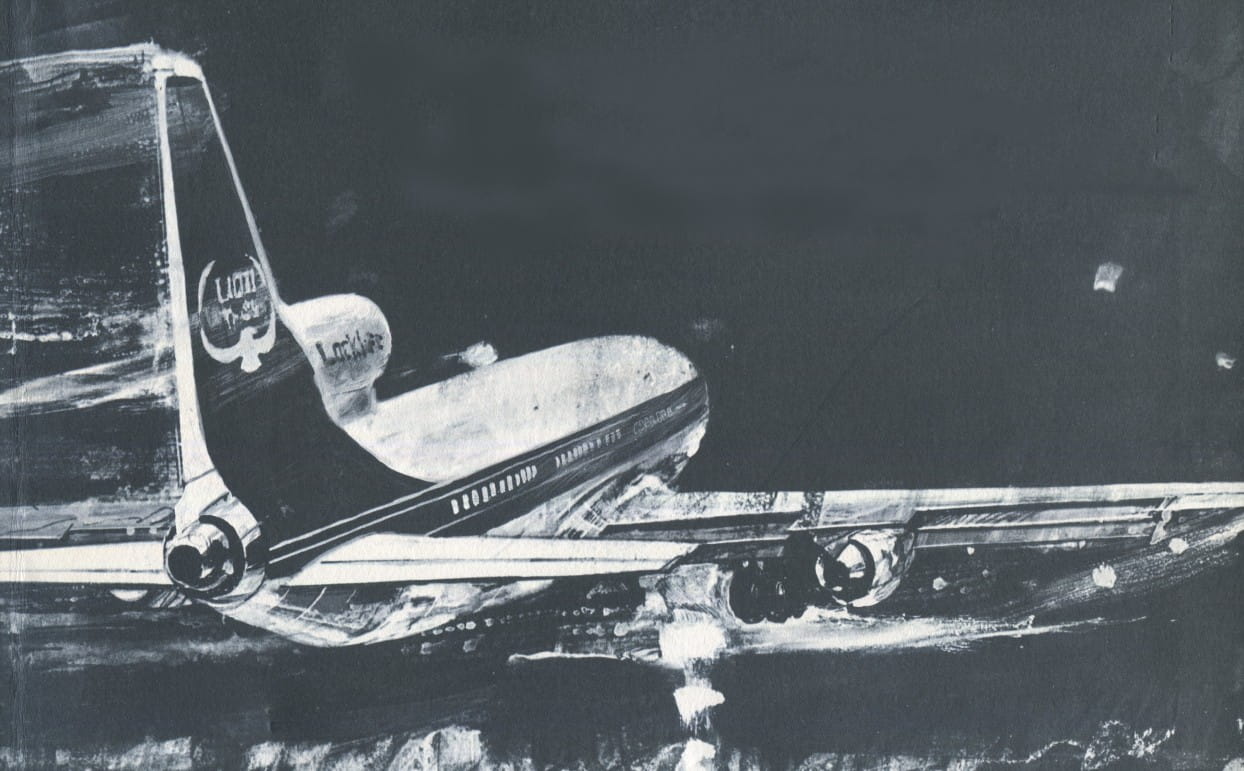
In the early 1970s, commercial aviation entered a new era. Wide-body aircraft were transforming long-haul travel, offering greater passenger capacity, improved comfort, and advanced technology. Among these aircraft, one stood out as perhaps the most technically sophisticated of its time: the Lockheed L-1011 TriStar.
Although it ultimately sold fewer aircraft than its rival, the McDonnell Douglas DC-10, the TriStar earned a reputation among pilots and engineers as one of the most technologically advanced and safest airliners of the decade.
More than fifty years after its first flight, the L-1011 remains one of the most respected aircraft ever built.
Origins of the TriStar
During the mid-1960s airlines began demanding a new generation of wide-body airliners capable of carrying more passengers on medium- and long-haul routes.
At the time Boeing was developing the Boeing 747, while Douglas Aircraft Company began work on the DC-10.
Lockheed, eager to return to the commercial airliner market after the success of the L-188 Electra, launched a competing design known as the L-1011 TriStar.
The aircraft was intended to be:
- quieter
- more automated
- easier to fly
- safer than competing aircraft
Lockheed’s design team focused heavily on advanced avionics and flight automation, which would later become one of the aircraft’s defining features.
First Flight and Entry Into Service
The prototype L-1011 made its first flight on 16 November 1970.
Following extensive testing, the aircraft entered commercial service with Eastern Air Lines in April 1972.
At the time, the TriStar was considered one of the most advanced commercial aircraft ever built.
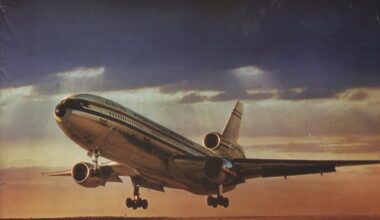
The aircraft featured a distinctive three-engine configuration, with two engines mounted under the wings and a third located in the tail through an S-shaped intake duct.
This design allowed the aircraft to operate efficiently on long over-water routes while meeting safety regulations of the era.
Revolutionary Cockpit Technology
Perhaps the most impressive aspect of the TriStar was its cockpit.
The L-1011 introduced one of the first fully integrated autoflight systems in commercial aviation.
This system combined several functions:
- autopilot
- flight director
- autothrottle
- automatic landing capability
Together these systems allowed the TriStar to perform Category III automatic landings, meaning the aircraft could land safely in extremely poor visibility.
For pilots accustomed to earlier jetliners, the level of automation in the TriStar was extraordinary.
Many airline captains later described the aircraft as one of the easiest wide-body jets ever built to fly.
Passenger Comfort and Cabin Design
The TriStar was also designed with passenger comfort in mind.
Compared with earlier airliners, the L-1011 offered:
- a wider cabin
- quieter engines
- improved pressurization
- smoother ride characteristics
The aircraft’s Rolls-Royce RB211 turbofan engines were among the quietest in the industry, earning the aircraft the nickname “Whisperliner.”
Inside the cabin, airlines often installed luxury features such as lounges and spacious seating arrangements.
For passengers in the 1970s, flying on a TriStar often felt like a significant upgrade from earlier jet aircraft.
The Rolls-Royce Crisis
Despite its technical brilliance, the TriStar’s development was nearly derailed by an unexpected crisis.
The aircraft depended on the Rolls-Royce RB211 engine, which used advanced composite fan blades and innovative engineering.
However, the program experienced major cost overruns.
In 1971 Rolls-Royce collapsed into bankruptcy, threatening the entire TriStar project.
Without the RB211 engine, the aircraft could not enter service.
The British government ultimately intervened and nationalized Rolls-Royce, allowing development of the engine to continue.
Although the rescue saved the aircraft program, the delays allowed the competing DC-10 to reach the market first.
Competition With the DC-10
The TriStar’s main rival was the McDonnell Douglas DC-10.
Both aircraft were wide-body trijets designed for similar routes and passenger capacities.
However, the DC-10 had two advantages:
- It entered service earlier
- It could be fitted with multiple engine types
By contrast, the TriStar relied exclusively on the RB211 engine.
While many pilots believed the TriStar was the superior aircraft, the DC-10 ultimately achieved greater sales.
In total:
- 250 L-1011 TriStars were built
- 446 DC-10s were produced
Safety and Engineering Excellence
Despite lower production numbers, the TriStar developed an outstanding safety reputation.
The aircraft incorporated several innovative design features including:
- advanced autopilot systems
- automatic landing capability
- sophisticated flight monitoring systems
- improved structural design
Many aviation professionals considered the L-1011 one of the best engineered airliners of the 20th century.
The aircraft’s performance in airline service reinforced that reputation.
For decades, TriStars operated reliably with airlines across the world.
Airlines That Flew the TriStar
Several major airlines operated the L-1011, including:
- Eastern Air Lines
- TWA (Trans World Airlines)
- Delta Air Lines
- British Airways
- Air Canada
- Cathay Pacific
- ANA (All Nippon Airways)
The aircraft became particularly popular on transcontinental and transatlantic routes, where its combination of capacity, range, and comfort made it ideal for long flights.
Variants of the L-1011
Lockheed produced several versions of the TriStar during its production run.
L-1011-1
The original model designed for medium-range routes.
L-1011-200
A longer-range version designed for transcontinental and international flights.
L-1011-500
A shorter fuselage variant optimized for long-range routes with improved fuel efficiency.
The L-1011-500 became particularly popular with international carriers due to its ability to operate long routes with fewer passengers.
Military and Later Uses
Even after airlines began retiring the TriStar in the 1990s, the aircraft continued to find new roles.
The Royal Air Force operated modified TriStars as:
- aerial refueling tankers
- military transport aircraft
NASA also used a modified L-1011 called Stargazer to launch Pegasus rockets from beneath the aircraft.
This unique mission demonstrated the aircraft’s remarkable structural strength and versatility.
The End of Production
Production of the L-1011 ended in 1984 after 250 aircraft had been built.
Lockheed ultimately withdrew from the commercial airliner market to focus on military aircraft such as the F-117 Nighthawk and C-130 Hercules.
Although the TriStar did not achieve the commercial success Lockheed had hoped for, the aircraft left a lasting legacy.
Legacy of the TriStar
The Lockheed L-1011 TriStar remains one of the most admired aircraft in aviation history.
Pilots often praised the aircraft for its:
- stability
- automation
- smooth handling
- reliability
Many aviation historians consider it one of the most technically advanced airliners ever produced during the early jet age.
Today, the TriStar stands as a reminder of a time when aircraft manufacturers pushed the boundaries of engineering innovation in pursuit of safer and more comfortable air travel.