The Regional Jet That Reshaped Short-Haul Aviation
Few aircraft families have influenced airline networks as profoundly as the Bombardier CRJ (Canadair Regional Jet). While wide-body aircraft dominate headlines and long-haul travel captures public imagination, the CRJ quietly transformed short-haul aviation by making jet service economically viable on regional routes.
Over nearly three decades of production, the CRJ family became the most successful regional jet program in aviation history, with close to 2,000 aircraft delivered worldwide. These aircraft connected smaller cities to major airline hubs, expanded the reach of global airline networks, and introduced a generation of pilots to modern regional jet operations.
The CRJ story is one of clever engineering, evolving airline economics, and the emergence of regional aviation as a vital part of the global airline system.
The Origins: From Business Jet to Regional Airliner
The roots of the CRJ program lie in the Canadair Challenger 600, a large business jet developed during the 1970s.
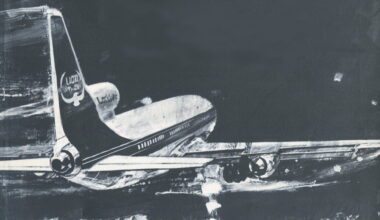
The Challenger was originally designed by Bill Lear’s company, LearStar, before the project was acquired and completed by Canadair, a Canadian aerospace manufacturer. The aircraft featured a wide cabin and advanced aerodynamics for its time, making it an ideal candidate for further development.
During the 1980s, engineers realised the Challenger airframe could potentially be stretched and adapted into a small commercial airliner.
When Bombardier acquired Canadair in 1986, the company recognised the potential for a new category of aircraft: the regional jet.
At the time, most short-haul routes were served by turboprops such as the Dash 8, Saab 340, or ATR-42. These aircraft were economical but slower and often less appealing to passengers compared with jet aircraft.
Bombardier saw an opportunity to introduce a small jet capable of operating efficiently on regional routes while offering the speed and comfort of larger airliners.
The Birth of the CRJ100
Bombardier launched the Canadair Regional Jet (CRJ100) program in 1989.
The aircraft was essentially a stretched version of the Challenger 600, fitted with:
- a longer fuselage
- increased passenger seating
- strengthened wings
- airline-style avionics systems
The aircraft retained the rear-mounted General Electric CF34 turbofan engines, a configuration inherited from the Challenger business jet.
The CRJ100 first flew in May 1991 and entered airline service in 1992 with Lufthansa CityLine.
The aircraft typically carried 50 passengers, placing it directly in the emerging regional airline market.
The timing proved ideal.
Following airline deregulation in the United States and Europe, major carriers were expanding hub-and-spoke networks that relied heavily on regional partners feeding passengers into large hub airports.
The CRJ100 provided the perfect aircraft for this role.
The CRJ200: Improved Performance
The success of the CRJ100 led to the introduction of the CRJ200, which incorporated several improvements including:
- upgraded GE CF34-3B1 engines
- improved fuel efficiency
- increased range
- improved avionics
The aircraft quickly became the backbone of many regional airline fleets.
Major operators included:
- Delta Connection
- United Express
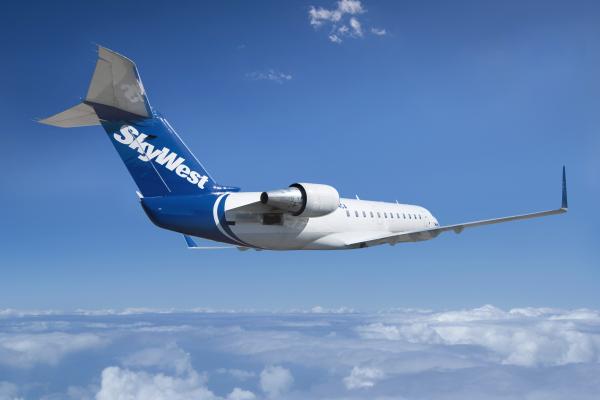
- SkyWest Airlines
- Lufthansa CityLine
- Air Canada Jazz
By the late 1990s, hundreds of CRJ200 aircraft were operating around the world, proving that regional jets could replace turboprops on many routes.
Expanding the Concept: The CRJ700
As regional aviation continued to grow, airlines began demanding larger aircraft capable of carrying more passengers while maintaining regional jet economics.
Bombardier responded by stretching the CRJ design into the CRJ700, which first flew in 1999.
The aircraft introduced several major improvements:
- capacity for 70–78 passengers
- redesigned wing with leading-edge slats
- improved aerodynamics
- more powerful GE CF34-8C engines
The CRJ700 entered service in 2001 and quickly found customers among airlines seeking greater capacity without moving to larger narrow-body aircraft.
The CRJ900: The Regional Workhorse
The next evolution of the design was the CRJ900, introduced in 2003.
The aircraft extended the fuselage further and could carry up to 90 passengers, although many airlines configured the aircraft with 76 seats to comply with U.S. pilot scope clause agreements.
The CRJ900 became one of the most widely used regional aircraft in North America.
Key advantages included:
- strong fuel efficiency
- high dispatch reliability
- commonality with earlier CRJ models
Because pilots could transition between CRJ variants with minimal training, airlines could operate mixed fleets efficiently.
The CRJ1000: The Final Stretch
Bombardier continued developing the platform with the CRJ1000, the largest aircraft in the family.
The CRJ1000 could carry up to 100 passengers, bringing it close to the capacity of smaller narrow-body aircraft.
The aircraft introduced:
- extended fuselage
- improved cabin layout
- updated avionics
- improved fuel efficiency
Although technically impressive, the CRJ1000 faced strong competition from the Embraer E190 and E195, which offered wider cabins and improved passenger comfort.
As a result, sales of the CRJ1000 were more limited than earlier models.
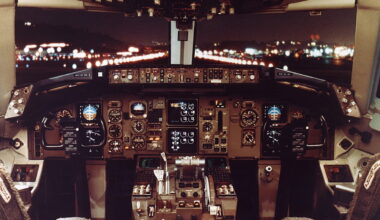
Avionics and the Pro Line 4 Flight Deck
One of the key technological features of the CRJ family was its use of Collins Pro Line 4 avionics.
The Pro Line 4 (PL4) flight deck introduced advanced electronic displays and integrated flight management systems to regional aircraft.
Key features included:
- Electronic Flight Instrument System (EFIS)
- integrated Flight Management System (FMS)
- digital autopilot and flight director
- weather radar integration
- engine monitoring systems
These systems replaced traditional electromechanical instruments and significantly improved pilot situational awareness.
For many airline pilots, the CRJ became their first experience flying a modern glass cockpit airliner.
Why the CRJ Was So Successful
Several factors contributed to the extraordinary success of the CRJ program.
Perfect Market Timing
The aircraft entered service just as airline deregulation created demand for regional jet aircraft.
Passenger Preference
Passengers strongly preferred jet aircraft over turboprops, even on short routes.
Fleet Commonality
All CRJ models shared similar cockpits, systems, and maintenance procedures.
Efficient Economics
The aircraft offered strong fuel efficiency and low operating costs.
These factors helped regional airlines expand rapidly during the 1990s and 2000s.
Global Impact
At its peak, the CRJ fleet operated hundreds of thousands of flights every month worldwide.
Regional jets became essential to airline networks by connecting smaller cities to major hubs such as:
- Atlanta
- Chicago
- Toronto
- Frankfurt
- Paris
Without regional jets like the CRJ, many of these routes would not have been economically viable.
The End of Production
In 2020 Bombardier sold the CRJ program to Mitsubishi Heavy Industries, marking the company’s exit from commercial airliner manufacturing.
The final aircraft, a CRJ900, was delivered in 2021 to SkyWest Airlines.
Although production ended, hundreds of CRJ aircraft remain in service around the world.
The Legacy of the CRJ
The Bombardier CRJ series proved that small jet airliners could operate profitably on regional routes.
In doing so, it transformed airline networks and helped establish the modern regional airline industry.
Today, regional jets carry millions of passengers every year, quietly forming the backbone of short-haul aviation.
While they may not attract the glamour of larger airliners, the CRJ family remains one of the most influential aircraft programs in the history of commercial aviation.