Two Aircraft That Defined the Future of Long-Haul Aviation
At the beginning of the 21st century, Airbus and Boeing reached dramatically different conclusions about the future of global air travel.
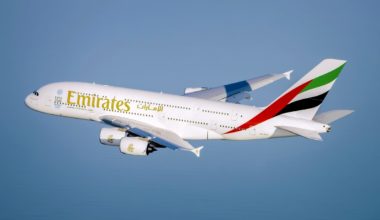
Airbus believed rising passenger numbers and growing airport congestion would favour very large aircraft operating between major international hubs. This thinking led to the development of the Airbus A380, the largest passenger aircraft ever built.
Boeing, however, predicted a different future. The company believed airlines and passengers would increasingly prefer direct flights between cities, avoiding large hub airports whenever possible.
Their answer was the Boeing 787 Dreamliner, a smaller but highly efficient long-range aircraft capable of opening entirely new nonstop routes.
The A380 and the 787 therefore represent two competing visions of modern aviation:
High-capacity hub travel versus flexible point-to-point connectivity.
Airbus and the Hub-and-Spoke Model
Airbus believed the world’s major airports would become increasingly congested.
With limited runway capacity available at large hubs, airlines would need aircraft capable of carrying more passengers per flight rather than operating more flights.
The solution was the Airbus A380.
The aircraft was designed specifically for the hub-and-spoke system, where passengers travel between major global hubs before connecting onward to regional destinations.
Typical hubs in this model include airports such as:
- London Heathrow
- Dubai
- Singapore
- Hong Kong
In this system, extremely large aircraft transport hundreds of passengers between major hubs where they disperse onto smaller connecting flights.
The A380 was designed to carry 500–600 passengers in typical airline configurations, with the ability to seat up to 853 passengers in high-density layouts.
Airbus believed airlines would increasingly favour fewer flights using much larger aircraft.
Boeing Saw a Different Future
Boeing believed the industry was moving in the opposite direction.
The company predicted passengers would increasingly prefer direct flights between cities, bypassing major hubs altogether.
Instead of travelling:
New York → London → Singapore
Passengers would increasingly fly:
New York → Singapore nonstop.
This model required aircraft with:
- extremely long range
- lower operating costs
- smaller seating capacity
It also required dramatically improved fuel efficiency.
The Sonic Cruiser: Boeing’s First Idea
Before developing the 787, Boeing initially explored a very different concept.
In the late 1990s the company unveiled the Sonic Cruiser, a futuristic aircraft designed to fly 15–20% faster than conventional airliners, approaching the speed of sound.
The aircraft featured an unusual canard configuration and delta-like wing designed to reduce drag at high subsonic speeds.
Initially the concept attracted interest from several airlines, particularly those interested in reducing long-haul travel times.
But the aviation industry changed dramatically after the September 11 attacks in 2001.
Airlines suddenly faced:
- collapsing passenger demand
- severe financial pressure
- rapidly rising fuel costs
Airline executives quickly made it clear that lower operating costs were far more important than higher speed. After 9/11, airlines pushed all suppliers for cost breaks to help spread the pain.
As a result, Boeing officially cancelled the Sonic Cruiser program in December 2002.
The Birth of the 7E7
Following the cancellation of the Sonic Cruiser, Boeing redirected its development resources toward a completely different aircraft.
Internally known as Project Yellowstone, the new aircraft became the 7E7.
The letter “E” stood for Efficiency, reflecting Boeing’s new focus on dramatically reducing fuel burn and operating costs.
Instead of designing a niche high-speed aircraft, Boeing proposed a highly efficient long-range twinjet capable of burning around 20% less fuel than the Boeing 767.
Much of the research conducted during the Sonic Cruiser program directly influenced the new aircraft.
Key technologies included:
- extensive use of carbon-fiber composite structures
- advanced high-bypass turbofan engines
- bleedless electrical systems
- next-generation avionics
The 7E7 was officially announced on January 29, 2003, and later renamed the Boeing 787 Dreamliner.
The Efficiency Advantage
Fuel efficiency quickly became the defining advantage of the 787.
The aircraft introduced a number of technological breakthroughs, including:
- carbon-fiber composite fuselage and wings
- advanced aerodynamics
- new generation engines from Rolls-Royce and General Electric
- electrically driven systems replacing traditional pneumatic systems
Together these innovations reduced fuel consumption dramatically.
Compared with previous generation widebody aircraft, the 787 burns roughly 20–25% less fuel per seat.
This advantage becomes even more significant when compared with very large four-engine aircraft like the A380.
Because the A380 uses four engines and carries far more structural weight, its total fuel burn per flight is significantly higher.
While the A380 can be efficient when completely full, the 787 offers airlines much greater flexibility and lower financial risk across a wider range of routes.
Point-to-Point Travel
Boeing saw a very different trend emerging.
The company believed passengers would increasingly prefer direct flights between cities, avoiding connections through major hubs whenever possible.
In 2005, Boeing Commercial Airplanes CEO Alan Mulally told a subcontractor town hall meeting:
“We are going to do it again.”
He was referring to the way the Boeing 767 had disrupted hub networks in the 1980s and 1990s by enabling long-range routes between city pairs.
Mulally believed Boeing’s new aircraft originally known as the 7E7 would repeat that transformation.
Instead of flying:
New York → London → Singapore
Passengers would increasingly fly:
New York → Singapore directly.
This model required aircraft with:
- longer range
- lower operating costs
- smaller seating capacity
The result was the Boeing 787 Dreamliner, designed to carry roughly 220–300 passengers while flying extremely long distances efficiently.
In effect, travel would become faster not because aircraft were dramatically faster, but because connecting hubs could be eliminated entirely.
Boeing called this concept “hub bypass” or point-to-point travel.
Why Boeing’s Strategy Worked
In hindsight, several industry trends supported Boeing’s prediction.
Improved twin-engine reliability
Modern engines allowed twin-engine aircraft to safely operate ultra-long-range routes under extended ETOPS rules.
Fuel efficiency
Twin-engine aircraft burn significantly less fuel than four-engine aircraft.
Airline economics
Smaller aircraft allow airlines to open new routes with lower financial risk.
Passenger preference
Passengers increasingly prefer nonstop travel rather than connecting through large hubs.
Aircraft such as the Boeing 787 and Airbus A350 allowed airlines to launch hundreds of new routes between secondary cities.
Why the A380 Still Succeeded
Despite the shift toward smaller long-range aircraft, the A380 was not a failure.
The aircraft performs extremely well on high-density routes, particularly between major international hubs.
Typical A380 routes include:
- Dubai – London
- London – Los Angeles
- Singapore – Sydney
Airports like Heathrow also have limited landing slots, meaning larger aircraft can still provide operational advantages.
Airlines such as Emirates built their entire long-haul network around the A380, and the aircraft remains extremely popular with passengers due to its spacious cabin and quiet ride.
Two Aircraft, Two Futures
In many ways the Airbus A380 and Boeing 787 represent one of the most fascinating strategic rivalries in aviation history.
Both aircraft pushed the boundaries of engineering.
The A380 demonstrated how far the concept of the very large passenger aircraft could be taken, with its double-deck fuselage and enormous wingspan.
The 787 introduced a different kind of revolution. By combining composite structures, advanced engines, and dramatically improved efficiency, it allowed airlines to rethink how long-haul travel could operate.
Today the results of those two strategies are visible across the global route map.
The A380 continues to dominate the world’s busiest high-capacity routes.
But increasingly the skies are filled with aircraft like the Boeing 787 and Airbus A350, quietly connecting cities that once required multiple connections.
In the end, the story of the A380 and the 787 is not about one aircraft winning and the other losing.
It is about two bold visions of the future and how technology, economics, and passenger preferences ultimately reshaped global aviation.