How a Douglas DC-2 Flew Into Mount Dandenong in Dense Fog
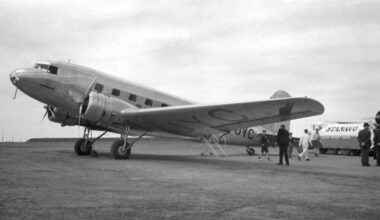
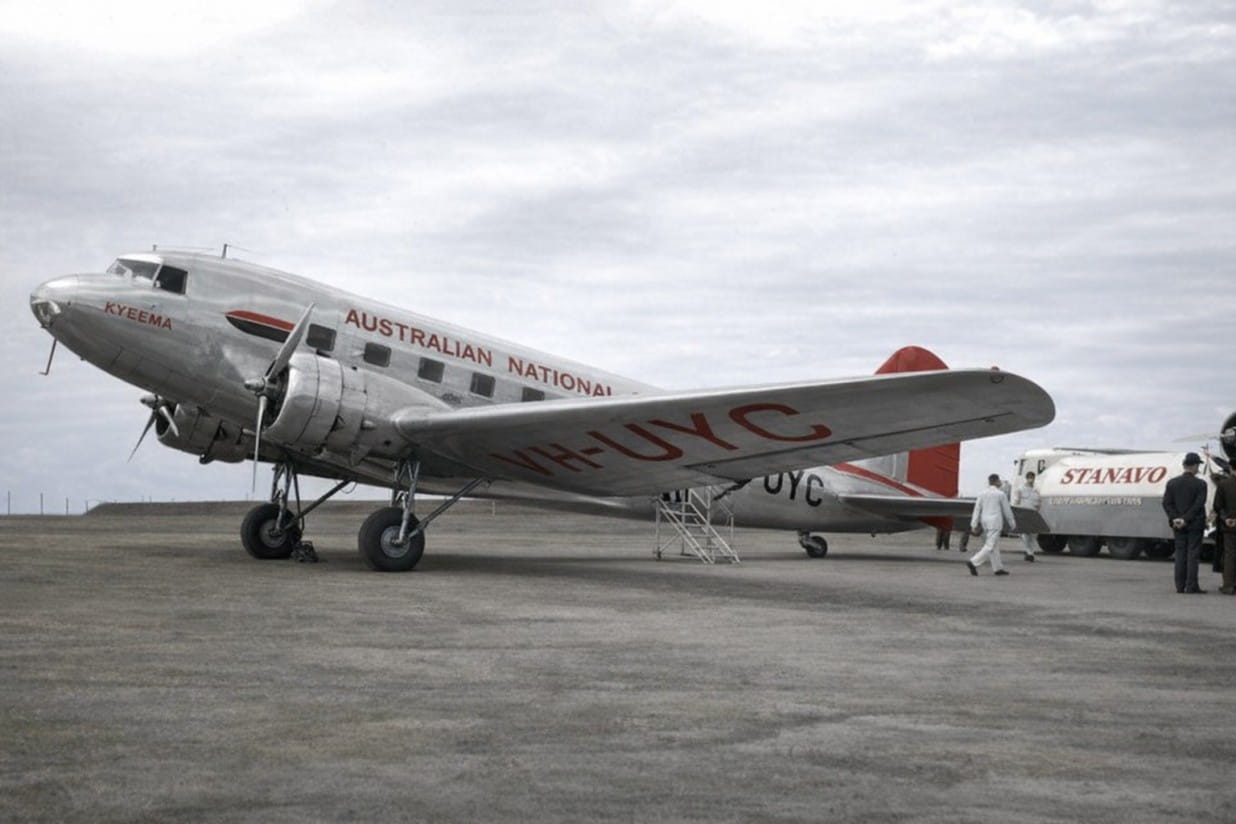
On the afternoon of 25 October 1938, an Australian National Airways Douglas DC-2 airliner named Kyeema disappeared into dense cloud over the hills east of Melbourne.
Minutes later the aircraft struck the slopes of Mount Dandenong, killing all 18 people on board.
The accident shocked Australia’s young airline industry and triggered one of the most significant aviation investigations in the country’s early civil aviation history.
Eyewitness accounts presented during the Air Accidents Investigation Board hearings painted a vivid picture of the final moments of the flight an aircraft roaring through thick fog before flying straight into the mountainside.
A Routine Flight Turns Fatal
The aircraft involved was a Douglas DC-2, one of the most advanced airliners operating in Australia during the late 1930s.
Operated by Australian National Airways (ANA), the aircraft was flying the regular route between Adelaide and Melbourne.
On board were:
- 14 passengers
- four crew members
The captain, A. C. D. Webb, was a highly experienced pilot with more than 4,300 flying hours, including over 300 hours commanding Douglas aircraft.
The flight had departed Adelaide normally and was approaching Melbourne in the early afternoon.
However, the weather over the Dandenong Ranges had deteriorated significantly.
Heavy fog had settled across the mountains, reducing visibility to almost nothing.
Dense Fog Over the Dandenongs
Witnesses living in the hills east of Melbourne later described the fog as some of the thickest they had ever seen.
Gardener Thomas Rudjard Stubbs, working near Ridge Road on Mount Dandenong, testified that visibility was extremely limited.
He said he could not see a fellow worker standing only 50 yards away.
Shortly before 1:45 pm, Stubbs heard the sound of a large aircraft approaching through the fog.
Moments later the sound of engines was followed by a violent crash.
When he ran toward the scene he found the wreckage already burning fiercely.
The flames were so intense he could not approach closer than about 20 yards.
Bodies lay scattered around the wreckage.
“A Double Crash”
Another witness, Frederick Lancelot Singleton, a flower grower whose property lay nearby, described a similar sequence of events.
Singleton said the fog was so dense he could not even see his own cottage, which stood only 100 yards away.
He heard the roar of the aircraft’s engines and then what he described as two distinct crashes.
The second sound resembled an explosion.
Realising something terrible had happened, Singleton rushed to his house to telephone for help before running toward the crash site.
When he arrived he encountered wreckage strewn across the hillside and several bodies lying near the burning aircraft.
Visibility Reduced to 30 Yards
Labourer Alexander Murphy, who was working about 300 yards from the impact site, testified that visibility in the fog was extremely poor.
At best he estimated it was around 30 yards.
Murphy said he heard the aircraft engines overhead but could not see the aircraft itself.
He noted that the engine noise sounded normal and steady, with no indication of mechanical problems.
The steady roar of the engines was broken only by the sound of the crash.
Another worker, Robert Logan, who was with Murphy at the time, confirmed the account.
A Glimpse of the Aircraft
One of the most striking testimonies came from George Butterfield, a garage proprietor living in Montrose.
Butterfield was inside his home when he heard the engines of a large aircraft approaching unusually low.
He ran outside and briefly saw the aircraft through a gap in the fog.
Butterfield described it as a large Douglas passenger airliner, flying at an estimated 600 to 800 feet above the ground.
The aircraft was heading toward the mountains.
Within seconds it disappeared back into the fog.
Almost immediately afterward he heard the crash.
Butterfield later told investigators the aircraft appeared to be flying directly toward the mountain, which was less than a mile away.
Evidence from the Crash Site
Investigators quickly recovered several key documents from the wreckage.
These included:
- the aircraft’s certificate of airworthiness
- passenger weight records
- aircraft and engine log books
- maintenance documentation
The records confirmed the aircraft was properly certified and airworthy at the time of the accident.
Investigators also determined that the aircraft’s total weight was within approved limits.
The aircraft had departed Adelaide about 300 pounds below its maximum allowable weight.
Evidence also showed that the aircraft’s radio equipment had been serviced shortly before the flight departed.
The Flight Crew
Captain A. C. D. Webb had built an impressive flying career.
He had served with the Royal Air Force in England before returning to Australia to fly with Australian National Airways.
He had been promoted to captain of Douglas aircraft only months before the accident.
The second pilot, Junior Captain A. J. Steen, had accumulated more than 1,300 flying hours before joining the airline.
Both pilots were regarded by the company as skilled and competent airmen.
How the Aircraft Struck the Mountain
Engineering evidence presented to the inquiry helped reconstruct the aircraft’s final moments.
A civil engineer produced a detailed plan of the crash site.
The wreckage pattern indicated that the aircraft first struck the tops of tall trees before continuing through the forest for approximately 160 feet.
The direction of travel was estimated at roughly 160 degrees magnetic.
The terrain at the impact site fell steeply, meaning the aircraft collided with the mountainside at considerable speed.
Early Theories in the Investigation
Initial evidence suggested that the aircraft had been flying normally until the moment of impact.
Witnesses consistently reported that the engines sounded steady and powerful before the crash.
This pointed investigators away from mechanical failure and toward other possible causes.
The most obvious factor was the extremely dense fog covering Mount Dandenong.
At the time of the accident, navigation aids in Australia were still relatively primitive.
Pilots often relied on a combination of:
- visual navigation
- basic radio communications
- limited ground-based radio beacons
In mountainous terrain, such conditions could be extremely hazardous.
The Broader Aviation Context
The Kyeema disaster occurred during a period when Australian commercial aviation was still evolving rapidly.
Aircraft such as the Douglas DC-2 represented the cutting edge of airline technology.
However, navigation infrastructure and air traffic control systems had not yet developed to the level required for consistently safe operations in poor weather.
The accident exposed the dangers of relying on visual navigation in mountainous areas where weather conditions could change quickly.
Legacy of the Kyeema Crash
The crash of the Kyeema became one of the most significant aviation accidents in early Australian airline history.
It highlighted the urgent need for improved:
- radio navigation aids
- weather reporting systems
- instrument flight procedures
In the years that followed, Australia began expanding its network of radio beacons and navigation systems, helping to reduce the risk of similar accidents.
The disaster also strengthened the role of formal accident investigations, ensuring that lessons learned from tragedies could improve aviation safety.
Conclusion
The eyewitness accounts presented during the Kyeema inquiry created a haunting picture of the final moments of the flight.
In thick fog covering Mount Dandenong, a Douglas DC-2 airliner flew unseen toward the mountains.
Witnesses heard the steady roar of engines followed by the sound of trees splintering and a violent crash.
The tragedy became one of the defining accidents of early Australian aviation, reminding the industry of the dangers posed by weather, terrain, and limited navigation technology during the pioneering years of airline flight.