Australia’s First Airline Mystery
On 21 March 1931, an Australian National Airways passenger aircraft departed Sydney’s Mascot Aerodrome bound for Melbourne.
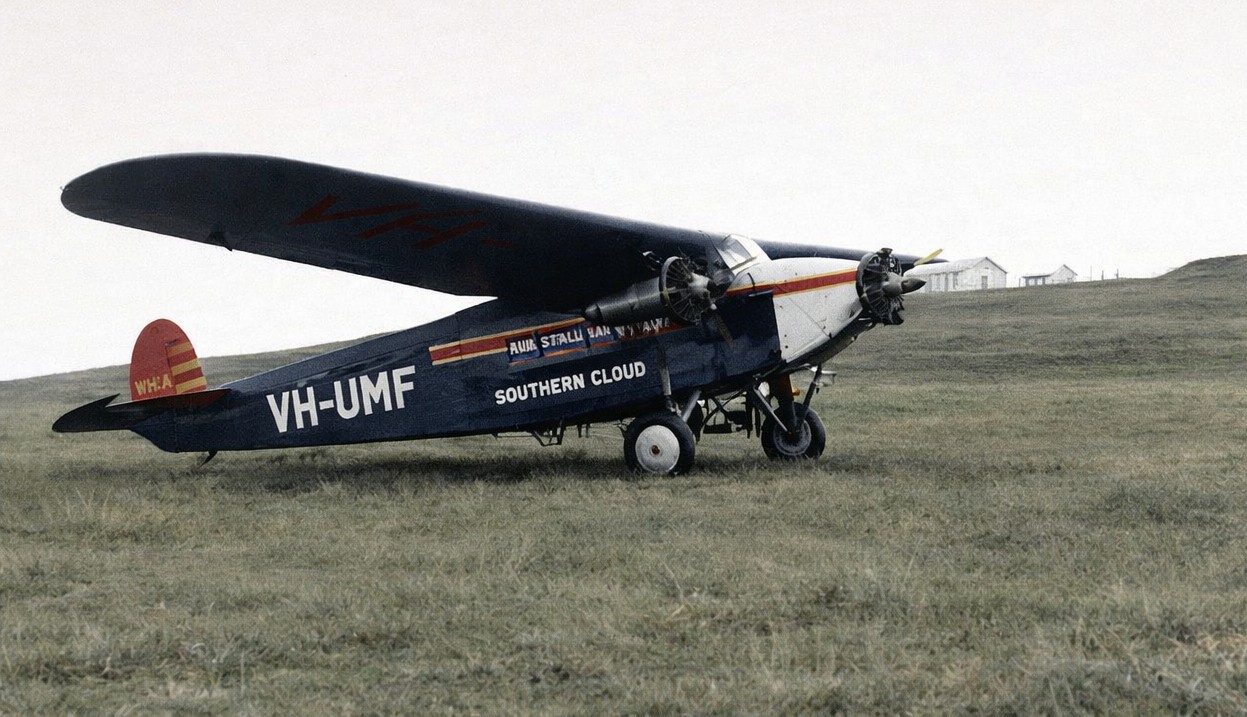
The aircraft was an Avro 618 Ten, registration VH-UMF, named Southern Cloud.
Eight people were on board.
The aircraft never arrived.
What followed was one of the greatest aviation mysteries in Australian history a disappearance that triggered a nationwide search, an official government investigation, and major reforms in aviation safety.
A Routine Airline Flight
In the early 1930s, Australian National Airways operated regular passenger services between Sydney and Melbourne using the Avro Ten, a British-built tri-motor airliner derived from the famous Fokker F.VII.
The aircraft carried ten passengers and crew, powered by three Armstrong Siddeley Lynx radial engines, and was widely considered reliable.
On the morning of the flight:
- Departure time: 8:15 AM
- Route: Sydney to Melbourne
- Pilot: Captain T. W. Shortridge
- Assistant pilot: C. T. Dunell
- Passengers: Six
Captain Shortridge was no novice. He had logged more than 4,600 flying hours, including extensive experience flying the Avro Ten on the Sydney–Melbourne route.
Before departure, the aircraft had been inspected and issued with a certificate of safety confirming it was fully airworthy.
Everything appeared normal when the aircraft lifted off from Mascot.
But the Southern Cloud vanished somewhere between Sydney and Melbourne.
The Aircraft That Never Arrived
When the aircraft failed to arrive in Melbourne, concern quickly turned to alarm.
Communication technology in 1931 was primitive compared to modern aviation. Aircraft did not routinely carry two-way radio equipment, and pilots relied largely on visual navigation and basic instruments.
When the aircraft did not report in, the alarm was raised.
The Southern Cloud had disappeared.
One of Australia’s Largest Early Air Searches
The response was immediate and massive for its time.
Aircraft from:
- Australian National Airways
- The Royal Australian Air Force
- Private operators
joined the search.
Ground parties were also mobilised, including police and volunteers who combed mountain ranges, forests, and remote terrain across southeastern Australia.
The search quickly became one of the most intensive aviation search operations ever conducted in Australia up to that time.
Despite weeks of searching, no wreckage was found.
The aircraft had simply disappeared.
Was the Aircraft at Fault?
Investigators examined every aspect of the aircraft.
Their findings were clear.
The Avro Ten was:
- Properly maintained
- Fully airworthy
- Equipped with functioning instruments
- Loaded within safe weight limits
The aircraft carried essential instruments, including a bank-and-turn indicator and inclinometer, and these were confirmed to be in working order before departure.
There was no evidence of mechanical failure.
The Pilot: Experienced and Qualified
Attention then turned to the crew.
Captain Shortridge was described during the inquiry as a pilot of outstanding ability.
His credentials included:
- Service with the Royal Air Force
- Service with the Royal Australian Air Force
- Extensive airline flying experience
His assistant, C. T. Dunell, was a trained ground engineer and trainee pilot capable of assisting in the cockpit.
The investigation concluded both men were medically fit and properly qualified for the flight.
The Weather Turns Dangerous
Weather conditions turned out to be the most significant factor in the investigation.
While the weather in Sydney appeared manageable at departure, conditions along the route rapidly deteriorated.
Investigators later found that the aircraft likely encountered:
- Violent squalls
- Thunderstorms
- Heavy rain
- Low cloud
- Strong winds exceeding 60 mph
- Snow over the tablelands
Visibility along the route from Goulburn to Melbourne was extremely poor.
Cloud layers extended thousands of feet deep, with storms forming where powerful air masses collided.
The inquiry described the weather conditions as particularly severe and abnormal.
However, forecasts available to the crew before departure did not indicate the extreme conditions that would develop later.
Why the Weather Was So Dangerous in 1931
Modern pilots benefit from weather radar, satellite data, and real-time updates.
None of that existed in 1931.
Weather forecasts were based on observations collected hours earlier, often nearly a day out of date.
Pilots typically received weather briefings based on data gathered the previous morning.
By the time the Southern Cloud encountered the storm system, the conditions had become far more severe than predicted.
The Official Conclusion
Because the aircraft was never found, investigators could not determine the exact cause of the crash.
Their official conclusion was cautious but telling:
- The aircraft was airworthy
- The pilot was qualified
- Weather conditions were extreme
The inquiry concluded that severe weather likely contributed significantly to the loss of the aircraft.
Aviation Safety Changes After the Disaster
Although the mystery remained unsolved, the investigation produced important safety recommendations.
These included:
Mandatory Radio Equipment
Passenger aircraft should carry two-way wireless radios.
Ground Radio Navigation
A national radio direction-finding network should be developed.
Distress Signalling Equipment
Aircraft should carry signal flares and visual distress markers.
Improved Weather Forecasting
Meteorological reporting and aviation forecasts should be significantly improved.
Many of these recommendations later became standard practice in commercial aviation.
A Mystery That Endured
For decades, the fate of the Southern Cloud remained unknown.
The disappearance captured the imagination of the public and aviation historians alike.
It represented a time when aviation was still pioneering new routes, often facing unpredictable weather with limited technology.
The loss of the aircraft became a defining moment in early Australian airline history.
It exposed the limitations of early aviation safety systems—and helped drive the improvements that modern aviation depends on today.