The Burned-Out Bulb That Brought Down a Jumbo Jet
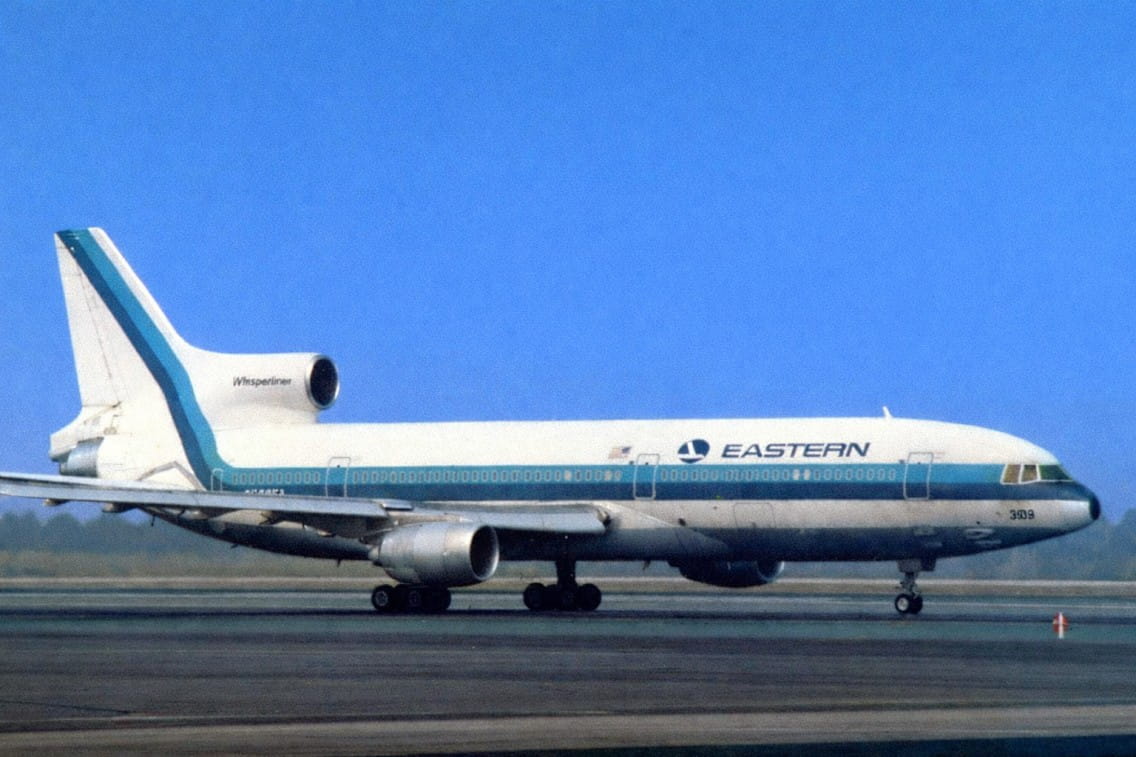
On the night of 29 December 1972, a brand-new Lockheed L-1011 TriStar operated by Eastern Air Lines crashed into the Florida Everglades while preparing to land at Miami.
What made the accident remarkable was not mechanical failure, weather, or pilot error in the traditional sense. Instead, the crash revealed a subtle but critical weakness in airline operations: crew distraction inside the cockpit.
The tragedy ultimately became one of the most influential accidents in aviation history and helped reshape how pilots work together on the flight deck.
The Flight to Miami
Eastern Air Lines Flight 401 was a scheduled passenger flight from John F. Kennedy International Airport in New York to Miami International Airport.
The aircraft was a Lockheed L-1011 TriStar, one of the most advanced wide-body airliners of its era. Introduced only a few years earlier, the TriStar represented a major leap forward in automation and avionics.
On board were:
- 163 passengers
- 13 crew members
In total, 176 people were aboard the aircraft.
The flight departed New York at 9:20 PM and proceeded normally toward Florida.
Weather in Miami that evening was good, with clear skies and visibility of around 10 miles.
Nothing suggested the flight would soon become one of aviation’s most studied disasters.
A Simple Landing Gear Warning
As Flight 401 began its descent toward Miami shortly before midnight, the crew lowered the landing gear.
When the landing gear extends properly, indicator lights on the cockpit panel confirm that each gear leg is down and locked.
However, the nose landing gear light failed to illuminate.
The pilots could not confirm that the nose gear had locked into position. Concerned that the aircraft might attempt to land without the nose gear properly deployed, the captain decided to discontinue the approach.
Air traffic control instructed the aircraft to climb to 2,000 feet and fly west while the crew investigated the issue.
At this stage, the situation was routine. Airlines regularly perform go-arounds to troubleshoot technical issues.
But inside the cockpit, events began to unfold in a way that would prove fatal.
Troubleshooting the Problem
The flight crew began focusing on the nose gear indicator light.
The first officer removed the indicator light assembly to check whether the bulb had burned out. Unfortunately, the lens assembly became jammed while he attempted to reinstall it.
Meanwhile, the captain asked the second officer to leave the cockpit and enter the forward electronics bay beneath the flight deck to visually inspect the nose landing gear mechanism.
From this compartment, technicians could view the gear through an inspection sight.
As the crew worked to solve the problem, the aircraft continued flying at 2,000 feet.
The autopilot was engaged, allowing the aircraft to maintain its altitude while the crew investigated the issue.
The Descent No One Noticed
At some point during the troubleshooting process, the aircraft’s autopilot left the altitude-hold mode.
This may have occurred when a small control input was applied to the control column, which automatically disengaged the altitude hold function.
Once altitude hold disengaged, the aircraft slowly began descending.
The descent was gradual and initially subtle. Over several minutes the TriStar drifted downward from 2,000 feet toward the Everglades below.
Inside the cockpit, however, the crew remained focused on the landing gear indicator.
No one noticed the change in altitude.
Warning Signs in the Cockpit
Eventually, the aircraft descended far enough that an altitude warning sounded.
A C-chord alert tone indicated that the aircraft had deviated from its selected altitude.
The sound was heard in the cockpit but apparently went unrecognized by the crew, who continued discussing the nose gear light problem.
Moments later, air traffic control noticed something unusual.
The radar display briefly showed Flight 401 at 900 feet, far below its assigned altitude.
The controller contacted the aircraft to ask how things were progressing.
The crew replied normally, giving no indication they were aware of any problem.
Realisation Comes Too Late
Only seconds before impact did the crew realise something was wrong.
The first officer suddenly remarked:
“We did something to the altitude.”
Moments later he asked:
“We’re still at two thousand, right?”
The captain responded with alarm:
“Hey, what’s happening here?”
At that moment the aircraft was already descending rapidly toward the swamp below.
The radio altimeter warning began sounding.
But there was no longer enough time to recover.
Impact in the Everglades
At 11:42 PM, Flight 401 struck the Everglades approximately 18.7 miles west-northwest of Miami International Airport.
The aircraft was in a shallow bank when the left wing struck the ground first.
The TriStar disintegrated across the marshland, scattering wreckage over a wide area of swamp and shallow water.
Despite the catastrophic breakup, some sections of the fuselage remained partially intact.
Rescue helicopters reached the crash site within minutes.
Casualties
The crash killed 101 people, including both passengers and crew.
Seventy-five occupants survived, although many were seriously injured.
The survival rate was surprisingly high considering the severity of the impact.
Investigators later noted that the design of the L-1011 passenger seats, which incorporated energy-absorbing structures, likely contributed to saving lives.
The Investigation
The investigation was conducted by the National Transportation Safety Board (NTSB).
Investigators examined the aircraft’s:
- engines
- flight controls
- autopilot system
- instruments
- hydraulic and electrical systems
All were found to be functioning normally prior to the crash.
The nose landing gear itself was also found to be fully extended and locked.
The problem that triggered the accident was nothing more than a burned-out indicator bulb.
The Official Cause
The NTSB concluded that the accident resulted from a loss of situational awareness in the cockpit.
The official finding stated:
The probable cause was the failure of the flight crew to monitor the flight instruments during the final four minutes of flight while they were distracted by a malfunction of the nose landing gear indicator system.
In other words, the crew became so focused on diagnosing the landing gear light problem that they stopped monitoring the aircraft’s altitude.
A Turning Point for Airline Safety
The lessons from Flight 401 had a profound effect on aviation safety.
The accident demonstrated how highly experienced pilots operating a sophisticated aircraft could still fall victim to task fixation.
In the years that followed, airlines began developing new training programs emphasizing:
- Cockpit teamwork
- Shared responsibility for monitoring instruments
- Clear division of tasks during abnormal situations
These concepts eventually evolved into what is now known as Crew Resource Management (CRM).
CRM training teaches pilots how to communicate effectively, manage workload, and maintain situational awareness even when dealing with technical problems.
Today it is a mandatory part of airline training worldwide.
Legacy of Flight 401
Eastern Air Lines Flight 401 remains one of the most important human-factors accidents in aviation history.
It demonstrated that advanced aircraft technology alone cannot guarantee safety. Pilots must maintain constant awareness of the aircraft’s flight path, even during seemingly minor technical issues.
From a simple burned-out light bulb came lessons that transformed airline cockpit procedures.
More than fifty years later, the legacy of Flight 401 continues to influence how pilots fly and how airlines train their crews.