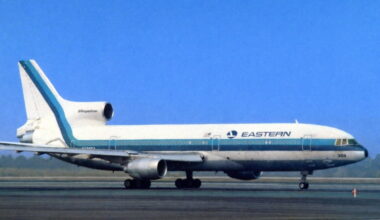
In the early 1970s the McDonnell Douglas DC-10 was one of the most advanced wide-body aircraft entering airline service. Designed to compete with the Lockheed L-1011 TriStar, the DC-10 promised airlines a flexible, long-range aircraft capable of carrying hundreds of passengers across the world.
However, within a few years of its introduction the aircraft became associated with one of the most serious structural design problems in commercial aviation: cargo door failure.
The flaw led to two major accidents and forced a complete redesign of the aircraft’s cargo door system, ultimately reshaping aircraft certification standards and aviation safety procedures worldwide.
The DC-10 and the Wide-Body Revolution
The McDonnell Douglas DC-10 entered airline service in 1971 with American Airlines. It was part of the new generation of wide-body aircraft designed to serve routes that were too small for the Boeing 747 but required more capacity than earlier narrow-body jets.
The aircraft featured:
- three-engine configuration (trijet)
- wide cabin seating up to 270 passengers
- long-range capability
- large lower-deck cargo compartments
To maximize cargo capacity, the DC-10 used outward-opening cargo doors rather than inward-opening doors used on many earlier aircraft.
While this design allowed the aircraft to carry more cargo, it introduced a dangerous engineering challenge.
The Engineering Problem
Aircraft cabins are pressurized at altitude to maintain comfortable conditions for passengers.
This means the internal pressure inside the aircraft is significantly higher than the outside air pressure.
For most aircraft doors, engineers design inward-opening doors, so that cabin pressure actually helps keep the door sealed.
The DC-10 cargo doors, however, opened outward to maximize cargo space.
Because of this design, the door relied entirely on latching mechanisms to remain secured against the pressure difference.
If those latches failed or were improperly locked, the door could be blown open by cabin pressure.
The First Warning: American Airlines Flight 96
The first serious incident occurred on June 12, 1972, involving American Airlines Flight 96, a DC-10 departing Detroit for Buffalo.
Shortly after takeoff, the aircraft experienced an explosive decompression when the rear cargo door blew open.
The sudden pressure release caused:
- collapse of the passenger cabin floor
- severed control cables
- partial loss of flight control
Despite the severe damage, the pilots managed to regain control of the aircraft and safely return to Detroit.
The incident was a clear warning that the cargo door system contained a serious design vulnerability.
Investigators recommended modifications to prevent the door from being improperly secured.
However, the proposed changes were not fully implemented across the DC-10 fleet.
The Paris Disaster: Turkish Airlines Flight 981
The worst fears about the DC-10 cargo door design became reality less than two years later.
On March 3, 1974, Turkish Airlines Flight 981, a DC-10 departing Paris for London, suffered a catastrophic cargo door failure shortly after takeoff.
The rear cargo door blew open while the aircraft was climbing through approximately 12,000 feet.
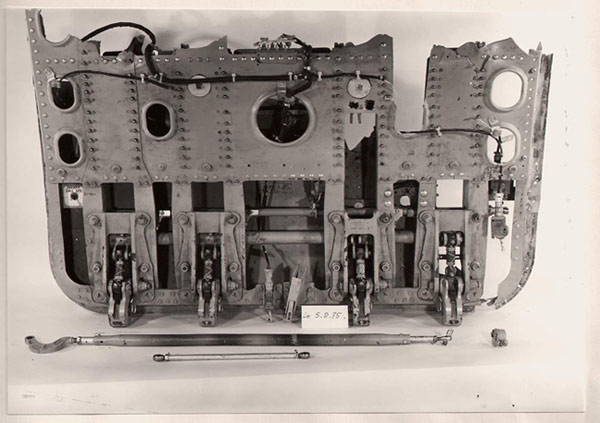
The explosive decompression caused the cabin floor to collapse, severing critical flight control cables running beneath the floor.
The pilots immediately lost control of the aircraft.
Only seconds later the DC-10 crashed into the Ermenonville Forest northeast of Paris, killing all 346 people on board.
At the time, it was the deadliest aviation disaster in history.
What Investigators Discovered
Investigators quickly determined that the accident was caused by failure of the cargo door locking system.
Several key issues contributed to the disaster:
Weak Latching Mechanism
The cargo door relied on rotating latches that could appear closed even when they were not fully engaged.
Misleading Cockpit Indicator
The cockpit warning system could indicate the door was locked even when the latches were improperly secured.
Structural Vulnerability
When the door blew open, the resulting decompression collapsed the passenger floor above the cargo compartment.
This severed control cables needed to operate the aircraft’s rudder and elevators.
With flight controls disabled, recovery was impossible.
Engineering Changes After the Crash
The disaster forced immediate and extensive redesign of the DC-10 cargo door system.
Major changes included:
Stronger Locking Mechanisms
The door latching system was redesigned to prevent incomplete engagement.
Venting Modifications
Air vents were added to allow pressure to equalize between compartments, preventing floor collapse during decompression.
Improved Warning Systems
New cockpit indicators ensured the crew could verify that the cargo door was properly secured.
Structural Reinforcement
The cabin floor structure was strengthened to prevent catastrophic collapse.
These changes eliminated the cargo door vulnerability and restored confidence in the aircraft.
Impact on Aviation Safety
The DC-10 cargo door accidents had a profound impact on aircraft design and certification standards.
Regulators introduced stricter rules requiring aircraft manufacturers to ensure that:
- critical control systems cannot be disabled by decompression
- warning systems accurately reflect mechanical conditions
- structural failures cannot lead to loss of flight control
These principles are now embedded in modern aircraft certification requirements.
The DC-10’s Long Operational Life
Despite the early cargo door controversy, the DC-10 went on to serve airlines around the world for decades.
The aircraft eventually proved to be reliable once its design issues were corrected.
In total:
- 446 DC-10 aircraft were produced
- many remained in service as cargo aircraft into the 21st century
The aircraft also evolved into the MD-11, an improved trijet developed by McDonnell Douglas.
Lessons from the Cargo Door Crisis
The DC-10 cargo door failures remain one of the most important engineering lessons in aviation history.
The accidents demonstrated how:
- seemingly small design compromises
- inadequate warning systems
- incomplete safety modifications
can combine to produce catastrophic results.
They also showed how quickly the aviation industry can adapt and improve when confronted with serious safety challenges.
Today, every modern airliner benefits from the lessons learned during the DC-10 cargo door crisis.
The tragedy ultimately helped shape the strict safety standards that define commercial aviation today.