Amalgamated Wireless (Australasia): How AWA Shaped Sixty Two years of Australian Aviation.
Flying Tin has covered the evolution of Aviation Radio in Australia, the Rise and Fall of Ansett, and the accidents that pushed safety forward. But there’s a company whose name belongs in almost every one of those stories and has never appeared in any of them. This is the piece that fills that gap.
There’s a name that doesn’t appear on the side of any aircraft, doesn’t grace any boarding pass, and rarely makes it into the highlight reel of Australian aviation history. Yet without it, Australia’s domestic airlines would have had no avionics backbone for decades.
That name is AWA – Amalgamated Wireless (Australasia) Ltd.
What Was Amalgamated Wireless (Australasia)?
AWA’s origins trace back to 1909, when Australasian Wireless Limited was established as a Telefunken wireless agent. By 1913, following a patent dispute between Marconi and the Australian government, the two wireless giants settled their differences and merged their Australasian interests to form Amalgamated Wireless (Australasia) Ltd, giving the new company exclusive rights throughout Australasia to the patents of both Marconi and Telefunken, present and future. It was an extraordinary founding position for a company that would go on to define Australian electronics.
The Australian Government quickly recognised AWA’s strategic value. In 1922, it granted AWA exclusive rights to operate the Coastal Radio Service a network of maritime radio stations stretching across Australia and eventually into New Guinea. The government also became a majority shareholder, injecting capital to build the country’s communications spine.
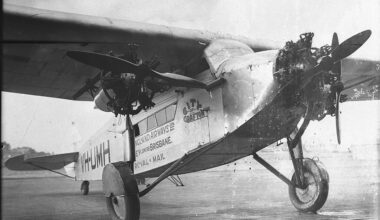
By the time commercial aviation was taking its first tentative steps across the Pacific, AWA was already deeply embedded in Australia’s communications infrastructure. What followed was a decades-long relationship with aviation that would shape the industry from the ground up literally.
Building Australia’s Aviation Radio Network: Beacons, Aeradio Stations, and the Fight Against Dead Reckoning
As civil aviation expanded through the 1930s, the challenge wasn’t just keeping aircraft in radio contact it was helping them find airports when the weather closed in.
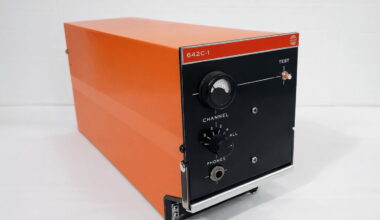
AWA installed navigational radio beacons at Essendon in 1935, then at Mascot, improving the ability of aircraft to locate airports in conditions of poor visibility. By 1938, the government contracted AWA to build and operate a network of twelve dedicated Aeradio stations at principal aerodromes on the main east-coast trunk routes from Tasmania in the south to New Guinea in the north, later expanded to fifteen. The company provided and installed transmitting and receiving stations at airports and locations across Australia. All the equipment was manufactured by AWA.
By 1939, passenger and mail-carrying aircraft were being fitted with AWA-built radio sets capable of both wireless telegraph and telephone communication. AWA built and supplied it all.
Flying Tin’s series on Aviation Radio in Australia traces the broader evolution of this network AWA was the company building much of the physical infrastructure that series describes.
The Kyeema Crash, 1938: What Was at Stake
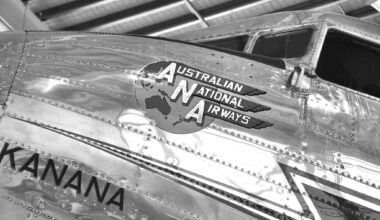
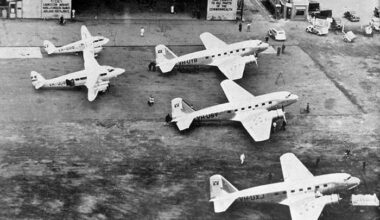
In October 1938, the ANA Douglas DC-2 Kyeema crashed into the Dandenong Ranges in Victoria, killing all on board. As Flying Tin’s own account of the Kyeema Disaster details, the subsequent inquiry exposed the inadequacy of ground-air communication systems, delays in commissioning navigation beacons, and a dangerous reliance on pilot position estimation.
AWA’s role was directly implicated in that failure not through negligence, but because the beacons being commissioned too slowly were largely AWA’s responsibility to install. The disaster accelerated the adoption of more capable radio navigation infrastructure across Australia, and AWA was the organisation that would have to deliver it.
AWA in World War II: Aircraft Instruments and the Marconi School
The Second World War transformed AWA from supplier into a critical pillar of national defence production. Aircraft instruments had not been manufactured in Australia before the war. That had to change fast.
At AWA’s works, a whole factory was devoted to making compasses, the Sperry gyro horizon, Sperry directional gyro, rate-of-climb indicator, pressure gauges, and altimeters. The directional gyro was at the time the only device providing fixed directional reference in the cockpit of an aircraft in flight, and its manufacture demanded considerable precision.
During the war, AWA’s Marconi School of Wireless trained military personnel in signals and communications the same institution that had been operating since the company’s earliest days now turning out the operators who kept Allied forces connected across the Pacific theatre.
The AWA Aviation Division: Forty-Three Years Maintaining Australia’s Airlines
After the war, AWA formalised its aviation commitment with the dedicated Aviation Division, which became the backbone of Australian airline avionics maintenance for almost half a century.
From 1948 to 1991, AWA held the contract to install and maintain the avionics of Australia’s domestic airlines Ansett-ANA (later Ansett Australia) and Trans Australia Airlines (later Australian Airlines). The Aviation Division operated service depots at major and secondary airports across Australia and Papua New Guinea, with a large central workshop at Airport West, Victoria.
That’s 43 years. For four decades, every time an Ansett or TAA jet pushed back from the gate, the avionics keeping it safe had been maintained by AWA’s engineers. It is one of the longest-running and most consequential aviation maintenance contracts in Australian history.
Flying Tin’s article on The Rise and Fall of Ansett Airlines tells the story of the airline AWA serviced for nearly half a century the two histories run in parallel throughout the entire postwar era.
AWA’s Navigation Technology: DME, VOR, and AWANET
From the late 1940s through to the 1980s, AWA wasn’t just servicing avionics it was designing and manufacturing them.
AWA introduced the world’s first mandatory DME (Distance Measuring Equipment) and in the 1960s designed and produced fully solid-state VOR (Very High Frequency Omni Range) beacons, which were and still are used in Australia and overseas. The company also developed AWANET, its own Air Traffic Control system, and the VHF Aural Range (VAR) for navigation use.
Distance Measuring Equipment (DME): An Australian Invention
DME was devised by James “Gerry” Gerrand under the supervision of Edward George Bowen, then Chief of CSIRO’s Division of Radiophysics. Born out of the wartime Identification Friend or Foe (IFF) radar systems of the Second World War, DME lets a suitably equipped aircraft measure its exact slant-range distance from a ground beacon. The principle is elegant: the aircraft transmits a pulse to the ground station, which instantly replies. The aircraft’s equipment measures the time interval between the outgoing pulse and the returning one, and from that interval computes the distance to the ground station and groundspeed as well.
It was AWA that turned the concept into operational equipment. Across the late 1940s through to the 1980s, AWA wasn’t merely servicing avionics it was designing and manufacturing them. In the early 1950s, working jointly with the CSIRO and the Department of Civil Aviation, AWA engineered and deployed a version operating in the 200 MHz VHF band well below the 960–1215 MHz UHF band that international DME would later settle on.
Many of these developments were undertaken jointly with the CSIRO and the Department of Civil Aviation. AWA didn’t just adopt international navigation standards in the case of DME, it helped invent the entire category and then built the equipment that put it in the air.
For roughly two decades, the 200 MHz DME(D) network was the backbone of en-route distance measurement across Australian skies a complete, nationally deployed navigation system built and maintained by AWA, running on a frequency band uniquely its own. When Australia later transitioned to the ICAO-standard international DME, it was retiring a homegrown system that had quietly done the job for a generation of airline crews.
This Australian domestic system was designated DME(D), or “DME Domestic,” by the Department, distinguishing it from the later international standard, DME(I), eventually adopted by ICAO. (The 1000 MHz international system arrived after the USA pushed for that frequency over the 200 MHz band that wartime radar experience had proven.) For roughly two decades, the 200 MHz DME(D) network was the backbone of en-route distance measurement across Australian skies, a complete, nationally deployed navigation system built and maintained by AWA, running on a frequency band uniquely its own.
The network eventually encompassed at least 84 beacons, including en-route beacons on major air routes such as Dederang in NSW, beacons at major airports, and beacons at regional airports like Wittenoom Gorge in WA and Roma in Queensland. The Australian system gave over forty years of valuable service to civil aviation between 1955 and 1995. When Australia finally transitioned to the ICAO-standard international DME with all DME(A) beacons withdrawn on 7 December 1995 it was retiring a homegrown system that had quietly done the job for a generation of airline crews.
More Than Just DME
DME was far from AWA’s only contribution. In the 1960s the company designed and produced fully solid-state VOR (Very High Frequency Omni Range) beacons, which were and still are used in Australia and overseas. AWA also developed AWANET, its own Air Traffic Control system, and the VHF Aural Range (VAR) for navigation use. Many of these developments, like DME, were undertaken jointly with the CSIRO and the Department of Civil Aviation.
In the case of DME, AWA didn’t just adopt international navigation standards it helped invent the entire category and then built the equipment that put it in the air. Alongside the T-VASIS visual landing aid and the Interscan landing system, all of which met and exceeded ICAO standards of performance, it’s a record of engineering and operational achievement Australia can be justly proud of.
The Aviation Radio in Australia: Modernisation and VHF Communication article covers the shift to VHF and modern navaid systems, AWA was the manufacturer behind much of Australia’s early VOR and DME infrastructure.
Interscan: AWA’s Microwave Landing System and the Race for a Global Standard
AWA’s most ambitious aviation achievement and one of the most remarkable Australian engineering stories ever told was Interscan: a homegrown microwave landing system that came within a whisker of becoming the global standard for precision approaches worldwide.
The problem was fundamental. Instrument Landing Systems (ILS) had been guiding aircraft down in poor visibility for decades, but were showing serious limits frequency congestion, restricted approach angles, limited accuracy. The International Civil Aviation Organisation (ICAO) was looking for a next-generation replacement.
Interscan was a joint project between the Department of Transport and the CSIRO to meet ICAO’s requirement for a new international landing system. Its basic concept derived from radio astronomy research at CSIRO’s Division of Radiophysics. AWA was awarded the contract from the Department of Transport to engineer and manufacture a prototype system for flight trials at Tullamarine airport, Melbourne.
The Interscan system works through microwave beams that scan back and forth across the sky. By measuring the time interval between pulses received in the aircraft during each scan, the angular position of the aircraft relative to the runway can be determined a technique called time-reference scanning beam (TRSB), pioneered by Interscan. One beam scanning horizontally gives the angle from the runway centreline; a second scanning vertically provides the glidepath angle.
The results were remarkable. Interscan was chosen by the FAA in 1975 and by ICAO in 1978 as the format to be adopted internationally. An engineered version called MITAN, developed by AWA and Hawker de Havilland under contract to the Department of Transport, was successfully demonstrated at Melbourne Airport in the late 1970s. Interscan International Limited was formed in Sydney in 1979 and went on to manufacture MLS systems deployed in the US, EU, Taiwan, China, and Australia.
Although ILS survived far longer than expected principally due to the enormous cost of replacing ground infrastructure worldwide Interscan’s technical legacy was permanent. The time-reference scanning beam concept AWA pioneered remained the foundation of microwave landing system technology globally. The system’s eventual decline, however, came from a different direction than ILS.
The Aviation Radio in Australia: Regulation and Modern Airspace Communication piece examines how Australia’s airspace communication framework evolved through this period the regulatory structures that article describes were built, in part, on the navaid systems AWA produced.
What Happened to Interscan? The Satellite Revolution
Interscan won the international competition, yet microwave approaches never became routine. The reason was timing. By the time MLS was ready for worldwide deployment, satellite navigation had matured and it offered most of the same operational benefits without requiring transmitting equipment to be installed and maintained at every runway.
The decisive blow came from the United States. In 1994, the FAA halted further development of MLS to pursue precision approaches based on the Global Positioning System (GPS) instead. Once the world’s largest aviation market stepped away, MLS lost the commercial momentum it needed, and the system that ICAO had crowned as the future of landing guidance was effectively overtaken before it could be widely adopted.
It’s worth being precise about which satellite technologies did the displacing, because they are not quite the same thing. The broad winner was GPS augmented by wide-area systems such as WAAS in the United States and EGNOS in Europe, which enabled “LPV” approaches offering vertical guidance comparable to ILS Category I. Today, GPS-based LPV approaches actually outnumber traditional ILS approaches at US airports. The more demanding, low-visibility precision role that MLS was originally built for is now being filled slowly by GLS, the GBAS Landing System, a satellite-based alternative to ILS that uses a single ground station at the airport to broadcast corrected GNSS data to suitably equipped aircraft. GLS is still maturing, with most installations certified only for the less demanding approach categories so far, but it, rather than microwave technology, is the long-term successor.
Europe clung to MLS longer than anywhere else, largely out of concern over relying on a US-controlled satellite constellation. Even so, it never took hold. The only major MLS installation in the world was at London Heathrow, and it was decommissioned on 31 May 2017. Airports once expected to embrace the technology, such as Frankfurt, installed GBAS instead.
There is a quiet epilogue at home. The white Interscan antenna dishes remained standing at Melbourne Airport until 2003, when they were finally dismantled roughly a generation after AWA’s engineers had built a system there that ICAO had adopted as the international standard. Interscan met its technical goals and won the competition it was designed for; what changed was the wider technological landscape, as satellite navigation matured faster than almost anyone had anticipated when the system was conceived in the 1970s.
The End of AWA’s Aviation Chapter
By the 1990s, AWA was restructuring. The Aviation Division was sold to British Aerospace in 1996 who was only interested in the Defence section of the business. BAe then sold again to Rockwell Collins, which absorbed it into its Australian Avionics Maintenance operations. In 1998, along with the Avionics repair contract for both Qantas Domestic (ex TAA) and Ansett Airlines. Rockwell Collins closed its Australian Commercial Service Centre in Tullamarine in 2015. This single act ended 79 years of Air Transport and General Aviation Avionics repair and innovation in Australia.
A sad end to the engineering giant that once had its fingerprints on nearly every aircraft operating in Australian skies.
The company that had installed the wireless in the Holyman DH 86 Fleet, built the country’s Aeradio network, maintained the nation’s airline fleets for 43 years under the Pool Agreement, and co-invented the world-adopted precision landing system had quietly exited the industry it helped build.
From the devastating fire in 1973 that destroyed their facility at Essendon Airport and its heydays from the 1980s through to 1998, the AWA Aviation Division dominated Avionics and Maintenance in Australasia. A lucky few got to be a part of the AWA journey; some went on to be leaders and spread their wings and knowledge across the globe, and too many have passed on but are not forgotten.
AWA’s Legacy in Australian Aviation
AWA’s story is Australian aviation history told from the ground up from the radio operators and instrument makers to the engineers who pushed the boundaries of what navigation technology could achieve. It’s history that doesn’t get the glossy centre spreads, but without which the more famous chapters couldn’t have been written.
The VOR beacons AWA designed in the 1960s are still guiding aircraft today. The TRSB technique it pioneered remains embedded in every microwave landing system on the planet. And the avionics it maintained for four decades on Ansett and TAA kept Australia’s skies safe through the entire golden age of domestic aviation.
Next time you’re lined up on final, riding the glidepath down through cloud, spare a thought for the AWA engineers at Tullamarine in the 1970s who were solving exactly this problem and solved it better than anyone else in the world.
Sources: AWA Technology Services (Wikipedia); Distance Measuring Equipment (Wikipedia); Microwave Landing System (Wikipedia); SKYbrary GBAS Landing System (GLS); CSIROpedia Interscan Aircraft Landing System; Air Services Australia A Brief History of Civil Air Traffic Services in Australia; Australian Parliament House archives; radiomuseum.org and the AWA archives Aviation Division 17-19 King St Airport West Victoria, Australia.