The Airport Famous for Extreme Crosswinds
Located at the southern tip of New Zealand’s North Island, Wellington Airport is widely known among pilots as one of the most challenging commercial airports in the world due to its extreme crosswinds and turbulent weather conditions.
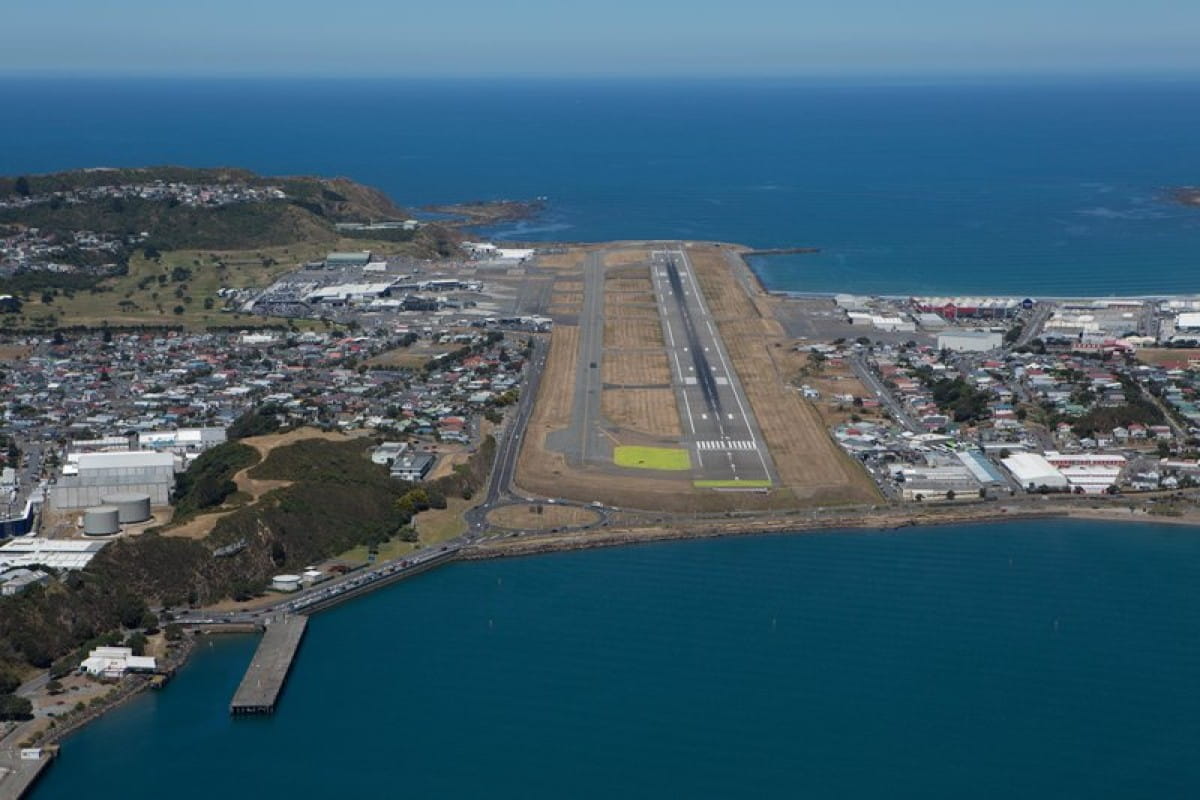
Nestled between steep hills and bordered by Cook Strait, the airport sits in one of the most wind-prone locations in the South Pacific. The combination of strong prevailing winds, narrow terrain, and a relatively short runway creates demanding operating conditions for aircraft and crews alike.
Despite these challenges, Wellington Airport remains a vital gateway to New Zealand’s capital city and a key hub for domestic and regional air travel.
A Unique Geographic Location
Wellington is located at a natural geographic bottleneck where the Tasman Sea and Pacific Ocean meet at Cook Strait. This area funnels powerful weather systems through a narrow gap between New Zealand’s two main islands.
The result is a region famous for strong and often unpredictable winds.
In fact, Wellington is commonly referred to as: “The Windy City.”
Wind gusts exceeding 100 km/h (62 mph) are not uncommon, and these winds frequently cross the runway at challenging angles during aircraft landings and takeoffs.
Wellington Airport Runway
Wellington Airport has a single primary runway:
Runway 16 / 34
- Length: 2,081 metres (6,827 ft)
- Surface: Asphalt
- Location: Built on reclaimed land extending into Lyall Bay
The runway sits between steep hills on one side and open water on the other, leaving little room for expansion.
While the runway length is sufficient for most narrow-body aircraft such as the Airbus A320 and Boeing 737, the surrounding geography makes approaches particularly demanding.
Why Crosswinds Are So Severe
Several geographic factors contribute to Wellington’s extreme crosswinds.
Cook Strait Wind Funnel
Cook Strait acts as a natural wind funnel, accelerating airflow between the North and South Islands. As winds are squeezed through the strait, their speed increases significantly.
Mountain Turbulence
The hills surrounding Wellington create mechanical turbulence as wind flows over uneven terrain. This can cause rapid changes in wind direction and speed during aircraft approaches.
Pilots frequently encounter:
- wind shear
- sudden gusts
- turbulence on short final
Ocean Weather Systems
Weather systems moving across the Southern Ocean often bring powerful winds and storm fronts directly across Wellington’s flight paths.
These systems can produce rapidly changing conditions that challenge even experienced flight crews.
Crosswind Landings
Because of these conditions, aircraft landing at Wellington often experience significant crosswinds, requiring skilled pilots to carefully manage the approach.
During strong winds, aircraft may approach the runway at a noticeable sideways angle in a maneuver known as crabbing.
Just before touchdown, pilots must smoothly align the aircraft with the runway while maintaining control in the turbulent airflow.
These landings can appear dramatic to passengers and aviation observers, especially when larger aircraft such as Boeing 737s or Airbus A320s rock in the wind during final approach.
Aircraft Types Operating at Wellington
Despite its challenges, Wellington Airport regularly handles modern jet aircraft.
Common aircraft include:
- Airbus A320 / A321
- Boeing 737
- ATR 72
- Dash-8 Q300
Regional turboprop aircraft such as the ATR 72 often handle Wellington’s windy conditions particularly well due to their lower approach speeds and excellent short-field performance.
Safety and Pilot Training
Airlines operating into Wellington ensure that pilots receive specialized training for the airport’s unique conditions.
Training typically includes:
- simulator practice for crosswind landings
- familiarization with local terrain and weather patterns
- strict crosswind operating limits
Modern aircraft are designed to handle significant crosswind conditions, and airlines enforce strict safety margins to ensure safe operations.
Why Wellington Fascinates Aviation Enthusiasts
For aviation enthusiasts, Wellington Airport has become famous for its spectacular landings in strong winds.
Videos of aircraft battling Wellington’s gusty conditions are widely viewed online, showcasing the skill of airline pilots operating in challenging weather.
The combination of:
- dramatic coastal scenery
- powerful winds
- challenging approaches
makes Wellington one of the most interesting airports to watch in the world.
Conclusion
Wellington Airport is a remarkable example of how aviation adapts to difficult geography and weather conditions.
Its strong crosswinds, mountainous surroundings, and coastal location create demanding operating conditions that test both aircraft performance and pilot skill.
Yet despite these challenges, thousands of flights operate safely each year, connecting New Zealand’s capital to the rest of the country and beyond.
For pilots and aviation enthusiasts alike, Wellington Airport remains one of the most fascinating and challenging airports in commercial aviation. Approaches were sometimes aborted when the plane was shaking so hard that the pilot could not read the instruments.