During the late 1960s and early 1970s, the airline industry entered the wide-body era. Passenger demand was increasing rapidly, long-haul travel was expanding, and airlines needed aircraft capable of carrying more people efficiently across longer distances.
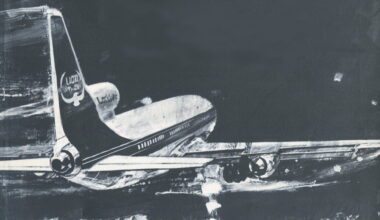
Two American manufacturers responded with similar yet fiercely competing designs: the Lockheed L-1011 TriStar and the McDonnell Douglas DC-10.
Both aircraft used a distinctive three-engine configuration, known as a trijet, and both were designed to serve medium- and long-haul routes around the world.
Although they shared many similarities, the rivalry between these aircraft would shape the economics and engineering direction of wide-body aviation for decades.
The Race to Build the Perfect Wide-Body
In the mid-1960s airlines were asking manufacturers for a new type of aircraft that could:
- carry 250–300 passengers
- operate efficiently on transcontinental and transatlantic routes
- serve airports unable to accommodate the larger Boeing 747
The result was a new class of aircraft positioned between the narrow-body jets of the 1960s and the jumbo jet.
Both Lockheed and McDonnell Douglas chose a trijet layout, with two engines mounted under the wings and a third in the tail.
This configuration offered a balance between power, range, and redundancy while meeting regulatory requirements for over-water flight.
The Lockheed L-1011 TriStar
The Lockheed L-1011 TriStar first flew in 1970 and entered airline service with Eastern Air Lines in 1972.
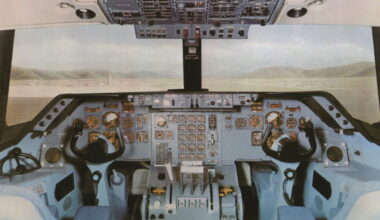
The aircraft quickly gained a reputation for being one of the most technologically advanced airliners of its time.
Key features included:
- advanced autoflight system
- Category III automatic landing capability
- highly sophisticated avionics
- quiet Rolls-Royce RB211 engines
The TriStar was also known for its exceptionally smooth handling and low noise levels, earning the nickname “Whisperliner.”
Many pilots considered it one of the most refined wide-body aircraft ever built.
The McDonnell Douglas DC-10
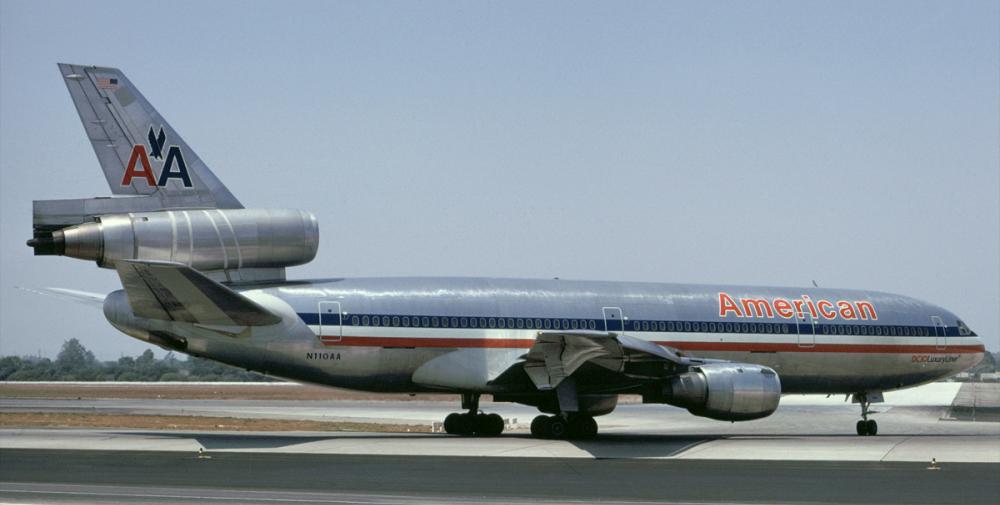
The DC-10 entered service slightly earlier, beginning operations with American Airlines in 1971.
Designed for flexibility and airline economics, the DC-10 emphasized:
- operational simplicity
- high passenger capacity
- flexible engine options
Unlike the TriStar, which relied exclusively on the Rolls-Royce RB211, the DC-10 could be equipped with engines from General Electric or Pratt & Whitney.
This flexibility proved attractive to many airlines, allowing them to choose engine suppliers and maintenance strategies.
The DC-10 also benefited from entering the market before the TriStar, giving it an important sales advantage.
Engineering Differences
Although both aircraft shared a similar trijet layout, their engineering philosophies differed significantly.
L-1011 TriStar
Lockheed prioritized advanced automation and engineering sophistication.
The aircraft introduced one of the most complex autopilot systems ever installed in a commercial airliner at the time.
DC-10
McDonnell Douglas focused on simplicity and operational flexibility, which helped airlines integrate the aircraft more easily into their fleets.
The TriStar was often viewed as the more technologically advanced aircraft, while the DC-10 was seen as the more commercially practical design.
The RB211 Crisis
One of the most important events affecting the rivalry was the development of the Rolls-Royce RB211 engine.
The engine was revolutionary but extremely complex. Development delays caused major financial problems for Rolls-Royce, which entered bankruptcy in 1971.
The British government eventually rescued the company, but the crisis delayed the TriStar program.
During this delay, the DC-10 entered airline service first, capturing a large portion of the market.
Many airlines that might have purchased the TriStar instead ordered the DC-10 because it was available sooner.
Sales and Market Outcome
In commercial aviation, timing often determines success.
Although the TriStar was widely admired, the DC-10 ultimately sold in larger numbers.
Production totals:
- Lockheed L-1011 TriStar: 250 aircraft
- McDonnell Douglas DC-10: 446 aircraft
The earlier market entry and engine flexibility gave the DC-10 a decisive advantage.
For Lockheed, the TriStar would ultimately become its last commercial airliner.
Airline Operators
Both aircraft were widely used by major airlines around the world.
Major TriStar operators
- Eastern Air Lines
- Delta Air Lines
- TWA
- British Airways
- Cathay Pacific
- Air Canada
Major DC-10 operators
- American Airlines
- United Airlines
- Northwest Airlines
- KLM
- Lufthansa
- Japan Airlines
Both aircraft became common sights at international airports throughout the 1970s and 1980s.
Safety Records
The two aircraft also experienced very different reputational paths.
The DC-10 suffered several high-profile accidents during its early years, including cargo door failures and structural issues that led to regulatory scrutiny.
Although the aircraft ultimately proved reliable, these incidents affected public perception.
The TriStar, by contrast, developed a strong safety reputation, partly due to its advanced monitoring systems and highly redundant design.
The End of the Trijet Era
By the 1990s, advances in engine reliability allowed aircraft manufacturers to move toward two-engine wide-body designs.
Twin-engine aircraft such as the:
- Boeing 767
- Airbus A330
- Boeing 777
could operate long routes with lower fuel consumption and reduced maintenance costs.
As a result, the trijet concept gradually disappeared from commercial aviation.
Both the DC-10 and TriStar were eventually retired from passenger service, although some aircraft continued flying as cargo aircraft and military transports.
Legacy of the Rivalry
The competition between the L-1011 and DC-10 represents one of the most fascinating chapters in aviation history.
The rivalry demonstrated how:
- engineering innovation
- timing in the marketplace
- engine development
- airline economics
can determine the success of an aircraft program.
The TriStar may have been the more technically advanced aircraft, but the DC-10’s earlier availability and flexibility secured its commercial victory.
Together, these aircraft defined the trijet wide-body era, shaping airline fleets and global air travel for more than two decades.