Introduction
By the late twentieth century and into the modern era, aviation radio in Australia had evolved into a highly regulated, standardised, and safety-critical system underpinning all controlled airspace operations. Advances in communication technology were matched by the development of formal procedures, regulatory oversight, and international alignment.
Aviation radio became inseparable from air traffic management, supporting increasingly complex airspace structures, higher traffic volumes, and diverse aircraft operations. Clear communication standards, frequency management, and disciplined operating procedures ensured that radio communication remained reliable and effective in all phases of flight.
This fourth part examines the regulatory framework governing aviation radio in Australia, the operation of modern airspace communication systems, and the role radio continues to play in contemporary aviation safety.
War Activities
The outbreak of war was to find the Aviation Department a well set-up organisation with 20 persons on the administration and field staff.
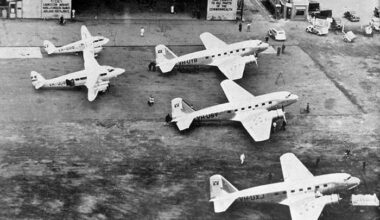
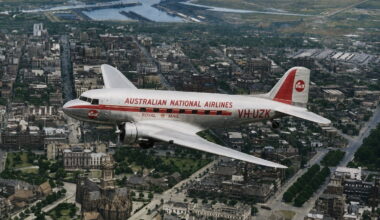
Early in September 1939, the R.A.A.F. requisitioned four DC-3 machines from the Airlines. These aircraft were based at Canberra and were engaged on coastal reconnaisance, in addition to aerial spotting activities for the convoys transporting A.I.F. Divisions to the Middle East.
To fly and maintain the aeroplanes, the Airlines made available the services of pilots and ground engineers.
A.W.A. made a similar gesture in transferring Bill Gibbings for a temporary period to Canberra, to look after the radio equipment.
It was during 1940 that some of the Company’s War plans became apparent. To close up the ranks, Harry Lamb was transferred from Melbourne Office to control the activities of both the Aviation and Marine Departments. (Since before 1935 Harry Lamb had been closely associated with aircraft radio and aviation matters generally. It was he, who guided airborne radio affairs during the difficult years before the formation of the Aviation Department and even after that time he continued to keep a discerning finger on the pulse of civil aviation).
In the national interest, it was decided to suspend further developmental work on equipments for civil aircraft the Company was being geared up for war work.
Meanwhile, things were very quiet at the Depots, most of the heavier aircraft were engaged on war activities, the airlines were reduced to mere skeleton services. Apart from a few conversions of civil aircraft for use with the R.A.A.F., plus a little installation work, Essendon Depot was almost at a standstill.
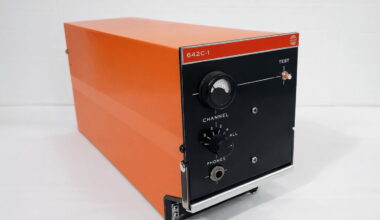
Mascot Depot was equally inactive but some relief was provided when it was decided that AS4, AS9, AS10 and AS12 units should be assembled, wired and tested at Mascot Depot.
Many of the field staff became restless, they reasoned that with the mighty struggle then going on in Europe and in the Middle East, surely their efforts should be directed to more nationally important projects. Many sought to join the services.
The Company thought differently. With characteristic foresight, field staff were advised to remain at their posts.
Frequency Management and Airspace Complexity
It was not long before the reason became alarmingly clear. Early in December 1941, the Japanese unleashed a fury never before seen in this part of the World. Within six weeks the enemy were at our very doorstep. By 22nd January, 1942. the Japanese had occupied New Britain. The Depot at Rabaul was forcibly closed never to re-open.
Shortly after the fall of Corregidor Island in the Philippines, General Douglas MacArthur arrived in Australia, and his Government in the United States decided to make Australia a forward base in the South West Pacific.
Many thousands of aircraft were to pour into the country within the ensuing months. AWA’s Aviation Department, together with most other sections of the Aviation Industry, found their resources stretched to breaking point.
Without warning, technicians were called upon to service radio and electronic equipment, using procedures and techniques the existence of many of which they had never suspected.
Radar installation, interception devices, and VHF communication gear were just some of the then intricate equipment, repaired and overhauled by Aviation staff – the doldrums were over.
With the same enthusiasm that motivated the Aviation Department throughout is short career the staff, both administrative and field, threw themselves into the frenzied activity that only national crises can produce. Many were the occasions when technicians would wearily wander home after long hours on the job with, no doubt, nostalgic thoughts of the blissful days before 1942.
This article is part of the Flying Tin series on Aviation Radio in Australia.
Continue reading:
Aviation Radio History in Australia: The Origins of Aircraft Communication Part 1
Aviation Radio in Australia: Network Expansion and Operational Maturity Part 2
Aviation Radio in Australia: Modernisation and VHF Communication Part 3
Image courtesy of the State Library of Victoria