The Airliner That Was Almost Too Good
Among commercial aircraft, the Boeing 757 holds a unique reputation. Introduced in the early 1980s, it quickly became one of the most capable narrow-body airliners ever built. Even decades after production ended in 2004, airlines continue to operate the aircraft on routes that few other jets can match.
Despite advances in aircraft technology, Boeing has never produced a direct successor to the 757. Modern aircraft such as the 737 MAX and 787 Dreamliner cover parts of its mission, but neither fully replaces the unique performance envelope that made the 757 so successful.
Understanding why the aircraft remains unmatched requires looking at its design, capabilities, and the market forces that shaped modern airline fleets.
A Powerful Narrow-Body Design
The Boeing 757 first flew in 1982 and entered service with Eastern Air Lines in 1983. Boeing designed the aircraft to replace the aging Boeing 727, while offering far greater efficiency and range.
Several features made the aircraft exceptional:
- High thrust-to-weight ratio
- Long, efficient wing
- Powerful high-bypass turbofan engines
- Advanced digital avionics
The engines Rolls-Royce RB211 or Pratt & Whitney PW2000 gave the aircraft enormous power for its size.
This allowed the 757 to take off from relatively short runways while carrying heavy payloads over long distances.
Pilots often described it as the most powerful narrow-body aircraft ever built, earning it the nickname:
“The sports car of airliners.”
The Perfect Aircraft for “Long Thin Routes”
One of the reasons the 757 became so valuable was its ability to operate what airlines call long thin routes.
These are routes that are too long for typical narrow-body aircraft but do not have enough demand to justify a wide-body airliner.
The 757 could:
- carry 180–220 passengers
- fly up to 3,900 nautical miles
- operate from shorter runways
This combination made the aircraft ideal for routes such as:
- U.S. East Coast → Europe
- secondary U.S. cities → transcontinental routes
- airports with performance limitations
Airlines like Delta Air Lines, United Airlines, and Icelandair built entire route networks around the aircraft.
The Unique “Middle of the Market”
The 757 sits in a category often called the Middle of the Market (MoM).
This market sits between:
Large narrow-body aircraft
such as the Boeing 737 or Airbus A321
and
Small wide-body aircraft
such as the Boeing 787.
The 757 occupied this space perfectly.
Unfortunately, the market size for this category has historically been too small to justify the cost of designing a completely new aircraft.
Why Production Ended
Despite its success, Boeing stopped building the 757 in 2004.
Several factors contributed to this decision.
1. Changing Airline Economics
During the 1990s and early 2000s airlines increasingly preferred larger wide-body aircraft or smaller narrow-body aircraft depending on the route.
This reduced demand for the mid-sized 757.
2. Rise of the Boeing 737 Next Generation
Boeing invested heavily in the 737-700, 737-800, and 737-900 series.
These aircraft covered much of the domestic route network previously served by the 757.
3. High Operating Costs
Although extremely capable, the 757 was heavier and more powerful than many routes required, making it less fuel efficient than smaller aircraft on shorter sectors.
Why Modern Aircraft Cannot Fully Replace It
Several newer aircraft attempt to fill parts of the 757’s role, but none fully match its capabilities.
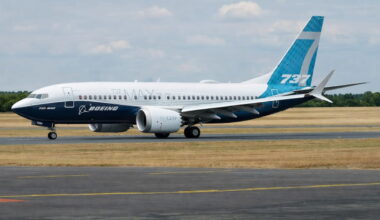
Boeing 737 MAX
The 737 MAX 9 and MAX 10 offer similar passenger capacity but lack the same range and runway performance as the 757.
Airbus A321neo
The A321neo and A321XLR come closer to replacing the 757’s mission profile, especially on long-range routes. However, the aircraft still lacks the 757’s raw takeoff performance from short or high-altitude runways.
Boeing 787
The 787 Dreamliner offers greater range and efficiency but is significantly larger and more expensive to operate, making it unsuitable for many of the thinner routes once flown by 757s.
The Aircraft Airlines Still Depend On
Because no true replacement exists, many airlines have continued operating their 757 fleets long past the normal retirement age.
Airlines including:
- Delta Air Lines
- United Airlines
- Icelandair
- FedEx
- UPS
still rely on the aircraft today.
The 757 also became extremely popular as a cargo aircraft, where its payload capacity and performance make it ideal for express freight networks.
Boeing’s Replacement Problem
For years Boeing studied the possibility of a new aircraft to replace the 757 and 767.
The proposed aircraft was often referred to as the:
New Mid-Market Airplane (NMA)
or
“797”
The concept would carry about 220–270 passengers and fly around 5,000 nautical miles.
However, Boeing has repeatedly postponed the project due to:
- high development costs
- uncertain airline demand
- competing priorities such as the 737 MAX program.
An Aircraft That Was Ahead of Its Time
In many ways the Boeing 757 was too capable for the market that existed when it was built.
Its powerful engines, long range, and strong performance made it uniquely flexible.
But that same capability made it difficult to replace economically.
Designing a modern aircraft with similar performance would require significant development investment, and the number of airlines that truly need that capability remains limited.
The Legacy of the Boeing 757
More than forty years after its first flight, the Boeing 757 remains one of the most respected aircraft ever built.
It bridged the gap between narrow-body efficiency and wide-body range in a way that no aircraft has quite replicated since.
Until Boeing eventually launches a new middle-of-the-market aircraft, the 757 will likely continue to serve airlines and cargo operators around the world.
In aviation history, it stands as a rare example of an aircraft that was so well designed that replacing it has proven extraordinarily difficult.
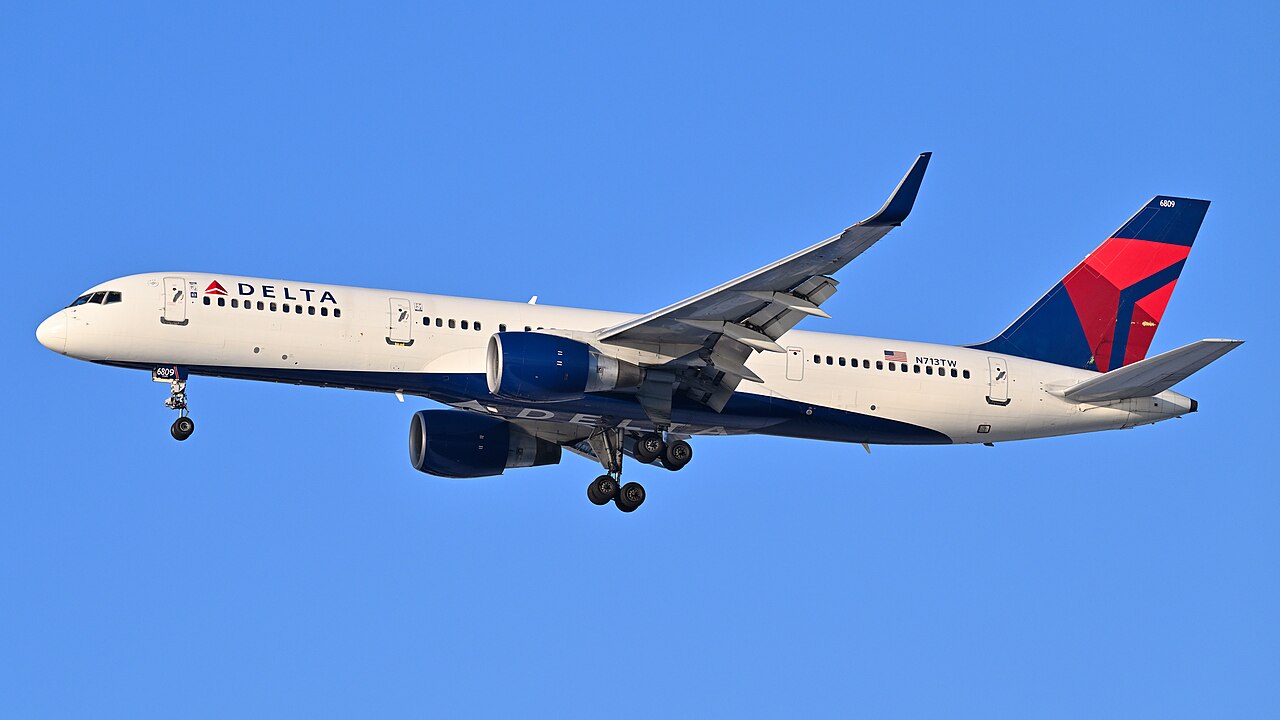
Photo by By 4300streetcar – Own work, CC BY 4.0,